
That first hot, sticky day on the Gulf Coast has a way of settling the question fast: does air conditioning need servicing, or can you just let it run until something breaks? If you want steady comfort, lower repair risk, and fewer surprise bills, regular service is part of owning an AC system. Waiting until it stops cooling usually costs more and causes more stress.
In our area, air conditioners do not get much of a break. Long cooling seasons, high humidity, and heavy daily use put real strain on every part of the system. Even a unit that seems to be working fine can slowly lose efficiency, build up wear, and develop small issues that turn into bigger repairs later.
Does air conditioning need servicing every year?
For most homes and small businesses, yes. Annual servicing is the standard because air conditioners collect dirt, lose efficiency, and experience wear over time. A yearly tune-up gives a technician the chance to clean key components, check performance, and catch developing problems before they leave you without cooling on a very hot day.
That said, once a year is the minimum for many systems. If your AC runs hard for much of the year, if you have pets, if your home tends to be dusty, or if the system is older, more frequent attention may make sense. Some homeowners benefit from seasonal maintenance plans simply because they use their HVAC system heavily and want fewer surprises.
Servicing is not just about avoiding a total breakdown. It also helps with the day-to-day things people notice first: uneven temperatures, rooms that feel muggy, weak airflow, and energy bills that keep climbing without a clear reason.
What AC servicing actually does
A lot of people hear “maintenance” and picture a quick once-over. Good service should be more useful than that. A proper AC visit is meant to improve performance, protect the equipment, and help the system last as long as it should.
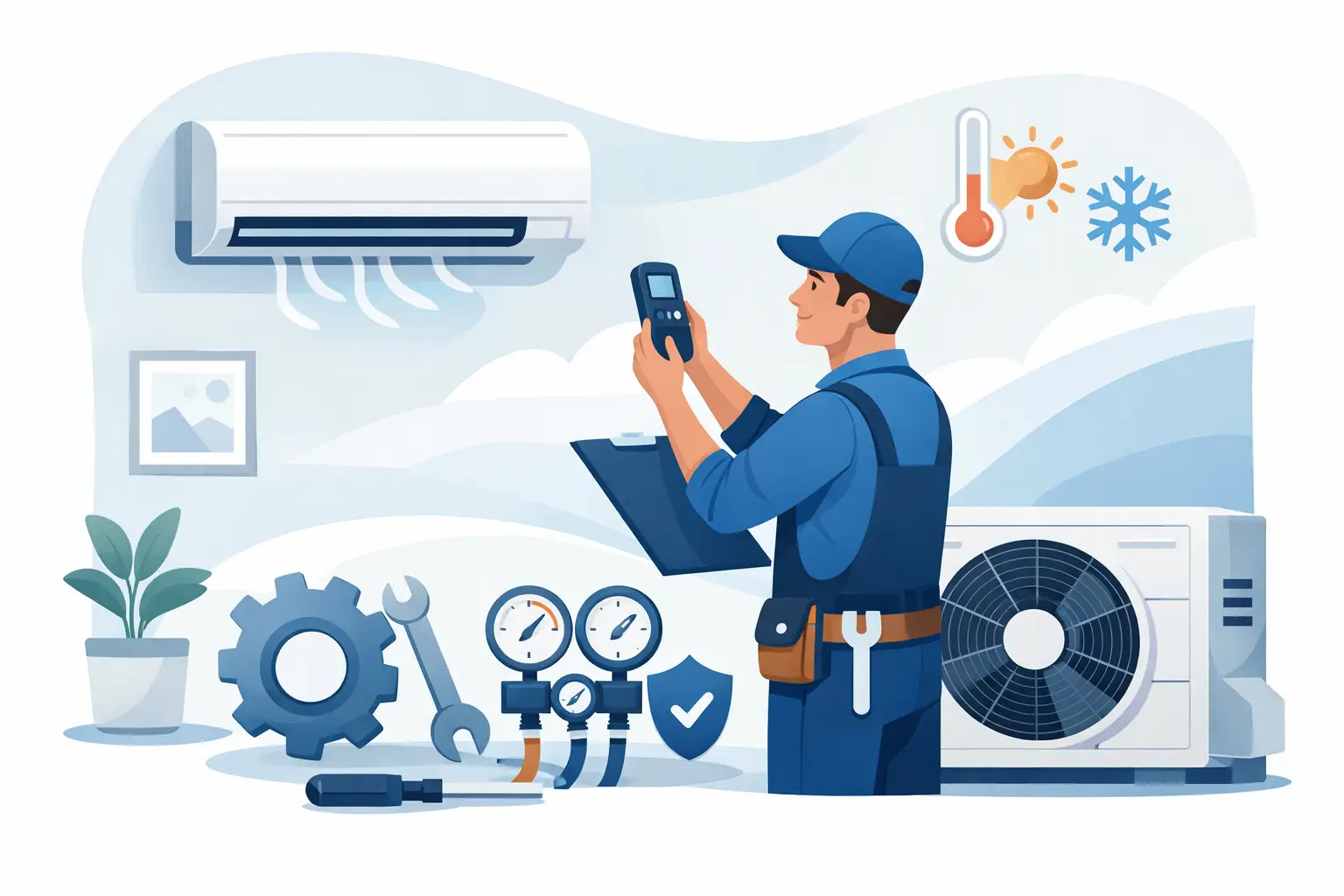
A technician will typically inspect electrical components, test system operation, clean the condenser and other dirty areas, check refrigerant levels and pressures, inspect the drain line, and look at moving parts for wear. They may also evaluate airflow, thermostat performance, and the condition of the filter and coils.
Those steps matter because air conditioning systems are sensitive to buildup and strain. A dirty coil can make the system work harder. A clogged drain can cause water issues. A weak capacitor can leave you with an unexpected no-cool call. Catching those things early is usually easier and more affordable than dealing with a system failure during a heat wave.
Why skipping service often costs more
It is easy to put off maintenance when the AC still turns on. The trouble is that air conditioning problems often build slowly. You may not notice the system running longer than it should, or struggling to remove humidity, or starting and stopping more often than normal.
That extra strain can lead to higher utility bills month after month. It can also shorten the life of major parts like the compressor, blower motor, or capacitor. When one worn part is left alone too long, it can affect other parts of the system. What could have been a smaller service visit may turn into a larger repair.
There is also the comfort side of it. In Mississippi and Southern Louisiana, a weak AC is not a small inconvenience. If your system fails during extreme heat, it can disrupt sleep, daily routines, and business operations fast. For families with young kids, older adults, or anyone sensitive to heat, dependable cooling is more than a luxury.
Signs your air conditioning needs servicing now
You do not always have to wait for a yearly appointment to know something is off. Sometimes the system tells you pretty clearly.
If your AC is blowing warm air, running constantly, making unusual noises, producing weak airflow, or leaving parts of the home humid and uncomfortable, it needs attention. The same goes for water around the unit, musty smells from the vents, or utility bills that rise without a change in usage.
Short cycling is another common warning sign. If the system turns on and off too often, that can point to airflow issues, thermostat trouble, electrical problems, or a system that is struggling to operate correctly. None of those issues get better by being ignored.
Older systems deserve even closer attention. An aging unit may still cool, but not as efficiently or reliably as it once did. Regular service helps you get the most out of the equipment while also giving you a clearer sense of when repair is still worthwhile and when replacement may start making more financial sense.
Does air conditioning need servicing if it seems fine?
Yes, because “seems fine” and “is operating at its best” are not always the same thing. Many AC systems continue cooling while operating under strain. Homeowners often do not notice a problem until comfort drops enough to become obvious.
Think of servicing as preventive care. You are not just responding to a problem in front of you. You are reducing the chance of future breakdowns, protecting efficiency, and helping your equipment last longer.
This is especially true in humid climates, where the AC does more than cool the air. It also helps manage indoor moisture. A system that is technically running but not performing well can leave your home feeling sticky, uncomfortable, and harder to keep at the temperature you want.
What homeowners can do between professional visits
Professional maintenance matters, but there are a few simple steps that help between service appointments. Replacing or cleaning the air filter on schedule is the big one. A clogged filter restricts airflow and forces the system to work harder than necessary.
It also helps to keep the outdoor unit clear of leaves, grass, and debris. Make sure vents inside the home are open and not blocked by furniture or rugs. Pay attention to changes in noise, airflow, cooling speed, or humidity levels. Those small clues can help you catch a problem early.
Still, homeowner care has limits. Refrigerant checks, electrical testing, deep coil cleaning, drain inspection, and component diagnostics are not do-it-yourself jobs for most people. That is where trained service makes the difference.
The value of regular servicing for homes and small businesses
For homeowners, AC servicing helps protect comfort, monthly budgets, and peace of mind. For landlords and commercial property decision-makers, it also helps reduce complaints, emergency calls, and avoidable downtime. A poorly maintained system can affect tenants, staff, customers, and inventory depending on the type of property.
Regular service gives you more control over your HVAC costs because it lowers the odds of sudden, expensive failures. It also helps you plan ahead. If a technician spots wear or age-related decline, you have time to think through repair or replacement instead of making a rushed decision in the middle of an outage.
That long-term approach is one reason many local families and businesses choose maintenance plans. It is not just about convenience. It is about staying ahead of problems and building a service relationship with a company you trust when things get urgent.
When servicing is enough and when replacement is the better move
Servicing is worthwhile for most systems, but there are times when maintenance alone will not solve the bigger issue. If your unit is older, needs frequent repairs, struggles to cool evenly, or drives up energy bills despite regular care, replacement may be the smarter investment.
Even then, servicing still has a role. A good technician can help you understand whether the issue is routine wear, a repairable fault, or a sign that the system is near the end of its useful life. That kind of honest guidance matters, especially when you are trying to balance comfort, timing, and budget.
At Campo Heating & Air, that is how we look at it. Service should help you make the right decision for your home or property, not just the fastest one.
If you have been wondering whether to schedule maintenance, the safer move is usually the simpler one: take care of the system before it asks for help on the hottest day of the year.
0 Comments