
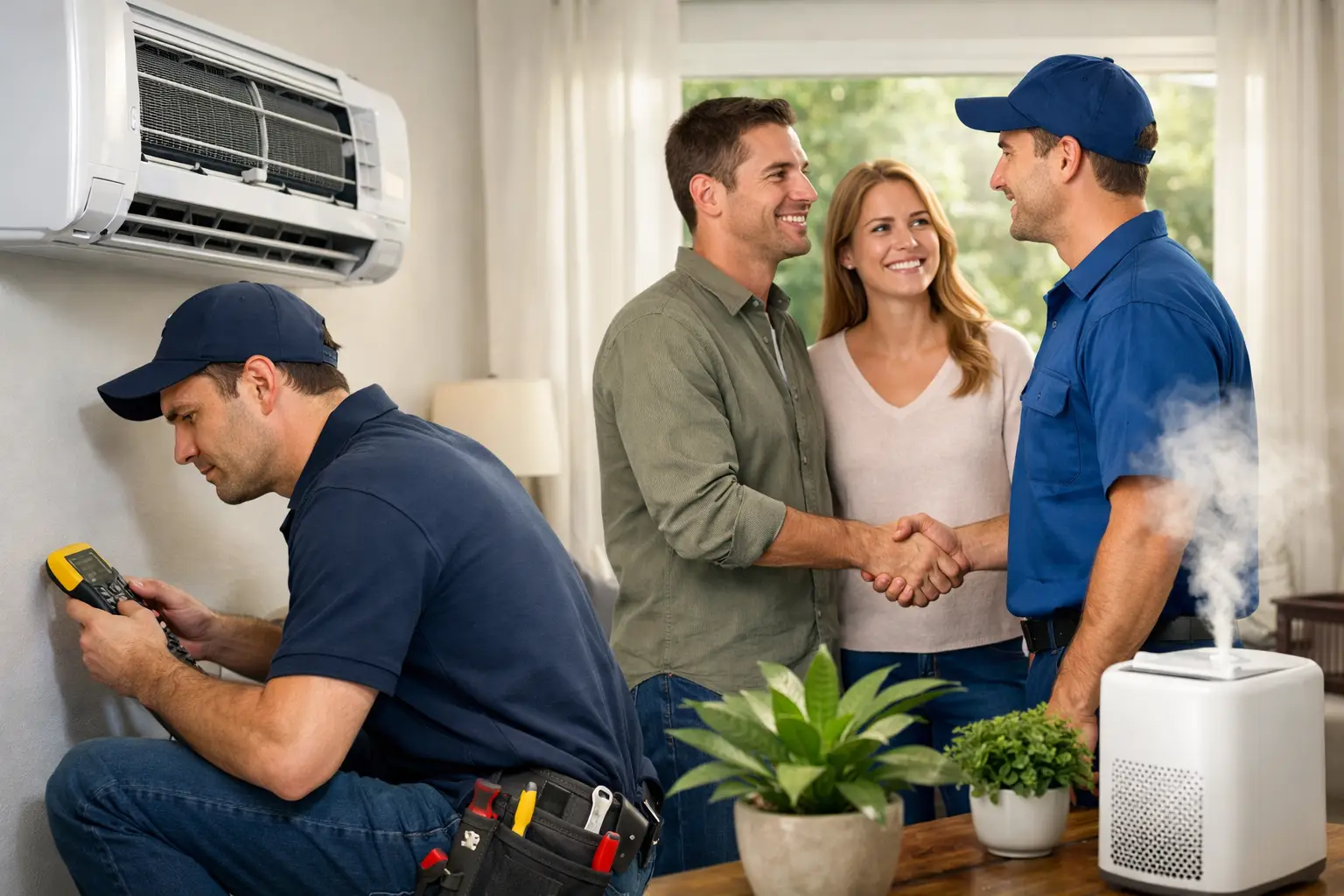
A home can look clean, smell fresh, and still have air that leaves your family coughing, congested, or uncomfortable. This indoor air quality guide is built for homeowners who want clear answers, practical next steps, and a healthier home without guessing at every product on the shelf.
Along the Mississippi Gulf Coast and in Southern Louisiana, indoor air concerns often come down to a familiar mix: high humidity, heavy AC use, pollen, moisture, pet dander, and everyday household pollutants. Your heating and cooling system can help manage those issues, but only when the system, filters, ductwork, and humidity levels are working together.
What Affects the Air Inside Your Home?
Indoor air quality is not one single problem. It is the condition of the air your family breathes day and night, including the amount of airborne particles, moisture, allergens, odors, and chemical pollutants present in your living space.
Some sources are easy to recognize. Dust buildup, pet hair, mildew smells, and a dirty filter all offer clues. Others are less obvious, such as volatile organic compounds from cleaners, paint, furniture, air fresheners, and stored chemicals. Poor ventilation can allow these pollutants to linger longer than they should.
In our climate, moisture deserves special attention. Warm, humid air can make a house feel sticky even when the thermostat is set low. It can also support mold growth in bathrooms, closets, crawl spaces, ductwork, and areas affected by roof or plumbing leaks. Air conditioning removes some moisture as it cools, but an oversized unit, a poorly maintained system, or improper airflow can leave humidity problems behind.
Signs Your Indoor Air Quality Needs Attention
You do not need a laboratory test to notice that something is off. Start with patterns in the home. If symptoms improve when family members leave the house, or if certain rooms always feel damp, dusty, or stuffy, it is worth looking closer.
Common warning signs include frequent sneezing or irritated eyes indoors, unexplained headaches, recurring musty odors, visible dust soon after cleaning, uneven temperatures, and condensation on windows or vents. A spike in allergy or asthma symptoms may also point to an air quality issue, although health symptoms can have many causes. Persistent or serious symptoms should always be discussed with a healthcare professional.
Pay attention to what happens when the HVAC system runs. A sour or musty smell at startup, weak airflow, rattling ductwork, or rooms that never seem comfortable can indicate maintenance, drainage, filtration, or duct issues. These are not problems to ignore until the next season. Small comfort issues can become bigger moisture or system problems over time.
Start With the Simple Fixes That Matter Most
The best approach is usually source control first, then filtration and ventilation. An expensive air-cleaning device will not solve a moisture problem caused by a leak, nor will a better filter compensate for a system that cannot move air properly.
Change the Filter Correctly
A clean HVAC filter is one of the simplest ways to protect both your air and your equipment. Check it monthly and replace it as needed, especially during long cooling seasons, after renovations, or in homes with pets. The right replacement schedule depends on the filter type, household activity, and how often the system runs.
Higher-rated filters can capture smaller particles, but there is a trade-off. A filter that is too restrictive for your system may reduce airflow and strain equipment. Rather than picking the highest rating available, ask an HVAC professional what filter works with your specific system and your household needs.
Keep Humidity in a Healthy Range
For most homes, indoor relative humidity around 30% to 50% is a reasonable target. On the Gulf Coast, maintaining that range can take more than simply lowering the thermostat. Your AC must be properly sized, clean, charged correctly, and able to drain condensation efficiently.
Use bathroom and kitchen exhaust fans when showering or cooking. Repair plumbing leaks quickly, and avoid drying clothes indoors unless the space is properly ventilated. A portable dehumidifier can help in a problem area, but recurring humidity throughout the house calls for a closer look at the HVAC system and building conditions.
Reduce Pollutants at Their Source
Choose unscented or low-odor cleaning products when possible, and store paints, fuels, pesticides, and harsh chemicals outside the living area. Never run vehicles, generators, grills, or fuel-burning equipment in a garage or enclosed space. Carbon monoxide is colorless and odorless, so working carbon monoxide alarms are essential in homes with gas appliances, fireplaces, or attached garages.
Vacuum regularly with equipment designed to capture fine dust, wash bedding often, and groom pets as needed. If pollen is a major issue, keeping windows closed during high-pollen periods may be more effective than airing the house out. The right choice depends on outdoor conditions and whether your home has controlled mechanical ventilation.
When Ventilation Helps – and When It Can Hurt
Fresh air sounds like an automatic solution, but humid outdoor air changes the equation in South Mississippi and Southern Louisiana. Opening windows on a mild, dry day may make a home feel better. Opening them during a hot, muggy stretch can bring in enough moisture to make indoor comfort worse and force your air conditioner to work harder.
Ventilation should be intentional. Bathroom exhaust fans should vent outdoors, not into an attic. Range hoods can reduce cooking particles and odors. Homes that are tightly sealed for efficiency may benefit from professionally designed ventilation, but the equipment should be selected for the home, climate, and existing HVAC setup.
If a room feels stale, do not assume it needs more outside air. It may have a blocked return, closed supply vents, undersized ductwork, or an imbalance in the system. Solving the actual airflow issue is more effective than masking the symptom.
Should You Add an Air Purifier or Whole-Home Solution?
Air purifiers can be useful, particularly for bedrooms, pet areas, or people sensitive to allergens. Look at the room size the unit is designed to handle and the type of particles it is rated to capture. A portable unit can improve one room, but it will not treat every space in the home.
Whole-home indoor air quality equipment may be a better fit when concerns affect the entire house. Depending on the problem, options can include upgraded media filtration, humidity control, UV treatment for certain HVAC components, or ventilation equipment. No single product is right for every home, and promises that one device will eliminate every pollutant deserve a careful second look.
A qualified technician should first evaluate the condition of your system, ductwork, drainage, airflow, and humidity. That assessment helps separate a true equipment need from a basic maintenance issue. It also helps prevent spending money on an add-on that will not address the source of the problem.
Do Your Ducts Need Cleaning?
Duct cleaning is not a routine cure-all, but it can make sense in specific situations. Visible debris around vents alone does not prove the entire duct system needs cleaning. However, professional evaluation is worthwhile after major construction, pest activity, water damage, visible mold concerns, or excessive dust that returns despite proper cleaning and filter changes.
Leaky or damaged ductwork can be just as important as dirty ducts. Duct leaks may pull dusty, humid air from attics, crawl spaces, or wall cavities into the system. They can also waste conditioned air and create uncomfortable rooms. Sealing and repairing ducts may improve comfort and efficiency while reducing the amount of unwanted air entering your home.
When to Call an HVAC Professional
Call for service when musty odors continue, humidity stays high, airflow is weak, water collects near the indoor unit, or your system struggles to maintain comfort. The same is true if you see possible mold around vents or experience repeated drain line clogs. These problems often have fixable causes, but waiting can increase the risk of water damage and costly repairs.
For homeowners in Picayune, Pass Christian, Bay St. Louis, Slidell, and Pearl River, Campo Heating & Air can inspect the HVAC conditions that affect comfort and indoor air quality. A professional visit can identify whether the answer is maintenance, drainage repair, filtration changes, ductwork service, humidity control, or a larger system correction.
The air in your home should support rest, comfort, and peace of mind. If it feels damp, dusty, stale, or difficult to breathe, trust what your home is telling you and address it before the problem has a chance to grow.
0 Comments