
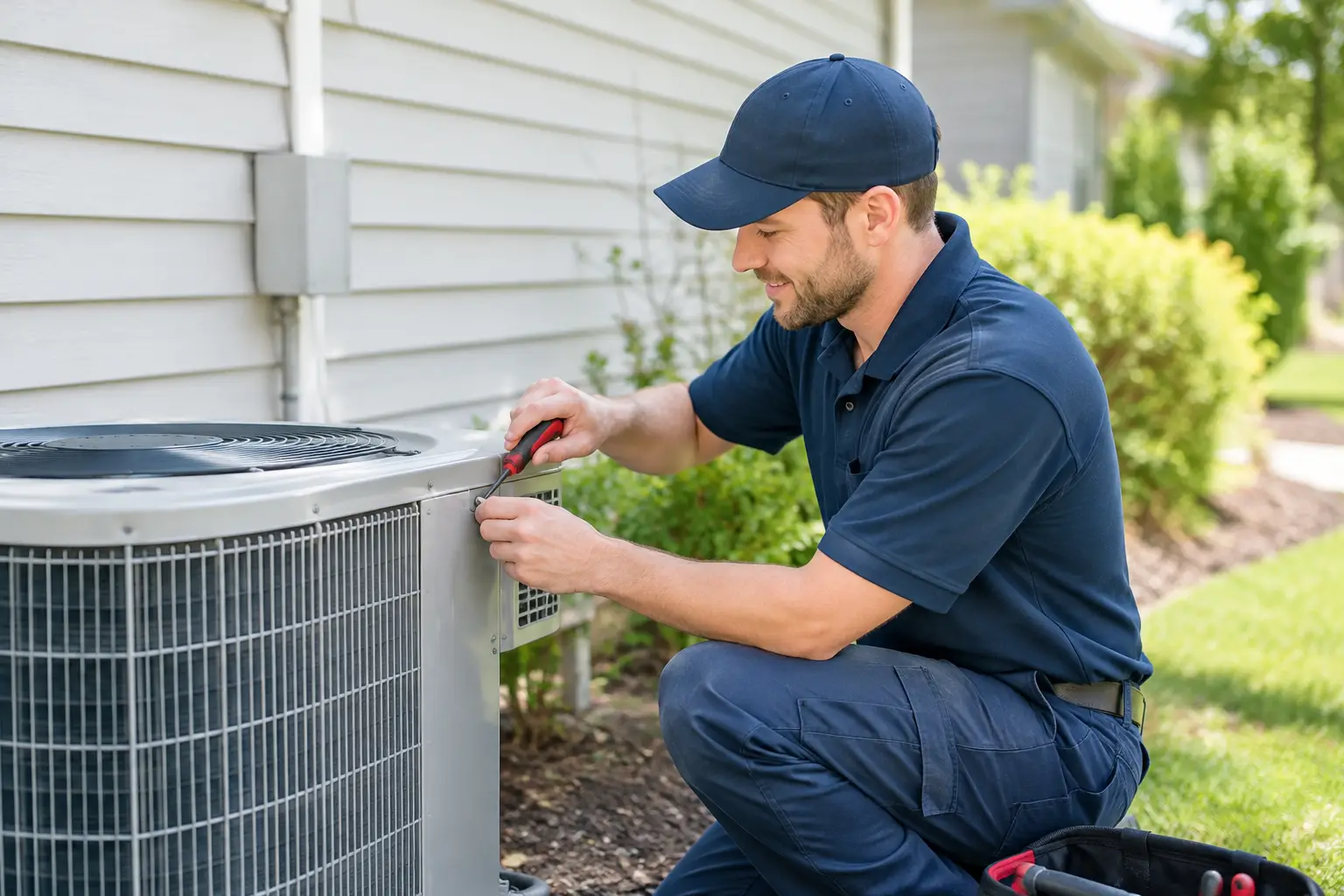
A 2,000-square-foot home can need a very different HVAC system than another 2,000-square-foot home just a few streets away. One may have shaded windows, tight insulation, and clean ductwork. The other may take full afternoon sun, have leaky ducts in the attic, and struggle with Gulf Coast humidity. If your search started with “what HVAC size needed,” the honest answer is that square footage is only the beginning.
Choosing the right size matters because an HVAC system is not simply a bigger-is-better purchase. A properly sized system should cool and heat your home evenly, manage humidity, and run efficiently without driving up utility bills or wearing itself out too soon.
What HVAC Size Is Needed for Your Home?
HVAC equipment is usually measured in tons for cooling capacity. One ton equals 12,000 BTUs of cooling per hour. Many homes in our area fall somewhere between 2 and 5 tons, but that range is not a recommendation for any specific house.
A quick rule of thumb may suggest roughly 400 to 600 square feet of living space per ton of cooling. That can be useful for a very rough starting point, not for selecting equipment. In Picayune, along the Mississippi Gulf Coast, and across nearby Southern Louisiana, heat and humidity put real demands on an air conditioner. A home with poor attic insulation or lots of sun-facing glass may need more capacity than the same-size home with energy improvements.
The only dependable way to determine system size is a professional load calculation, often called a Manual J calculation. This measures how much heating and cooling your home actually loses and gains under local conditions. It replaces guesswork with details that affect your comfort every day.
Why Square Footage Cannot Tell the Whole Story
Your home’s layout and construction can change the answer dramatically. A single-story ranch home and a two-story home may have the same square footage, yet the upstairs rooms in the two-story home can hold more heat. An open floor plan may circulate air differently than a home with long hallways and closed bedrooms.
A proper sizing visit considers the home as a complete system. That includes ceiling height, insulation levels, window size and direction, exterior doors, roof color, number of occupants, and heat-producing appliances. Even additions and converted garages can affect the calculation.
Older homes deserve especially careful attention. They may have hidden air leaks, underinsulated walls, or ducts that were sized for equipment installed decades ago. Installing a new high-efficiency unit without checking those conditions can leave you paying for an upgrade that never performs the way it should.
Humidity Changes the Equation on the Gulf Coast
In our climate, comfort is about more than the temperature on the thermostat. Humidity can make a home feel sticky at 74 degrees, while also creating conditions that contribute to musty odors and moisture concerns.
An air conditioner removes humidity during its cooling cycle. If the system is too large, it may cool the air so quickly that it shuts off before it has enough time to remove moisture. The result can be a cold but clammy house, frequent cycling, and rooms that never feel consistently comfortable.
This is one reason homeowners should be cautious about sizing based on an old system alone. If the old unit was oversized, replacing it with the same tonnage may repeat the same comfort problem.
What Happens When an HVAC System Is Too Small?
An undersized unit may run for long stretches on the hottest or coldest days and still fail to reach the set temperature. You may notice warm bedrooms, weak airflow at distant vents, or a system that seems to be working nonstop.
Long run times are not automatically bad. A correctly sized system can run steadily during severe weather. The concern is when it cannot keep up even after maintenance, filter changes, and airflow issues have been addressed. Constant operation can increase energy costs and place added strain on major components.
Before assuming the unit is too small, have a technician check the basics. A dirty coil, clogged filter, refrigerant issue, duct leak, failing blower, or thermostat problem can mimic a sizing issue. Repairing the actual problem may restore performance without requiring replacement.
What Happens When an HVAC System Is Too Large?
Oversized equipment is often mistaken for extra peace of mind. In reality, it can create expensive problems. It tends to start and stop more often, which is called short cycling. Those frequent starts can increase wear on electrical and mechanical parts.
It can also lead to uneven temperatures. Some rooms may cool fast while others remain uncomfortable, especially if ductwork cannot move the higher volume of air correctly. Most noticeably in our humid region, an oversized AC may not run long enough to control indoor moisture.
The right system is sized to meet the home’s load, not to provide the largest number on the proposal. A good recommendation should explain why a particular capacity, efficiency level, and equipment type fit your home.
Ductwork Has to Match the Equipment
Your outdoor unit and indoor equipment cannot do their jobs if the ducts are undersized, leaking, disconnected, or poorly designed. Airflow is a major part of comfort. A new system connected to old problem ducts may still leave you with noisy vents, hot spots, and high utility bills.
During an installation evaluation, ask whether your ductwork will support the proposed system. In some homes, duct sealing, repairs, added returns, or redesigning a section of ductwork makes as much difference as the new unit itself.
This is also where room-by-room needs matter. A back bedroom, enclosed porch, garage conversion, or new addition may need a separate solution rather than forcing the central system to compensate. A ductless mini-split can be a practical option for certain spaces, but it should be selected around the room’s load, not just the room’s dimensions.
A Practical Way to Plan for Replacement
If your HVAC system is aging, breaking down often, or no longer keeping up, start by writing down what you are experiencing. Mention rooms that are too hot or cold, unusually high bills, humidity concerns, noisy operation, and any recent renovations. Those details help a technician look beyond the equipment label.
During the estimate, expect measurements and questions. A trustworthy HVAC professional should assess the house, review equipment options, inspect accessible ductwork, and discuss your budget. Higher efficiency equipment can lower operating costs, but the best choice depends on your home, how long you plan to stay there, and your comfort goals.
For landlords and business owners, the same principle applies. Commercial spaces require their own load calculations based on occupancy, operating hours, equipment, lighting, and the building’s layout. Sizing from square footage alone is particularly risky when a space has changed its use.
Get an Answer Built Around Your Home
There is no single tonnage that fits every 1,500-, 2,000-, or 2,500-square-foot home. The right answer comes from evaluating the house, the ductwork, the local weather, and the comfort issues your family actually lives with.
Campo Heating & Air can help homeowners make that decision with clear recommendations, professional sizing, and options that respect the budget. The goal is not just to install equipment. It is to give your home dependable comfort through the hottest summer afternoons, the cold snaps, and every season in between.
0 Comments