
A hot dining room, a humid retail floor, or an office with uneven temperatures can affect far more than comfort. It can send customers out the door, distract employees, strain inventory, and turn a normal workday into a costly problem. This commercial HVAC service guide explains what business owners and property managers should expect from professional service, how to catch trouble early, and how routine care protects the equipment your business depends on.
Commercial heating and cooling systems work harder than most people realize. Longer operating hours, heavier foot traffic, kitchen heat, equipment loads, and Gulf Coast humidity all put extra pressure on the system. Waiting until the air conditioner stops cooling or the heater will not start usually means a more urgent repair and less control over the cost.
What Commercial HVAC Service Should Cover
Commercial HVAC service is not just a technician changing a filter and leaving. A proper visit begins with understanding what your building is experiencing: hot and cold areas, rising utility bills, unusual odors, moisture concerns, loud equipment, or repeated thermostat complaints.
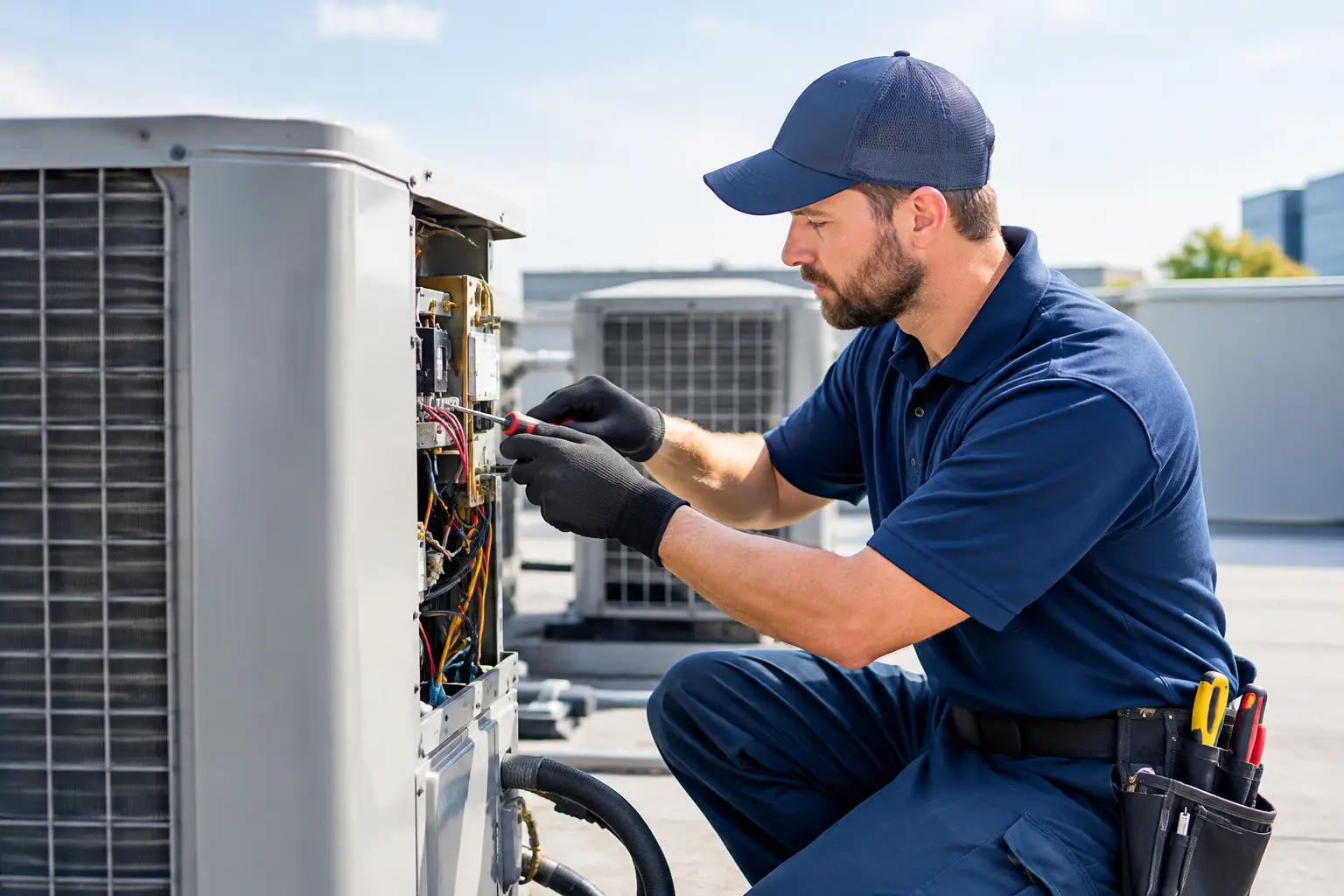
From there, the technician should inspect the condition and operation of the equipment. That often includes checking electrical connections, motors, belts, coils, condensate drains, refrigerant performance, safety controls, thermostats, airflow, and ductwork concerns. The exact scope depends on your equipment and building, but the goal is the same: find issues before they interrupt business.
A good service company should explain findings in plain language. You should know what needs attention now, what can be planned for later, and what steps may help prevent the same issue from returning. Clear recommendations matter, especially when you are balancing comfort, operating expenses, and a busy schedule.
Signs Your Business Needs HVAC Service Now
Some HVAC problems are obvious. If your system will not cool, will not heat, trips breakers, leaks water, or makes grinding or burning smells, it is time to call for service. A quick response can help protect the equipment and keep a smaller problem from becoming a shutdown.
Other warning signs are easier to overlook. Your business may need service if employees or customers regularly complain about one area being too warm or too cold, if the system runs constantly without reaching the set temperature, or if indoor humidity feels unusually high. Musty odors, weak airflow, excess dust around vents, and unexplained increases in energy bills also deserve attention.
Do not assume an older system is the only reason for poor performance. Dirty coils, clogged drains, failing capacitors, thermostat issues, duct leaks, and airflow restrictions can all create comfort problems. The right repair depends on a careful diagnosis, not a guess.
A Commercial HVAC Service Guide to Preventing Downtime
Preventive maintenance is one of the best ways to avoid an inconvenient failure during a crowded shift, a heat wave, or a cold snap. It gives technicians a chance to spot worn parts, drainage issues, dirty components, and electrical concerns before the system reaches the point of failure.
Most commercial properties benefit from scheduled maintenance at least twice a year: once before the cooling season and once before the heating season. Businesses with long operating hours, multiple units, high occupancy, kitchen operations, or sensitive inventory may need more frequent attention. There is no single schedule that fits every property.
During a maintenance visit, a technician can clean key components, test system operation, verify safe performance, and identify repairs that may be worth handling before they become urgent. Maintenance also helps protect efficiency. When coils are dirty, filters are neglected, or airflow is restricted, your equipment has to run longer to do the same job.
Your team can support that work between visits. Keep outdoor equipment clear of leaves, grass, boxes, and other obstructions. Make sure supply and return vents are not blocked by furniture, displays, or storage. Replace filters on the schedule recommended for your building and system, especially in dusty, high-traffic, or humid environments.
Repairs, Replacement, and the Right Financial Decision
When a commercial unit needs a significant repair, the question is rarely just, “Can it be fixed?” The better question is whether repair is the smartest use of your budget.
Repair often makes sense when the system has been maintained, the issue is isolated, replacement parts are available, and the equipment still delivers dependable comfort. A qualified technician should be able to explain the repair, the expected benefit, and whether there are related concerns to watch.
Replacement becomes worth considering when repairs are frequent, operating costs keep climbing, the system cannot maintain comfort, or a major component fails on equipment near the end of its expected service life. New equipment can improve efficiency and reliability, but the lowest upfront price is not always the best value. Proper sizing, installation quality, building load, duct condition, and operating needs all affect long-term performance.
For a small office or storefront, a straightforward replacement may be the practical choice. For a larger building with multiple zones, the decision may involve controls, airflow design, equipment staging, and how different parts of the property are used. Ask for options that fit your building and budget rather than accepting a one-size-fits-all recommendation.
Indoor Air Quality Matters at Work
Your HVAC system does more than heat and cool. It influences humidity, ventilation, filtration, and how fresh the indoor air feels throughout the day. In our warm, humid climate, moisture control is especially important. Too much indoor humidity can make rooms feel warmer, encourage musty odors, and create conditions that are harder on both people and property.
If your business has persistent odors, visible dust, stuffy rooms, or recurring humidity issues, the answer may involve more than a standard repair. Ductwork concerns, poor airflow balance, filtration needs, drainage problems, and ventilation limitations can all contribute. A professional evaluation can help separate the symptom from the source.
Restaurants, salons, medical offices, retail spaces, rental properties, and offices all have different air-quality demands. The right solution should reflect how the space is used, not just the size of the HVAC unit.
Choosing a Commercial HVAC Partner
When your system is down, you need a company that respects the urgency of the situation. But the best relationship starts before an emergency. Look for trained, certified technicians, clear communication, dependable scheduling, and a company that can support both repairs and ongoing maintenance.
It also helps to choose a local team that understands the demands of the Mississippi Gulf Coast and nearby Southern Louisiana communities. High heat, humidity, storms, and long cooling seasons can change how equipment performs and how quickly a minor issue becomes disruptive.
Ask how emergency calls are handled, whether maintenance plans are available, and how the company approaches repair-versus-replacement decisions. If a large repair or replacement is needed, financing options can also make it easier to protect your business without putting off necessary work.
Campo Heating & Air helps commercial customers make practical decisions with dependable service, straightforward recommendations, and responsive support when comfort cannot wait. Whether you manage a shop, office, rental property, or another local business, a trusted HVAC partner should make the next step clear.
Your heating and cooling system may stay out of sight when it is working well, but it supports every customer visit, every shift, and every productive day. Give it attention before it demands it, and you can spend more time running your business instead of reacting to an avoidable breakdown.
0 Comments