
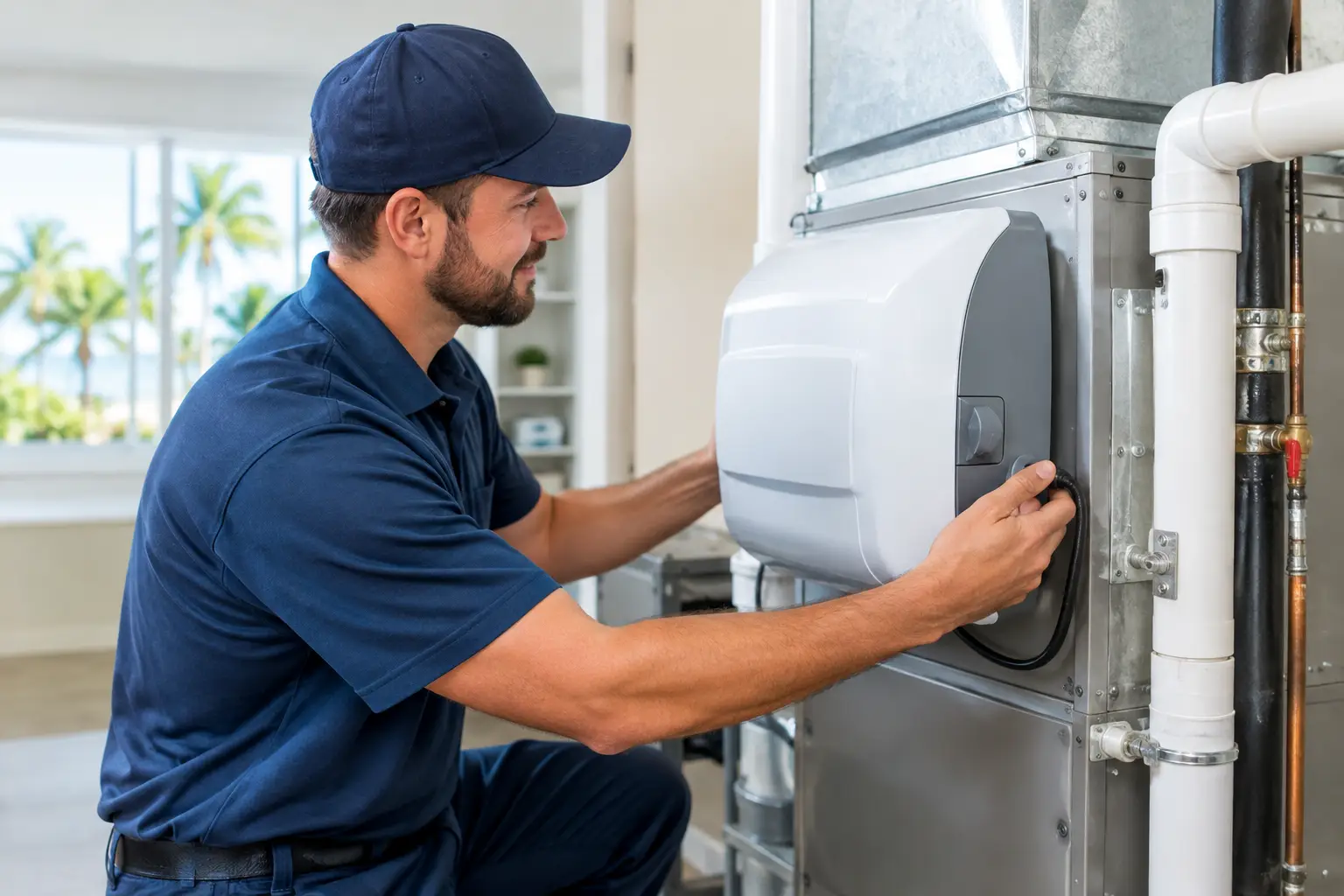
A dry throat when the heater runs, frequent static shocks, chapped skin, and wood floors that start to gap can all point to low indoor humidity. This whole home humidifier review explains what these systems do, where they make sense, and why the right setup matters more than simply adding moisture to the air.
For homeowners around Picayune, the Mississippi Gulf Coast, and nearby Southern Louisiana, humidity can feel like an outdoor problem for most of the year. That is true in summer. But when temperatures fall and your heating system runs more often, indoor air can become surprisingly dry. A properly selected humidifier can improve comfort during those cooler stretches without creating the damp conditions that encourage mold.
What a Whole-Home Humidifier Actually Does
A whole-home humidifier connects to a forced-air heating and cooling system. Rather than treating one bedroom or living room like a portable unit, it adds controlled moisture as air moves through the ductwork. The result is more even humidity throughout the house.
Most systems work with a humidistat, which monitors indoor relative humidity and tells the unit when to run. The goal is not to make the home feel muggy. It is to keep relative humidity in a comfortable, safe range, usually around 30% to 50% depending on outdoor temperatures and the condition of your home.
That control is the biggest advantage over small plug-in humidifiers. Portable models can help in a single room, but they need frequent refilling and cleaning. They can also over-humidify a tight bedroom if they run unchecked. A whole-home system is designed around the home’s HVAC equipment, square footage, and airflow.
Whole Home Humidifier Review: The Main Types
There is no single best humidifier for every home. Your HVAC system, household needs, budget, and local climate should guide the choice. A qualified technician should also confirm that your equipment and ductwork can support the installation.
Bypass Humidifiers
A bypass humidifier is often the most affordable whole-home option. It uses the furnace blower and a bypass duct to direct warm air across a water panel. That moisture is then carried into the home through the duct system.
For many families, this is a practical choice because it has a simple design and relatively low operating cost. The trade-off is that it depends on the HVAC blower running and may provide less moisture output than other options. It can be a good fit for average-size homes with standard heating equipment and moderate dry-air concerns.
Fan-Powered Humidifiers
Fan-powered units also use a water panel, but they include their own fan to move air across it. This design can deliver more humidity without requiring a bypass duct.
These systems are often useful when installation space is limited or when a home needs more output than a bypass model can provide. They generally cost more upfront and use some electricity, but they can offer stronger performance for larger homes or households that notice persistent dryness during heating season.
Steam Humidifiers
Steam humidifiers heat water to create steam, then introduce that moisture into the duct system. They are the strongest option for large homes, tightly built homes, and situations where precise humidity control is a priority.
The higher capacity comes with a higher installation and operating cost. Steam units also need proper electrical capacity, water connections, drainage, and routine service. For a home with significant dry-air problems, though, the comfort difference can be worthwhile.
When a Whole-Home System Is Worth the Cost
A central humidifier is not automatically the right answer just because someone has dry skin or a scratchy throat. Those symptoms can also come from air leaks, dirty filters, duct issues, allergies, or a heating system that is not operating correctly.
A whole-home unit is usually worth considering when dryness returns every heating season, affects multiple rooms, or causes problems beyond personal comfort. Families may notice nosebleeds, irritated sinuses, static electricity, dry furniture, shrinking wood trim, or an uncomfortable need to turn up the thermostat. Air with appropriate humidity often feels warmer than overly dry air, which may help some households feel comfortable at a reasonable thermostat setting.
It can also make sense for people who are tired of maintaining several portable units. Filling tanks, wiping them down, replacing filters, and preventing mildew gets old quickly. A professionally installed central system reduces that daily hassle, although it does not eliminate maintenance altogether.
The case is weaker if your home rarely feels dry, if you only need moisture in one room, or if indoor humidity is already elevated. On the Gulf Coast, many homes need dehumidification far more often than humidification. Adding moisture during warm, damp weather can lead to window condensation, musty odors, mold growth, and unnecessary strain on indoor air quality.
The Humidity Level Matters More Than Maximum Output
More humidity is not better. A home that stays too damp can become less comfortable and less healthy than one that is mildly dry. Excess moisture may collect on windows, inside exterior walls, and around vents. That is especially concerning in humid Southern climates, where mold and mildew can gain a foothold quickly.
A dependable installation includes a humidistat that is set for the season. When outdoor temperatures drop, the recommended indoor humidity may need to be lowered to reduce condensation risk. Homes with older windows, limited insulation, or air leaks may need more conservative settings than newer, well-sealed homes.
This is where professional guidance earns its value. The right humidifier is sized for the house, but it is also adjusted for how that house performs. A system that is too large or set too high can create the very moisture problems homeowners are trying to avoid.
Installation and Maintenance Expectations
Whole-home humidifier installation is not a typical do-it-yourself project. The equipment must connect correctly to your HVAC system, water supply, drainage, electrical components when required, and ductwork. Poor installation can cause leaks, restricted airflow, ineffective humidity control, or damage to the HVAC equipment.
Maintenance is straightforward, but it should not be ignored. Most bypass and fan-powered units need a new water panel at least once a year, often before heating season. Mineral buildup can reduce performance, particularly where water has a higher mineral content. The housing, drain line, and humidistat should also be inspected and cleaned.
Steam humidifiers may require additional cleaning because they heat water and can accumulate mineral deposits. Regular service protects the unit’s output and helps prevent avoidable repairs. Including the humidifier in annual heating maintenance is usually the easiest way to stay ahead of the work.
Questions to Ask Before You Buy
Before choosing a model, ask whether your existing furnace or air handler has enough runtime and airflow to distribute humidity effectively. Ask how much moisture output the home actually needs, where the water and drain connections will go, and what annual maintenance will cost.
You should also ask how the humidifier will be controlled. A manual humidistat can work well when adjusted seasonally, while an automatic control may respond to outdoor conditions and reduce guesswork. Neither choice is universally better. The best fit depends on your equipment, your comfort preferences, and how hands-on you want to be.
Finally, consider the age and condition of your HVAC system. If a replacement is approaching, it may be smarter to plan humidifier installation alongside the new equipment. That can simplify the work and help ensure every part of the system is designed to operate together.
If dry indoor air is making your home less comfortable during heating season, start with an HVAC and humidity assessment rather than guessing at a product. A trustworthy local technician can identify whether a whole-home humidifier, duct repair, maintenance visit, or a simpler room-by-room solution will give your family the best long-term comfort.
0 Comments