
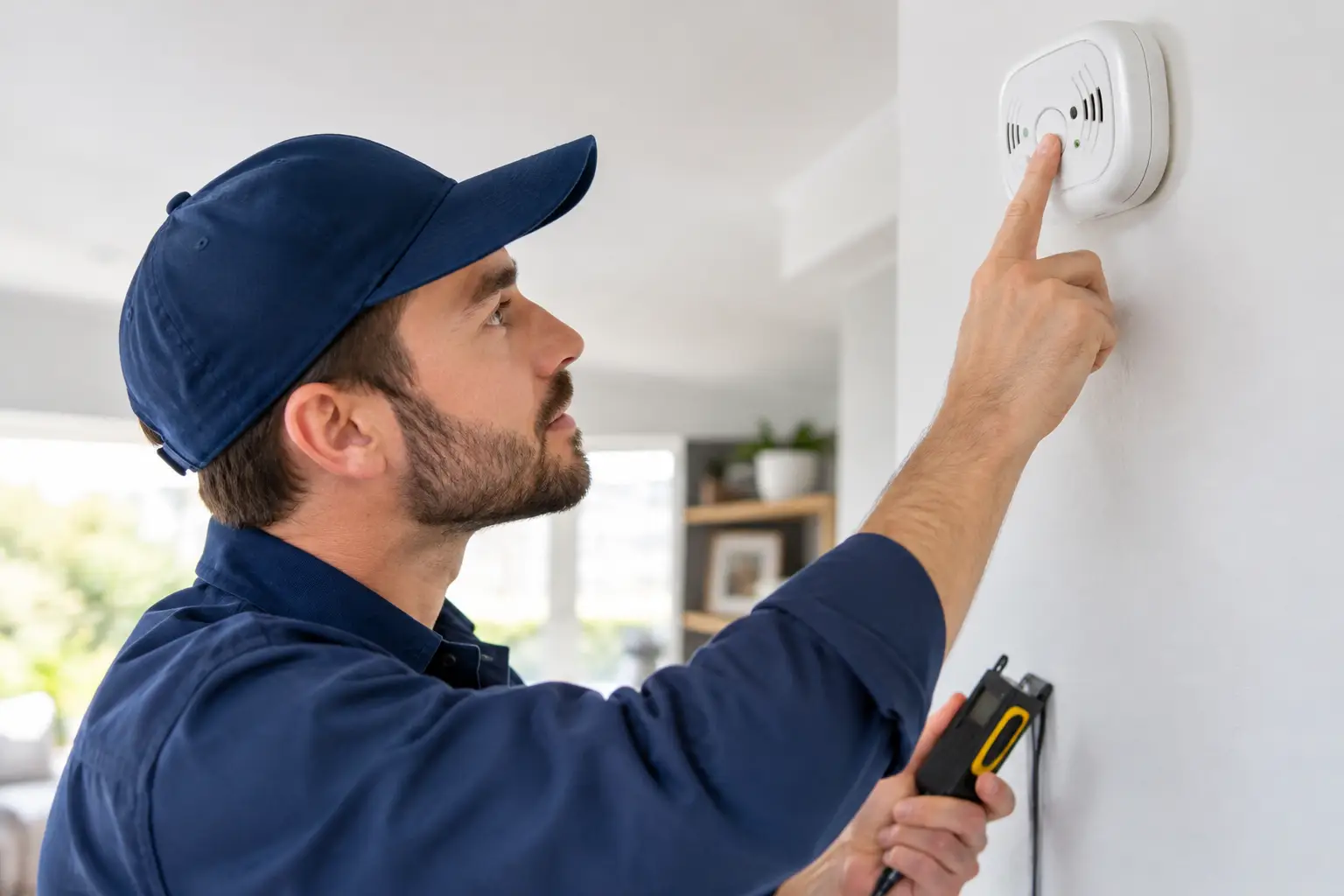
A carbon monoxide alarm is one of the few devices in your home that can warn you about a danger you cannot see or smell. Knowing how to test carbon monoxide protection correctly can make the difference between catching a problem early and facing a real emergency. The key is understanding what your alarm’s test button can confirm, what it cannot, and when your heating equipment needs professional attention.
Carbon monoxide, often called CO, is created when fuel does not burn completely. Furnaces, gas water heaters, fireplaces, generators, gas ranges, and vehicles can all produce it. A properly operating appliance vents combustion gases safely outside. A cracked heat exchanger, blocked vent, failed burner, or other equipment issue can allow carbon monoxide to build up indoors.
First, Know What an Alarm Test Actually Tests
Pressing the test button on a carbon monoxide alarm checks the unit’s power source, internal circuitry, and siren. It tells you whether the alarm can sound if it detects a problem. That is a valuable test, but it does not prove the sensor can accurately detect carbon monoxide gas.
Most manufacturers recommend testing every CO alarm once a month. Press and hold the test button until the alarm sounds. The sound should be loud and clear. If it is weak, intermittent, or silent, replace the batteries if the unit uses them. If a fresh battery does not solve the problem, replace the alarm.
Do not use a car, grill, lighter, candle, incense, or any fuel-burning appliance to create carbon monoxide for a home test. Trying to make your own CO source can put people at risk and may damage the detector. It also does not provide a controlled or reliable reading.
How to Test Carbon Monoxide Detectors at Home
A safe monthly test takes only a few minutes. Let everyone in the home know you are testing alarms first, especially children, older relatives, or anyone sensitive to loud sounds. Then press and hold the test button on each unit until it sounds.
Check every installed device, including battery-operated, plug-in, and hardwired alarms. For hardwired systems, the test should verify that interconnected alarms sound together if your system is designed that way. If only one alarm activates when all should respond, schedule service with a qualified electrician or alarm professional.
After testing, look at the alarm itself. Most units have a status light or display that indicates normal operation. Refer to the instructions printed on the device or its manual if the light is flashing an unfamiliar color or pattern. Chirping is commonly a low-battery warning, but it can also mean the device has reached the end of its service life.
Check the Expiration Date
Carbon monoxide alarms do not last forever. Many need replacement after five to 10 years, depending on the model. Find the manufacture date or replacement date on the back or side of the unit. If it is expired, replace it, even if the test button still works. The button can confirm that the horn works while the sensing component has become less reliable with age.
Use a Sensor-Test Product Only If Approved
Some manufacturers approve specific carbon monoxide test sprays or kits for checking the sensor itself. If you choose this option, use only a product that is clearly compatible with your alarm model and follow every instruction exactly. A sensor test is optional for most homeowners, but it can offer additional reassurance when done properly.
When in doubt, replace an old alarm rather than relying on a questionable test result. Carbon monoxide detectors are a relatively small investment compared with the protection they provide.
Place Detectors Where They Can Protect Your Family
Testing is only helpful when alarms are installed in the right locations. Carbon monoxide alarms should be installed on every level of the home, including the basement, and outside sleeping areas. Larger homes may need additional units so an alarm can be heard clearly from every bedroom.
Follow the placement instructions for your specific model. In general, avoid putting alarms right next to fuel-burning appliances, directly beside bathrooms with steam, or in spots with strong drafts from windows, doors, supply vents, or ceiling fans. These conditions can interfere with performance or cause nuisance alerts.
If anyone in your household sleeps with a bedroom door closed, consider an alarm inside the room if permitted by the manufacturer’s instructions and local requirements. Families with young children, older adults, or people who use medical equipment should be especially careful that the alarm can be heard at night.
A Detector Test Is Not a Furnace Safety Test
Your detector is the last line of warning. Your HVAC system should be inspected well before an alarm ever has a reason to sound.
A professional carbon monoxide and heating-system inspection involves more than checking a detector. A trained technician can use calibrated combustion-analysis equipment to measure CO levels around the appliance and in its exhaust. They can inspect the venting system, burner operation, gas connections, flame pattern, draft, heat exchanger, and safety controls.
This matters most before and during heating season, when furnaces and other fuel-burning equipment are working harder. Routine maintenance can identify issues such as dirty burners, restricted vents, loose flue connections, or failing components before they become a comfort or safety concern.
For homeowners in Picayune and nearby Gulf Coast communities, damp weather and storm-related debris can also affect outdoor vent terminations. A blocked or damaged vent is not always obvious from inside the home, which is one more reason to have heating equipment checked by a professional.
Warning Signs That Call for Professional Service
A carbon monoxide alarm may be the first warning, but it is not the only sign that something needs attention. Call for HVAC service if your furnace frequently shuts down, produces unusual odors, has a yellow or flickering burner flame when it should be blue, or leaves soot-like marks near the equipment or vents.
Other signs include excessive window condensation, stale or stuffy indoor air, unexplained headaches that improve when you leave the house, or a pilot light that will not stay lit. These symptoms do not always mean carbon monoxide is present, but they should never be ignored around combustion equipment.
Never try to repair a gas furnace, vent pipe, or heat exchanger yourself. A quick adjustment made without proper testing can create a more serious risk. A qualified technician should diagnose the source, make the repair, and verify safe operation with the right instruments.
What to Do If Your CO Alarm Sounds
Treat a carbon monoxide alarm as an emergency. Do not assume it is a false alarm simply because no one smells smoke or gas. Carbon monoxide has no odor.
Get everyone outside into fresh air immediately, including pets. Once you are safely outside, call 911 or your local fire department and follow their instructions. If anyone has a headache, dizziness, nausea, confusion, chest pain, weakness, or loss of consciousness, seek emergency medical care right away.
Do not reenter the home to open windows, silence the alarm, or gather belongings. Do not restart the furnace or other fuel-burning appliances until emergency responders or a qualified professional says it is safe. Resetting the alarm without finding the cause can leave your family exposed to the same hazard.
After the immediate danger is addressed, have the suspected equipment inspected before using it again. Campo Heating & Air can help homeowners identify heating and venting problems and make sure their system is operating as it should.
Keep Carbon Monoxide Protection Part of Home Care
Add detector testing to the same monthly routine as checking smoke alarms, changing HVAC filters when needed, or reviewing household emergency supplies. Mark the test date on a calendar or set a recurring phone reminder so it does not get overlooked.
The safest home is not the one that waits for an alarm. It is the one where detectors are tested, aging units are replaced, and heating equipment receives dependable care before a small concern becomes an emergency.
0 Comments