
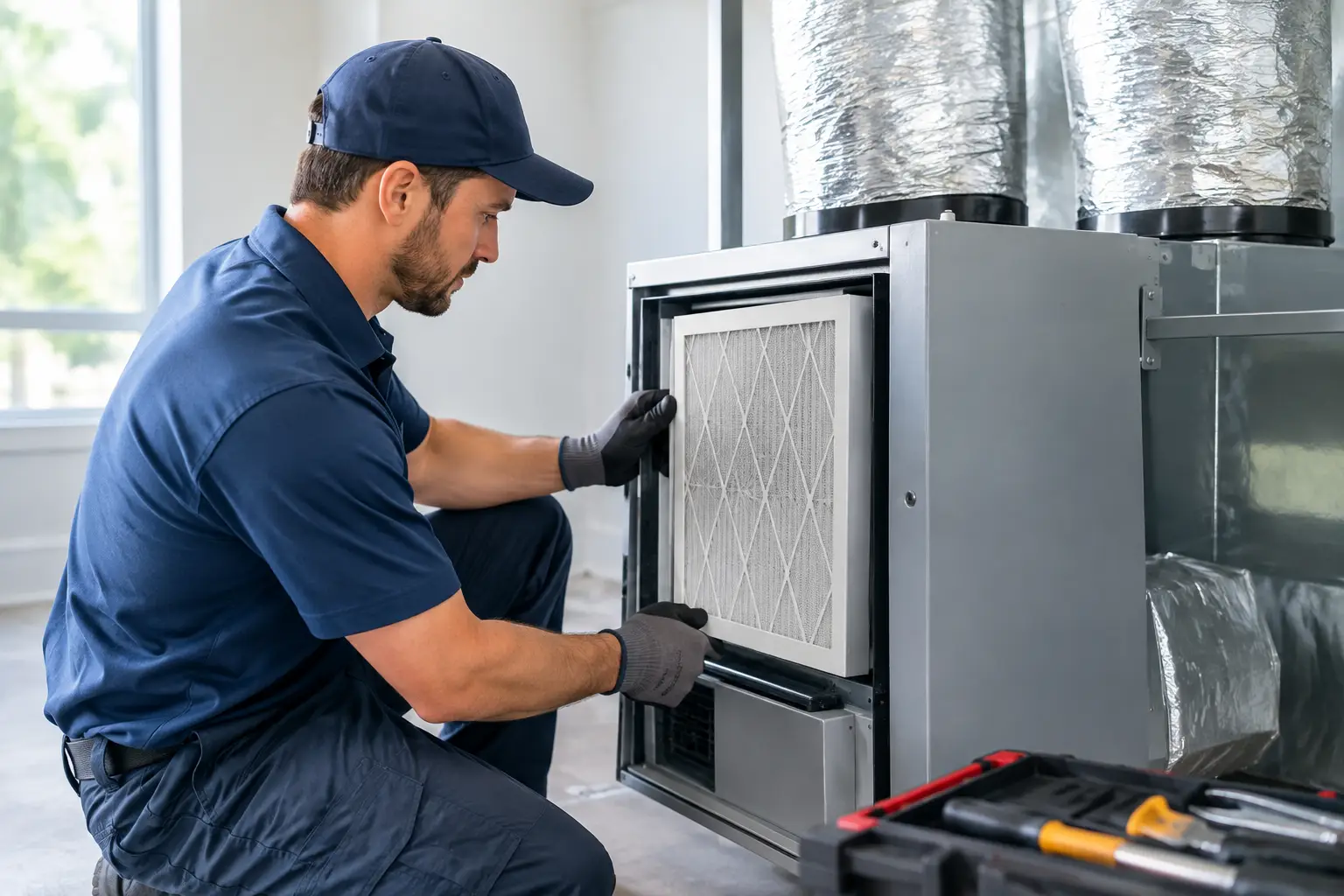
When your home smells musty after a humid Gulf Coast week, dust seems to return the day after cleaning, or allergies flare up whenever the AC starts, better filtration alone may not solve the problem. This air scrubber installation guide explains what a whole-home air scrubber does, where it belongs, and why correct HVAC installation matters to your comfort and peace of mind.
An air scrubber is not a magic fix for every indoor air concern. It can be a valuable part of an indoor air quality plan, but the right results depend on the equipment, your home’s ductwork, and the condition of your heating and cooling system.
Start by Choosing the Right Type of Air Scrubber
The term “air scrubber” can describe several different products. Portable units sit in a room and plug into a wall outlet. They are often used during renovation projects, water damage cleanup, or temporary odor control. Whole-home air scrubbers are installed as part of the HVAC system so treated air moves through the home’s ductwork whenever the system operates.
For most homeowners looking for ongoing help with airborne particles, odors, and everyday indoor air quality, a whole-home system is the more practical choice. It treats the air circulating through multiple rooms instead of focusing on one area.
The technology matters, too. Some systems use enhanced filtration, some use UV light, and others use ionization or similar air-cleaning methods. Each option has limits. A technician should help you select equipment that is properly rated for your system and is designed to operate safely in an occupied home. Avoid choosing a unit based only on broad claims about “purifying” the air.
If there is visible mold, major water damage, smoke contamination, a pest issue, or a strong chemical odor, address the source first. An air scrubber can support cleaner air, but it cannot replace moisture control, professional remediation, duct repair, or a proper cleaning plan.
Why Whole-Home Installation Is Usually a Professional Job
A whole-home air scrubber is commonly mounted in or near the supply plenum, which is the section of ductwork that sends conditioned air from your HVAC system into the house. Placement is not arbitrary. The unit needs sufficient airflow, a secure mounting surface, appropriate electrical connections, and access for future service.
An installer also needs to protect the furnace, air handler, evaporator coil, and duct system. Cutting into ductwork in the wrong place can create air leaks, reduce system efficiency, or interfere with airflow. A poorly sealed opening may pull dusty attic, crawlspace, or garage air into the system, working against the reason you installed an air-quality product in the first place.
Electrical work is another concern. Many whole-home units require a dedicated low-voltage connection or a properly protected line-voltage connection. Improvised wiring can create safety risks and may affect the manufacturer’s warranty. If the equipment includes UV components, exposure to the light and safe servicing procedures also need to be considered.
For these reasons, an air scrubber installation is best handled by a trained HVAC professional rather than treated as a quick weekend project.
What Happens During an Air Scrubber Installation
A dependable installation starts with a look at the HVAC system, not just the product box. The technician should confirm the system’s size, layout, airflow condition, filter setup, and available installation space. If the blower is already struggling because of a clogged filter, dirty coil, undersized return, or leaking ducts, those issues deserve attention before adding new equipment.
1. Inspect the system and indoor air concerns
Your technician should ask what you are noticing in the home. Persistent odors, excess dust, pet dander, humidity, allergy symptoms, and rooms with poor airflow can point to different solutions. An air scrubber may be part of the answer, but duct cleaning, filtration upgrades, humidity control, or HVAC repair could be more urgent.
This inspection is also the time to check the system’s existing filter. A high-efficiency filter can help capture fine particles, but using a filter that is too restrictive for the equipment may reduce airflow. The goal is cleaner air without forcing your HVAC system to work harder than it should.
2. Select the installation location
For a ducted central system, the installer typically chooses a location in the supply-side ductwork or air handler cabinet based on the manufacturer’s requirements. The equipment must be positioned where it can treat moving air without blocking access panels, wires, drains, or serviceable HVAC components.
A good location also makes maintenance easier. If a bulb, cell, or internal component needs replacement later, no one should have to dismantle major duct sections just to reach it.
3. Mount, seal, and connect the unit
After marking the location, the technician creates the opening, mounts the unit securely, and seals the connection to prevent leakage. Any seams should be properly sealed with approved materials rather than ordinary cloth duct tape, which often fails in hot, humid conditions.
The electrical connection is completed according to local code and the equipment manufacturer’s instructions. Depending on the model, the unit may operate whenever the HVAC blower runs or use its own control strategy. Your installer should explain how it turns on, what indicator lights mean, and what normal operation looks like.
4. Test airflow and verify operation
Installation is not complete when the unit powers up. The technician should verify that the HVAC system is still moving air correctly, that panels are secure, and that the new equipment is functioning as intended. They should also make sure no wiring, insulation, or ductwork was disturbed during the work.
This final check protects both comfort and equipment life. Restricted airflow can lead to uneven temperatures, higher energy use, frozen AC coils, or unnecessary wear on the blower motor.
Air Scrubber Installation Guide: Questions to Ask First
Before approving an installation, ask what the recommended unit is designed to address in your home. A clear answer should be specific, not vague. You should also ask whether the system will need replacement parts, how often they are needed, and what those parts typically cost.
It is smart to ask about maintenance, warranty coverage, and whether the installation will affect your existing HVAC warranty. If someone recommends an air scrubber without inspecting your ductwork, filter, and system condition, request a more complete evaluation.
For homeowners with asthma, severe allergies, or other respiratory concerns, speak with a healthcare professional about your family’s needs. HVAC equipment can improve air management, but it is not medical treatment.
Maintenance That Keeps the System Working
Most whole-home air scrubbers need periodic attention. The schedule depends on the model, runtime, household conditions, and whether the system uses a replaceable UV lamp, cell, or filter. Your technician can provide the manufacturer’s recommended interval and add reminders to your HVAC maintenance plan.
Continue changing your central HVAC filter on schedule. A clean filter supports airflow and helps prevent the dust buildup that can reduce overall system performance. During routine maintenance, have the technician inspect the air scrubber, clean around the installation area, and confirm that all components are operating correctly.
If you notice a new odor, unusual noise, a warning light, or a drop in airflow after installation, call for service rather than disabling or disassembling the unit yourself.
When an Air Scrubber Makes the Most Sense
An air scrubber can be a worthwhile upgrade for homes with pets, frequent cooking odors, high dust levels, seasonal allergy concerns, or a history of musty indoor air. It can also help property owners who want an additional layer of air treatment between maintenance visits.
Still, it depends on the home. In a house with damaged ducts, ongoing moisture intrusion, or an aging system that cannot maintain airflow, repairs may offer a better first return on your investment. The best recommendation starts with an honest assessment of the whole system, not a one-size-fits-all product pitch.
For homeowners in Picayune and nearby communities, Campo Heating & Air can evaluate your HVAC system, explain your air-quality options in plain language, and install the right solution with care. A comfortable home should feel like a place where your family can breathe easier, not another problem waiting for your attention.
0 Comments