
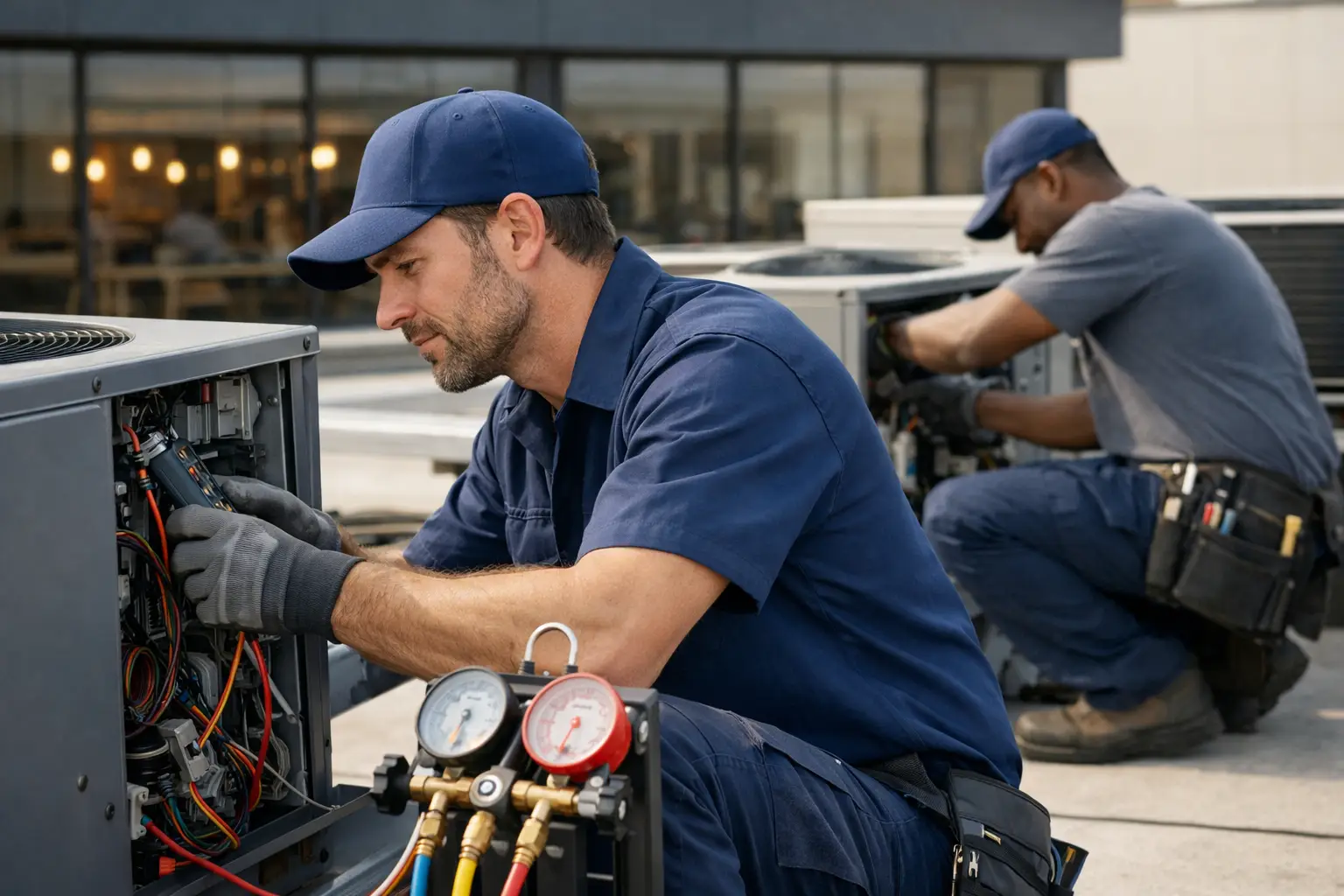
A failed rooftop unit at 10 a.m. can turn a normal workday into a problem that touches everything – staff comfort, customer experience, inventory, and even revenue. That is why commercial hvac repair is not just about fixing hot or cold air. It is about keeping your business running without unnecessary disruption.
For small and mid-sized businesses, HVAC problems rarely show up at a convenient time. A restaurant notices the dining room getting warm before lunch rush. An office manager starts getting complaints about one wing feeling stuffy while another feels freezing. A retail space hears a loud rattle from the system right as customers walk in. In each case, the issue is bigger than temperature. It affects the people inside the building and the way the business operates.
Why commercial HVAC repair matters more in business settings
Commercial systems work harder than most people realize. They often run longer hours, serve larger spaces, and handle higher occupancy loads than residential equipment. They may also support specialized needs, whether that means server rooms, kitchen areas, waiting rooms, or spaces with strict ventilation requirements.
That changes the stakes when something goes wrong. At home, an HVAC issue is frustrating. In a business, it can interrupt employees, create a poor impression for customers, and put sensitive products or equipment at risk. The longer the issue lingers, the more expensive it can become.
There is also the complexity factor. Commercial systems may involve multiple zones, thermostats, duct runs, rooftop units, split systems, packaged equipment, or controls that need to work together. A quick patch may get air moving again, but if the real cause is missed, the same problem often returns. That is why good commercial HVAC repair starts with proper diagnosis, not guesswork.
Signs you may need commercial HVAC repair
Some failures are obvious. The system stops cooling, stops heating, or will not turn on at all. Other warning signs are easier to miss, especially when business is busy and comfort complaints get brushed aside for too long.
If some rooms stay comfortable while others never do, there may be an airflow, zoning, duct, or control problem. If energy bills rise without a clear reason, the system may be working harder than it should because of worn components or neglected maintenance. Strange odors, unusual noises, short cycling, weak airflow, or excess humidity are also signs that something is off.
In commercial buildings, small issues tend to spread. A failing blower motor can strain the system. A refrigerant issue can reduce cooling and increase wear. A clogged drain can lead to water problems around the unit. The sooner a technician sees the system, the better the chance of keeping the repair smaller and less disruptive.
What a good commercial HVAC repair visit should include
Business owners and property managers deserve more than a vague answer and a large invoice. A strong repair visit should begin with listening. What changed? When did the problem start? Is it happening all day or only at certain times? Are certain zones affected more than others?
From there, the technician should inspect the system thoroughly and explain the issue in clear language. That matters because commercial HVAC decisions often involve budgets, approvals, tenants, staff, or operating schedules. You need to know what failed, what caused it, and whether the repair is expected to solve the full issue or simply buy some time.
A dependable provider will also talk honestly about trade-offs. Sometimes repair is clearly the right move. Other times, an older system may need an expensive part while showing signs of broader wear. In that case, it may make more sense to repair now and plan for replacement soon, or compare the repair cost against the long-term operating cost of hanging onto aging equipment.
Repair or replace? It depends on the bigger picture
This is one of the most common commercial questions, and there is no one-size-fits-all answer. If the system is relatively new and the issue is isolated, repair is usually the practical choice. If the equipment has been reliable and the cost is reasonable, there is no need to overcomplicate it.
But age matters. Frequent breakdowns matter. Rising utility costs matter. So does the impact on your business if the same system keeps failing during peak demand. A lower repair bill is not always the cheaper decision if it leads to repeated service calls and more downtime.
For some businesses, a strategic repair can help stretch the life of the system while budgeting for replacement. For others, especially when comfort complaints are constant or parts are failing one after another, replacement may offer more stability and lower operating costs. The right answer depends on the equipment condition, the urgency of the problem, and how critical indoor comfort is to daily operations.
Commercial HVAC repair and downtime prevention
The best repair is the one that prevents a closure, a customer complaint, or a lost workday. That is why response time matters so much in commercial service. When a system fails in the middle of a Mississippi heat wave or during a cold snap, waiting days for help is not a real option.
Fast service does not mean rushed service, though. It means showing up prepared, identifying the issue quickly, and helping the customer make a sound decision. In markets like Picayune, Gulfport, Biloxi, and nearby communities, many businesses rely on local service companies because they want a team that understands the climate, the workload these systems face, and the value of showing up when promised.
Preventing downtime also means thinking beyond emergency calls. If your system has already had one or two warning signs, scheduling service before a total breakdown is often the smartest move. Emergency repair will always have its place, but planned repair usually gives you more control over timing, cost, and disruption.
Why maintenance changes the repair conversation
Most commercial HVAC repairs do not happen in a vacuum. They happen after months or years of strain, dirt buildup, worn parts, or skipped tune-ups. Maintenance cannot prevent every issue, but it can catch many of them early.
Routine service helps identify loose electrical connections, dirty coils, blocked drains, low refrigerant, worn belts, failing capacitors, and airflow restrictions before they become larger problems. That means fewer surprise breakdowns and better performance from the system you already have.
It also makes repair decisions easier. When equipment has been maintained properly, technicians have a clearer picture of its condition. Business owners have better records. And when a repair is needed, it is easier to judge whether the issue is a one-time fix or part of a pattern.
For budget-conscious businesses, that matters. Preventive care is not about spending money for the sake of it. It is about avoiding higher costs later, especially when lost productivity and emergency service are part of the equation.
Choosing a commercial HVAC repair company
Not every HVAC company approaches commercial work the same way. You want a team that respects the business side of the problem, not just the equipment side. That means clear communication, honest recommendations, dependable scheduling, and the ability to work around your operating hours when possible.
It also helps to choose a company that understands long-term service relationships. One repair call may solve today’s problem, but what most businesses really want is peace of mind. They want to know who to call when the unit makes a strange sound, when a tenant complains, or when the building starts feeling uneven again.
That is where a local, service-first company can make a real difference. Campo Heating & Air is built around that kind of relationship – dependable help, practical solutions, and the belief that comfort is something you protect over time, not just when something breaks.
When to call for commercial HVAC repair
If your business is dealing with weak airflow, uneven temperatures, rising utility costs, loud system noises, water around the unit, poor humidity control, or a complete loss of heating or cooling, it is time to bring in a professional. Waiting often turns a manageable repair into a larger interruption.
You do not need to have the problem fully figured out before making the call. A good HVAC partner will help you sort through what is urgent, what can be scheduled, and what options make the most sense for your building and budget.
Comfort affects more than the thermostat reading on the wall. It shapes how your employees work, how customers feel, and how smoothly your day goes. When your system starts telling you something is wrong, listening early is one of the best business decisions you can make.
0 Comments