
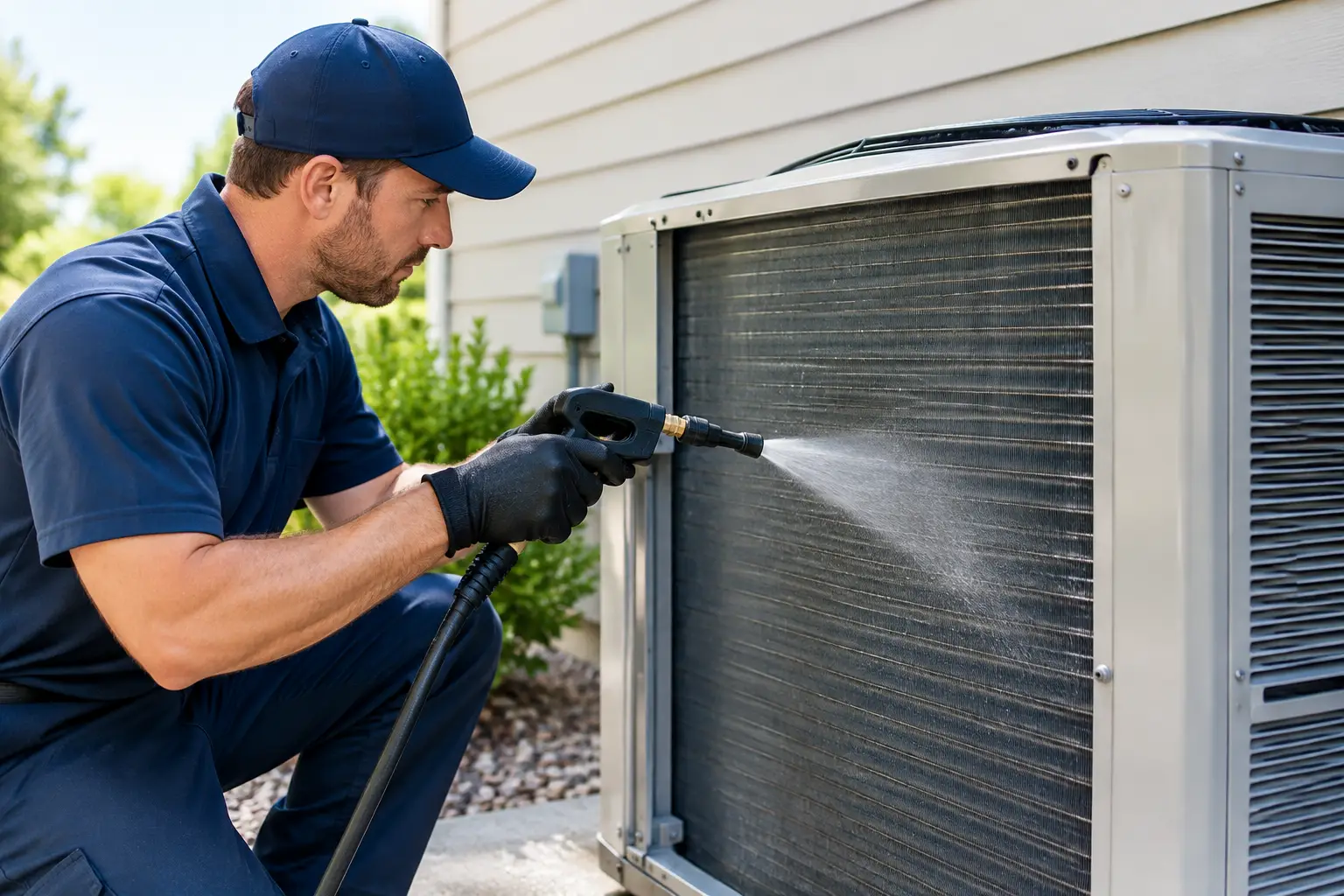
When your air conditioner runs all afternoon but the house still feels sticky or unevenly cooled, the problem may be sitting outside. Condenser coil cleaning removes the dirt, grass clippings, pollen, and debris that collect on your outdoor AC unit and make it work harder than it should. Along the Mississippi Gulf Coast and in Southern Louisiana, long cooling seasons, humidity, salt air, and heavy pollen can turn a small buildup into a real comfort problem.
Your condenser is built to release heat from inside your home. When its coil is coated with debris, that heat cannot escape as easily. The system may run longer, use more electricity, and experience added wear during the hottest days of the year. A clean coil is not a cure-all for every AC issue, but it is one of the most practical parts of keeping a system dependable.
What the Outdoor Condenser Coil Does
The outdoor unit is often called the condenser. Inside it is a network of thin metal fins and tubing called the condenser coil. Refrigerant carries heat from your indoor air to this coil, where the system releases that heat outdoors.
For that process to work, air has to move freely across the coil. A layer of dust or matted grass acts like insulation. The unit can still run, but it has to run longer to do the same job. That extra strain can contribute to poor cooling, higher utility bills, and unnecessary stress on components such as the compressor.
This is why a condenser coil should not be treated as an out-of-sight, out-of-mind part of the system. It is one of the places where regular maintenance can protect comfort and help prevent a midsummer breakdown.
Signs You May Need Condenser Coil Cleaning
A dirty coil does not always announce itself with one obvious symptom. Many homeowners first notice a change in how their home feels. The AC may seem to run nearly nonstop, rooms farthest from the thermostat may stay warm, or the air coming from the vents may not feel as cool as usual.
You may also see a higher electric bill without a clear change in household use. If you look at the outdoor unit, visible lint, leaves, grass, mud, or cottonwood-like fluff on the exterior fins are good reasons to have it checked. Landscaping that has grown too close to the unit can create the same airflow restriction.
These signs can also point to other issues, including a clogged air filter, low refrigerant, duct leaks, thermostat concerns, or a failing part. That is why a professional inspection matters. Cleaning a coil is valuable when it is needed, but guessing at the cause of an AC problem can delay the repair that actually restores your comfort.
Why Gulf Coast Conditions Can Make Buildup Worse
Our local weather gives an outdoor condenser plenty to handle. Spring pollen, frequent rain, lawn debris, high humidity, and long stretches of hot weather all contribute to coil buildup. Homes near the coast can also deal with airborne salt and moisture that may accelerate corrosion over time.
The unit does not have to look completely blocked to lose efficiency. Fine dirt can settle deeper between the fins, where a quick rinse may not remove it. Commercial systems may collect even more debris when they are located near parking areas, kitchens, dryer vents, landscaping, or high-traffic walkways.
What Professional Coil Cleaning Includes
Proper condenser coil cleaning is more than spraying the unit with a garden hose. A trained technician first checks the equipment for obvious damage, loose wiring, worn components, drainage concerns, and airflow restrictions. The power is shut off before work begins.
The technician clears debris from around the unit and carefully removes surface buildup without crushing the delicate aluminum fins. Depending on the condition of the coil, professional equipment and an HVAC-approved cleaner may be used to lift embedded dirt and residue. The coil is then rinsed in a controlled way, and the area is checked for proper airflow.
During a maintenance visit, the technician can also inspect electrical connections, capacitors, refrigerant performance, the condensate system, and the indoor air filter. That broader view is useful because a clean outdoor coil will not correct a weak capacitor, a refrigerant leak, or restricted airflow inside the home.
At Campo Heating & Air, the goal is not to sell a service you do not need. It is to identify what is affecting your system, explain the options clearly, and help you make a practical decision for your home or business.
Can You Clean a Condenser Coil Yourself?
Homeowners can safely handle a few basic tasks. Turn the thermostat off, switch off power to the outdoor unit if you can do so safely, and remove leaves, sticks, and loose grass from around the cabinet. Keep shrubs, fencing, and stored items away from the unit so it has room to breathe. Replacing a dirty indoor air filter on schedule is another simple step that supports overall system airflow.
Deep cleaning is different. Condenser fins bend easily, and bent fins restrict airflow. A pressure washer can flatten them quickly. The wrong chemical cleaner can damage coil materials, surrounding surfaces, or landscaping. Water directed into electrical components can create another problem altogether.
If the coil is heavily soiled, oily, corroded, or difficult to access, professional service is the safer choice. The same goes for a unit that is freezing up, tripping breakers, making unusual noises, or failing to cool. Those symptoms need diagnosis, not just cleaning.
How Often Should a Condenser Coil Be Cleaned?
For many homes, checking and servicing the condenser coil once a year as part of AC maintenance is a sensible starting point. In areas with heavy pollen, frequent mowing, pets, coastal exposure, or nearby construction, the system may need attention more often. A business with equipment exposed to parking-lot dust or restaurant grease may also need a more frequent schedule.
There is no single calendar rule that fits every property. What matters is the condition of the equipment, how hard it runs, and its surroundings. A maintenance plan helps catch buildup early instead of waiting until your AC is struggling on the hottest week of the year.
Small Steps That Help Keep the Coil Cleaner
Between professional visits, give the outdoor unit some breathing room. Keep at least two feet of clear space around it when possible, and do not stack garden tools, trash cans, or outdoor furniture against the cabinet. Direct lawn clippings away from the unit when mowing.
After a storm, take a quick look for branches or leaves that may have gathered around the base. Avoid covering the unit tightly during the cooling season. If you use a cover in the off-season, use one designed for HVAC equipment and remove it before operation.
These small habits do not replace maintenance, but they reduce the debris that has a chance to settle into the coil.
Do Not Wait for a Breakdown to Check Your AC
A clean condenser coil helps your air conditioner release heat the way it was designed to, but preventive care is really about peace of mind. It gives you a chance to address small concerns before they become an expensive repair or an uncomfortable night without cooling.
If your system is running longer than usual, cooling unevenly, or showing signs of outdoor debris buildup, scheduling a professional check can bring clarity quickly. A well-maintained AC is easier to trust when summer heat settles in and your family needs comfort most.
0 Comments