
That thin layer of dust on your coffee table is more than a housekeeping annoyance. It can include pollen, pet dander, fabric fibers, outdoor dirt, skin cells, and other particles that make a home feel less fresh. Learning how to reduce indoor dust means addressing where it comes from, how it moves through your home, and where it settles.
For families along the Mississippi Gulf Coast and in Southern Louisiana, humid weather, frequent AC use, pets, and seasonal pollen can all add to the problem. You may not be able to eliminate dust completely, but a few consistent habits can make a noticeable difference in your comfort and indoor air quality.
Start With the Places Dust Enters
Dust often starts outside. Every time someone comes in through the front door, garage, or back door, shoes can carry dirt, pollen, and fine debris indoors. Place sturdy mats outside and inside your main entrances, and shake or vacuum them regularly. Asking family members and guests to remove their shoes indoors can reduce how much debris gets tracked across floors.
Windows and doors deserve a quick check, too. Worn weatherstripping, damaged screens, and gaps around frames allow more outdoor particles inside. In our area, that can mean a surprising amount of pollen and damp outdoor debris during much of the year. Sealing obvious gaps helps with dust control and may improve heating and cooling efficiency as well.
Clean in an Order That Keeps Dust From Moving Around
The way you clean matters as much as how often you clean. If you vacuum first and dust afterward, particles from shelves and furniture can fall onto the floor you just cleaned. Work from top to bottom instead. Dust ceiling fan blades, vents, shelves, blinds, and furniture before cleaning floors.
A dry feather duster may move particles into the air rather than remove them. Use a slightly damp microfiber cloth for hard surfaces, then rinse or wash it after use. Microfiber traps fine particles far better than an old T-shirt or paper towel.
Vacuum carpets, rugs, upholstered furniture, and pet areas at least once a week. Homes with shedding pets, children, or heavy foot traffic may need attention two or three times weekly. A vacuum with a sealed system and a high-efficiency filter is a worthwhile upgrade if dust is a recurring concern. Be sure to empty the canister or replace bags outside when possible so you do not release collected dust back into the house.
Wash the Fabrics That Hold Onto Dust
Soft surfaces quietly collect a lot of dust. Curtains, bedding, throw blankets, pillows, rugs, and upholstered furniture all trap fibers and allergens over time. Wash sheets weekly in the warmest water recommended on the care label, and wash blankets and comforters on a regular schedule.
Curtains can often be vacuumed with an upholstery attachment between washes. If they are difficult to remove or clean, consider washable curtains or blinds that can be wiped down more easily. Area rugs should be vacuumed regularly and professionally cleaned when they begin to hold odors or look dull.
Pet beds deserve special attention. Their fabric can collect hair, dander, and tracked-in dirt quickly. Washing pet bedding weekly can help reduce dust in the rooms where your pets spend the most time.
How to Reduce Indoor Dust With Better HVAC Care
Your HVAC system has a major effect on the air circulating through your home. When the system runs, it can either help capture particles or spread dust through rooms if filters, ducts, or equipment are neglected.
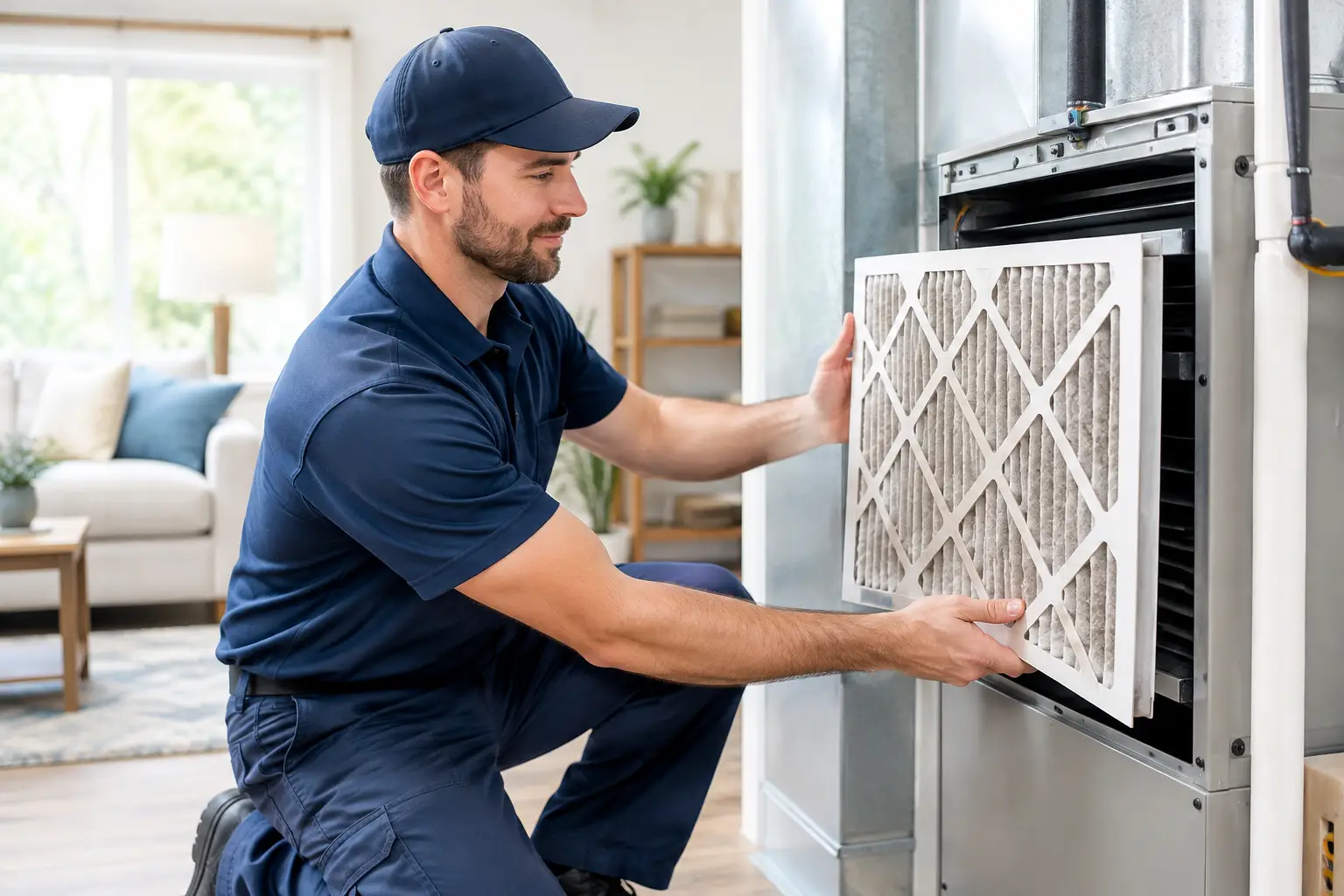
Check your air filter every month, especially during months when your AC runs frequently. A filter that looks gray, clogged, or visibly dirty should be replaced. Most homes benefit from replacing standard filters every one to three months, but the right schedule depends on filter type, pets, household size, and how often the system operates.
Do not assume the highest-rated filter is always the right choice. Filters with very high MERV ratings capture smaller particles, but some systems are not designed to handle the added airflow resistance. An overly restrictive filter can strain equipment and reduce airflow. A qualified HVAC technician can recommend a filter that balances cleaner air with proper system performance.
Keep supply vents and return grilles clean, and avoid blocking them with furniture, storage bins, or rugs. Dust around a return grille is a sign it is pulling air as designed, but excessive buildup may point to a filter issue or a need for maintenance. During a professional tune-up, the technician can inspect components that affect airflow and help identify conditions that are contributing to dust circulation.
Pay Attention to Ductwork, But Avoid Guesswork
Duct cleaning is not necessary on a set annual schedule for every home. However, it can be helpful after major remodeling work, when moving into a previously occupied home, after a pest issue, or when there is visible dust and debris around vents despite regular filter changes.
Leaky ducts are another concern. In attics, crawl spaces, and other unconditioned areas, gaps in ductwork can pull dusty air into the system or allow conditioned air to escape. This can leave certain rooms dusty, uncomfortable, or harder to cool. A professional inspection can determine whether duct sealing, repair, or cleaning makes sense for your specific home.
Keep Humidity in a Healthy Range
Humidity changes the way dust behaves. When indoor air is extremely dry, light particles stay airborne longer and may settle across surfaces more easily. When humidity is too high, however, dust combines with moisture and can support mold growth or attract dust mites.
For most homes, an indoor relative humidity level between 30% and 50% is a practical target. Gulf Coast homes often struggle with excess humidity, particularly during long cooling seasons. Your air conditioner helps remove moisture, but an oversized system, drainage issue, poor airflow, or aging equipment may keep it from doing the job effectively.
Use bathroom and kitchen exhaust fans when showering or cooking. Address plumbing leaks promptly, and consider a properly sized dehumidifier in persistently damp spaces. If rooms feel clammy even when the AC is running, it is worth having the system checked rather than simply turning the thermostat lower.
Reduce Clutter Where Dust Likes to Settle
Open shelving, stacks of magazines, decorative items, and crowded storage areas create more surfaces for dust to collect. You do not need a bare home to have cleaner air, but simplifying high-traffic rooms makes regular cleaning faster and more effective.
Store off-season clothing, toys, and linens in closed containers rather than open baskets or cardboard boxes. Use closed cabinets where possible, and choose washable covers for frequently used furniture. In bedrooms, keep items from piling under the bed, where dust can build up unnoticed.
Air purifiers can also help, particularly in bedrooms or rooms where pets spend time. Look for a unit sized for the room and equipped with a true HEPA filter. An air purifier is a helpful supplement, not a replacement for cleaning, filtration, and moisture control.
Know When Dust May Be an HVAC Problem
A little dust is normal. But if you are seeing heavy buildup just days after cleaning, dark marks around vents, musty odors, uneven airflow, or worsening allergy symptoms at home, there may be a larger issue behind it. Dirty equipment, duct leaks, poor filtration, and humidity problems can all affect the air you breathe every day.
For homeowners in Picayune and surrounding communities, Campo Heating & Air can inspect your system, ductwork, and indoor air quality concerns with the straightforward service your home deserves. The goal is not to sell a one-size-fits-all fix. It is to find the source of the problem and help you enjoy a cleaner, more comfortable home.
A cleaner home usually comes down to small routines done consistently: capture dust at the door, clean from high to low, maintain your HVAC filter, and keep humidity under control. If those steps are not making a difference, a professional look at your heating and cooling system can provide the peace of mind that your family is breathing easier.
0 Comments