
When your furnace not heating house problem shows up on a cold morning, it rarely feels like a small issue. One room is chilly, another is freezing, and suddenly the whole house feels uncomfortable. The good news is that some heating problems have simple causes. The better news is that you do not have to guess your way through it.
A furnace can run and still fail to heat your home the way it should. Sometimes it will blow air that feels cool. Other times it may short cycle, struggle to keep up, or leave part of the house cold while the rest feels fine. The key is figuring out whether you are dealing with a quick fix, a maintenance issue, or a repair that needs professional attention.
Why a furnace is not heating the house
The most common reason a furnace stops heating properly is something basic, not catastrophic. That matters for homeowners because the first few checks can save time, stress, and sometimes a service call.
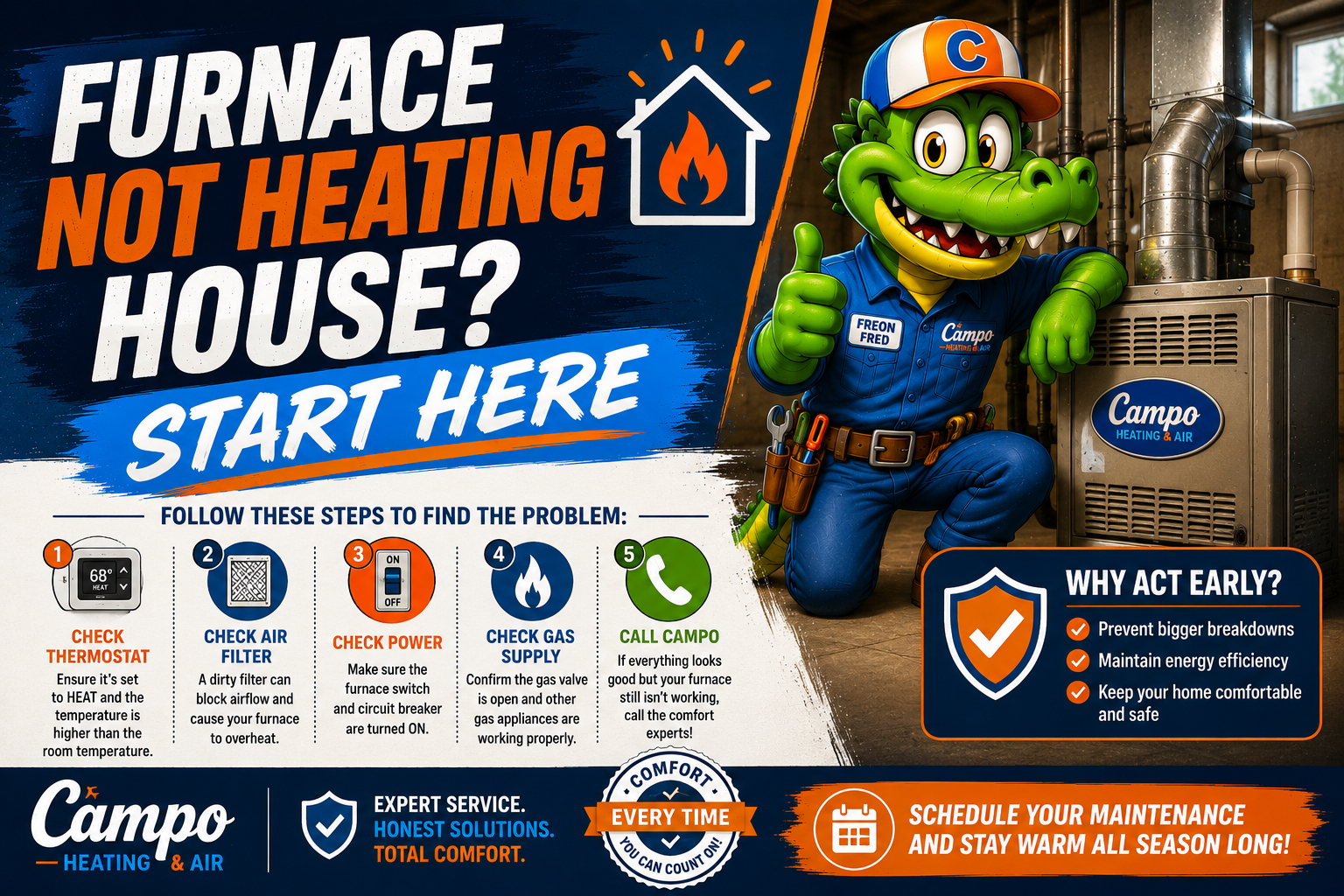
Start with the thermostat. If it is set to “on” instead of “auto,” the blower may keep moving air even when the furnace is not actively heating. That can make it feel like the system is blowing cold air. Check the temperature setting too. It sounds obvious, but dead batteries, bumped settings, or thermostat programming issues are frequent culprits.
Next, check the air filter. A clogged filter can choke airflow enough to overheat the system, trip a safety switch, and shut the burners down before the house ever warms up. In some homes, this shows up as weak airflow from vents. In others, the furnace turns on and off repeatedly without reaching the set temperature.
The pilot light or ignition system can also be the issue. Older furnaces may have a pilot light that goes out. Newer systems often use electronic ignition, and when that part fails, the furnace may start the fan but never create heat. If you smell gas, skip troubleshooting and leave the house immediately before calling your gas company and then an HVAC professional.
Power and fuel supply matter too. A tripped breaker, a switched-off furnace disconnect, or a closed gas valve can stop heat in a hurry. If you have a heat pump with electric backup or a gas furnace paired with another system, the symptoms can be less obvious. That is one reason heating diagnosis is not always as straightforward as it looks.
Quick checks when your furnace not heating house
Before assuming the worst, there are a few safe checks that make sense for most homeowners.
Set the thermostat to heat and raise the temperature a few degrees above the current room temperature. Wait a minute and listen. You should hear the system respond. If nothing happens, check the thermostat batteries if your model uses them.
Then look at the filter. If it is dirty, replace it. A fresh filter is one of the simplest ways to protect airflow and help the system operate normally.
Check the breaker panel next. If the furnace breaker has tripped, reset it once. If it trips again, stop there. Repeated trips usually point to an electrical problem that needs professional service.
You can also make sure supply vents are open and not blocked by furniture or rugs. Closed vents do not always save money. In some cases, they create pressure issues that make heating performance worse.
If your furnace has a visible switch nearby, confirm it has not been turned off by mistake. It often looks like a standard light switch mounted on or near the unit.
These checks are useful because they cover the most common causes. They are not meant to replace a repair visit if the problem continues. If the system starts making strange noises, smells burnt, or turns on without delivering heat, it is time to stop experimenting.
Signs the problem is bigger than a filter or thermostat
Some furnace problems announce themselves clearly. Others build slowly until the house never quite feels warm.
If your furnace is blowing lukewarm air, the issue could be a dirty flame sensor, a failing ignitor, or a burner problem. If it heats for a few minutes and shuts off, it may be overheating due to restricted airflow or a malfunctioning limit switch. If the blower runs constantly, control board issues or thermostat wiring may be involved.
Uneven heating is another clue. When upstairs rooms are warm but downstairs stays cold, or one side of the house never reaches the set temperature, the furnace may not be the only issue. Duct leaks, zoning problems, poor insulation, or airflow imbalances can all make it seem like the furnace is failing when the full comfort system needs attention.
Age also plays a role. An older furnace may still produce heat, but not efficiently or reliably. Parts wear down. Safety controls become more sensitive. Small repairs can start stacking up. In that situation, the question is not only “Can it be fixed?” but also “Is it worth fixing again?”
When to call for professional furnace repair
If you have already checked the thermostat, filter, power, and vents, and the furnace still is not heating the house, a service call is the smart next move. Heating systems involve gas, electricity, combustion, and safety controls. Guesswork can turn a manageable repair into a bigger problem.
Professional diagnosis matters because different failures can look similar from the outside. A bad ignitor and a bad control board may both leave you with no heat. A clogged filter and a failing blower motor may both reduce airflow. The right repair starts with the right diagnosis.
This is especially true during cold snaps in places like Picayune and across the Mississippi Gulf Coast, where homeowners may not use heat every day but need it to work the moment temperatures drop. A furnace that sat idle for months can reveal issues fast when winter finally arrives.
If you notice a burning smell that does not go away after startup, banging noises, repeated cycling, rising utility bills, or rooms that stay cold no matter what the thermostat says, do not wait for a complete breakdown. Early repairs are usually less stressful than emergency ones.
Repair or replace? It depends on the full picture
Not every heating problem means you need a new furnace. In many cases, a targeted repair restores reliable heat quickly and affordably. That is often the best route when the unit is newer, the issue is isolated, and the rest of the system is in good shape.
Replacement starts to make more sense when the furnace is older, repairs are becoming frequent, or your heating bills keep rising without better comfort. If the heat exchanger is damaged, replacement is often the safer and more cost-effective path. The same goes for systems that are undersized, poorly installed, or struggling to heat the home year after year.
Budget matters here, and so does peace of mind. Some homeowners want the lowest immediate cost. Others want fewer breakdowns and more predictable performance. There is no one-size-fits-all answer. The right choice balances the age of the system, repair history, energy use, and how long you plan to stay in the home.
How to prevent the same problem next month
A furnace rarely fails without warning. The trouble is that the warning signs are easy to miss until the house gets cold.
Routine maintenance is the best protection against surprise heating problems. A seasonal tune-up helps catch worn parts, ignition issues, dirty sensors, airflow restrictions, and safety concerns before they stop the system from doing its job. It also gives you a better sense of how much life your equipment has left.
Homeowners can help between visits by changing filters on schedule, keeping vents clear, listening for new noises, and paying attention to how long the system runs. If your furnace starts working harder than usual to keep the house comfortable, that is worth checking before it becomes a no-heat call.
For families, landlords, and busy homeowners, dependable heat is not just about temperature. It is about knowing your home will stay comfortable without last-minute stress. That is why working with a local HVAC team you trust matters. Campo Heating & Air builds that relationship by showing up when homeowners need real answers, not runaround.
If your furnace is not heating the house, start with the simple checks, but trust what the system is telling you. A home that will not stay warm is asking for attention, and the sooner you address it, the easier it usually is to get your comfort back.
0 Comments