
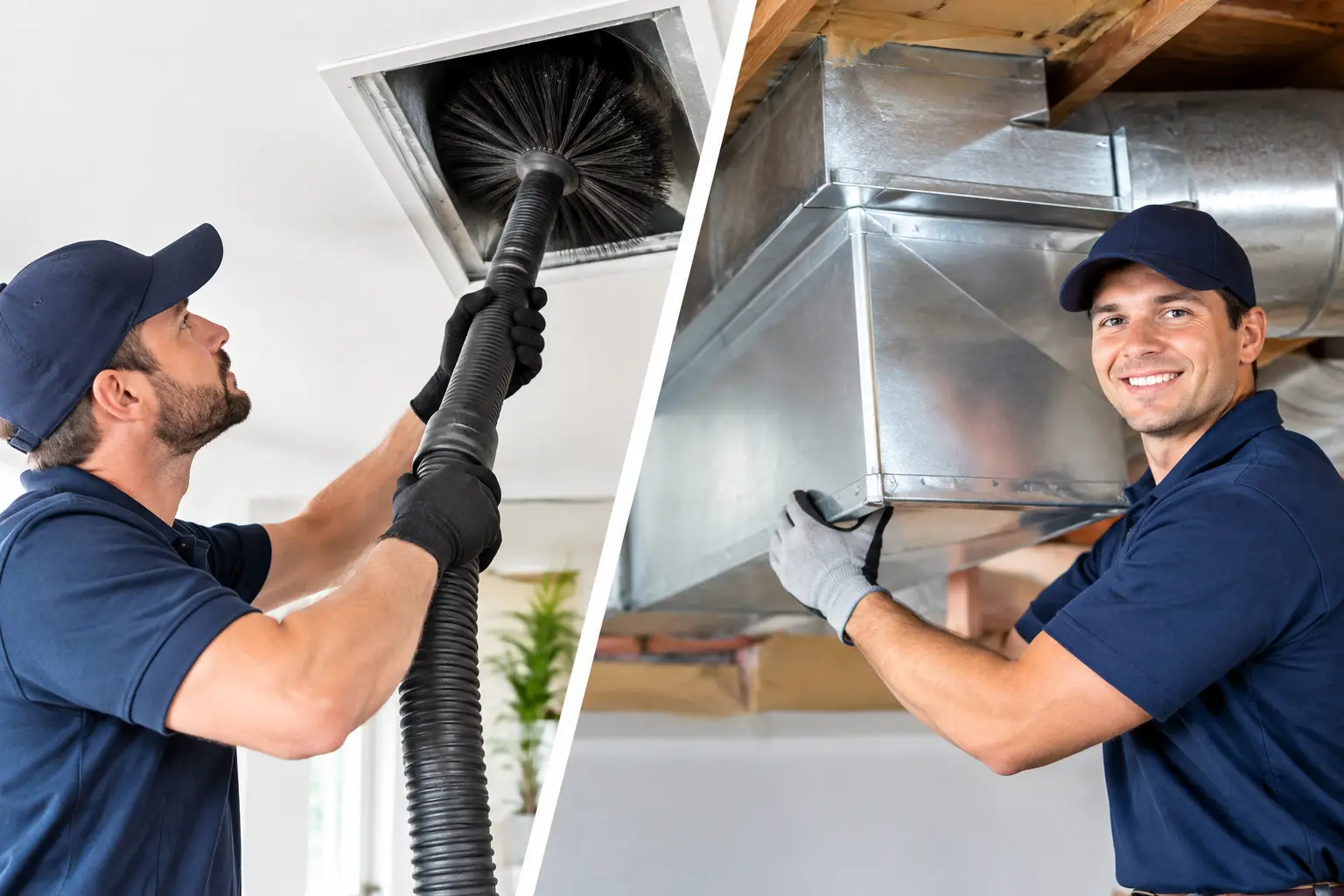
A dusty vent cover is one thing. Rooms that never cool evenly, a musty smell every time the AC starts, or utility bills that keep climbing are another. When homeowners weigh duct cleaning vs replacement, the right answer depends on what is actually happening inside the duct system – not simply how old it is or how dirty it looks.
Duct cleaning can remove built-up dust and debris. Replacement can correct leaks, damaged insulation, crushed runs, and duct designs that restrict airflow. They solve very different problems. A professional inspection keeps you from paying for a cleaning when the real issue is failing ductwork, or replacing ducts that only need targeted service.
Duct Cleaning vs Replacement: The Basic Difference
Your ducts carry heated and cooled air from the HVAC system into each room. Over years of use, they can collect ordinary household dust, renovation debris, pet hair, and other particles. Cleaning focuses on removing that buildup from inside the duct system, registers, and related components.
Replacement means removing all or part of the existing ductwork and installing new materials that are properly sized, sealed, supported, and insulated. This is a larger investment, but it addresses structural problems that cleaning equipment cannot fix.
Think of it this way: cleaning helps when the pathway is dirty. Replacement helps when the pathway is broken, poorly built, or no longer capable of delivering air where it needs to go.
When Duct Cleaning Makes Sense
Duct cleaning is most useful when there is a clear reason to believe debris is affecting your air system or indoor environment. It is not a routine cure for every allergy concern or comfort complaint. A trustworthy technician should be able to show you why cleaning is recommended.
Cleaning may be a good choice after a remodeling project, especially if drywall dust, sawdust, or construction debris entered the returns or vents. It can also be worthwhile after a pest issue has been resolved, when visible debris is present around registers, or when heavy dust quickly returns after normal housekeeping.
Homes with multiple shedding pets may also benefit from an evaluation. Pet hair and dander can accumulate around return grilles and within accessible portions of the system. In humid areas around the Mississippi Gulf Coast and Southern Louisiana, moisture concerns deserve extra attention. If moisture has contributed to mold-like growth, the moisture source must be corrected first. Cleaning without fixing a leak, drainage issue, or insulation problem only sets the stage for the problem to return.
A proper cleaning should be thorough and careful. It should not damage flexible ducts, spread debris through the home, or rely on scare tactics. If a company cannot explain what it found and why it recommends a service, it is reasonable to ask more questions.
Signs Your Ductwork May Need Replacement
Dirty ducts and damaged ducts can look similar from the outside because both can lead to poor comfort. The clues become clearer when you pay attention to airflow, energy use, and the condition of the system.
Uneven temperatures that never improve
If one bedroom stays warm while the rest of the house cools, cleaning may not be the answer. The issue could be a disconnected branch line, an undersized run, a crushed flex duct, or a duct layout that was never balanced correctly. Replacement or targeted duct repair can restore the path air needs to take.
High bills and weak airflow
Leaky ducts can release conditioned air into attics, crawlspaces, garages, and wall cavities. Your system then runs longer to make up the difference. Cleaning the interior surfaces will not seal those leaks. New, properly sealed ductwork can reduce wasted air and help the HVAC equipment operate under less strain.
Visible damage or deteriorating materials
Torn duct insulation, sagging flexible duct, rusted metal, loose connections, and ducts with water damage are all reasons to schedule an inspection. Older duct systems sometimes use materials that have deteriorated beyond a practical repair. In those cases, replacement is often the safer long-term choice.
Persistent odors or contamination
An isolated odor can come from a drain, dirty filter, damp carpet, or another source unrelated to the ductwork. But persistent musty odors, evidence of pests, or water-damaged duct insulation calls for a closer look. Porous, contaminated insulation generally cannot be restored by surface cleaning alone. Replacing affected sections may be the more dependable option.
Age Alone Does Not Decide It
Many homeowners assume ducts need to be replaced when they reach a certain age. Age matters, but condition matters more. A well-installed duct system that has been maintained, kept dry, and protected from damage can serve a home for many years.
On the other hand, newer ducts may need repair or replacement if they were poorly installed. Common trouble spots include long unsupported flex duct runs, sharp bends that restrict airflow, missing insulation, and poorly sealed connections. An inspection should consider the entire system, not just the parts visible near the air handler.
This is why a quick look through a vent opening is not enough to make a major decision. The technician should examine accessible ducts, check airflow concerns, look for leakage or damage, and consider whether the duct design fits the capacity of the HVAC system.
Can You Replace Only Part of the Ductwork?
Yes, in many homes, targeted replacement is the smartest option. If one run has collapsed, a return duct has been damaged by moisture, or a section was disturbed during renovation work, replacing only the affected area can be more affordable than replacing the entire system.
Partial replacement works best when the remaining ductwork is sound, properly sized, and compatible with the new section. If the rest of the system has widespread leaks, deteriorated insulation, or design problems, piecemeal repairs may become an expensive cycle. Your technician should explain whether a focused repair will solve the root cause or merely buy time.
For landlords and property managers, this distinction can protect both the budget and tenant comfort. Replacing a failed section promptly may prevent a smaller issue from turning into water damage, HVAC strain, or repeated service calls.
What a Reliable Duct Evaluation Should Include
Before deciding between cleaning and replacement, expect a clear explanation of the findings. A good evaluation looks beyond the register covers and considers the duct condition, insulation, connections, airflow, and likely sources of dust or odors.
Ask whether there are leaks, disconnected sections, crushed ducts, signs of moisture, or contamination that cannot be cleaned effectively. Ask whether the current duct sizing supports your heating and cooling equipment. You should also receive straightforward options: clean the system, repair selected sections, replace affected ducts, or monitor the condition if immediate work is not necessary.
The goal is not to sell the biggest job. It is to help your home or business receive consistent airflow and dependable comfort at a cost that makes sense.
Cost, Comfort, and the Long-Term View
Duct cleaning usually costs less upfront because it is a maintenance-focused service. It can be valuable after construction, pest activity, or significant debris buildup. But it will not stop conditioned air from escaping through damaged ducts, correct poor airflow design, or replace wet insulation.
Duct replacement costs more because it involves materials, access, labor, sealing, insulation, and sometimes changes to the layout. The return can be meaningful when it reduces hot and cold spots, improves airflow, and helps your HVAC system avoid unnecessary runtime. Financing options can also make a needed project easier to plan around rather than postponing a problem until the system is under greater stress.
If you are unsure, start with an inspection rather than an assumption. Campo Heating & Air can help homeowners in Picayune and nearby communities understand what their duct system needs, explain the options in plain language, and recommend work based on comfort and value. The best next step is the one that gives your family cleaner airflow, steadier temperatures, and peace of mind long after the service visit is over.
0 Comments