
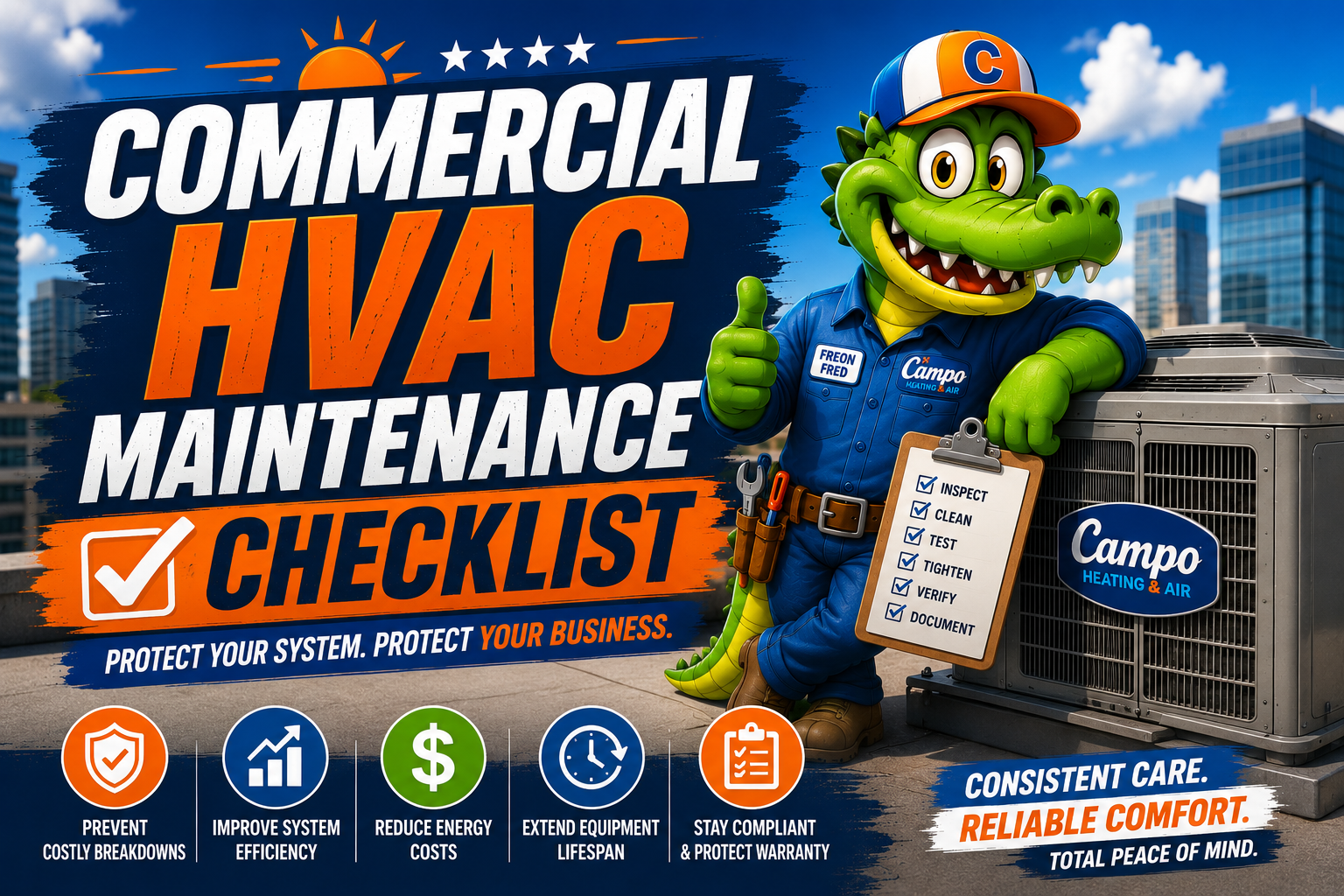
A rooftop unit rarely quits at a convenient time. It fails on the hottest afternoon, during a packed workday, or right before tenants start calling. That is why a commercial HVAC maintenance checklist matters. It gives building owners, managers, and business operators a clear way to stay ahead of expensive surprises instead of reacting to them.
For most commercial properties, HVAC is not just another building system. It affects employee comfort, customer experience, equipment performance, energy bills, and even indoor air quality. If you manage an office, retail space, church, restaurant, or mixed-use property, small maintenance issues can turn into larger problems quickly. A clogged drain line can lead to water damage. A dirty coil can push energy costs up month after month. A loose electrical connection can shorten the life of major components.
What a commercial HVAC maintenance checklist should cover
A useful commercial HVAC maintenance checklist is not just a list of tasks copied from a manual. It should reflect how the system is used, the age of the equipment, and the demands of the building. A small office with regular hours has different needs than a restaurant kitchen, a medical office, or a property with long operating hours.
At a minimum, the checklist should address air movement, filtration, electrical components, refrigerant performance, drainage, thermostat accuracy, safety controls, and overall system cleanliness. The goal is simple – catch wear early, keep the system running efficiently, and reduce the odds of an emergency call.
Some items can be monitored by onsite staff, especially if they are already handling routine facility checks. Others should be left to trained commercial HVAC technicians. That distinction matters. There is a big difference between replacing a filter and diagnosing a compressor issue.
Start with the basics that affect daily performance
Air filters deserve attention first because they influence so many other parts of the system. Dirty filters restrict airflow, force the system to work harder, and can make rooms feel unevenly heated or cooled. In commercial settings, filters may need to be checked monthly, not just once a season. Buildings with higher foot traffic, dust, or specific indoor air quality concerns often need more frequent replacement.
Thermostats and control systems should also be reviewed regularly. If schedules are off, sensors are inaccurate, or zones are not responding correctly, the building may be conditioning empty spaces or missing occupied ones. That leads to comfort complaints and wasted energy. In multi-zone properties, even a minor control issue can create ongoing frustration for staff and tenants.
Supply and return vents should be inspected for blockages, damage, or obvious airflow issues. Furniture, storage, and renovations can interfere with airflow more often than people realize. Uneven temperatures are not always caused by major equipment failure. Sometimes the issue is much simpler.
The equipment checks that prevent expensive repairs
Commercial systems live hard lives, especially in hot and humid climates. That means the mechanical and electrical side of maintenance cannot be treated as optional.
Technicians should inspect blower components, belts, and motors for wear. A loose belt or failing motor does not always cause an immediate shutdown, but it can reduce airflow and strain the rest of the system. Bearings, pulleys, and moving parts need attention before they become noisy, inefficient, or unreliable.
Electrical connections should be tightened and tested. Contactors, capacitors, relays, and wiring can degrade over time. Left unchecked, these issues can lead to nuisance shutdowns or damage to more expensive components. A preventive visit is usually much less costly than a major electrical repair after a failure.
Evaporator and condenser coils should be cleaned as needed. Dirty coils reduce heat transfer, which means the system runs longer to do the same job. That can show up as rising utility bills, poor cooling performance, and extra wear on compressors and fans. In coastal areas where salt and humidity can be hard on outdoor equipment, coil condition matters even more.
Refrigerant levels and operating pressures should be checked if performance suggests a problem. This is not about topping off refrigerant as routine maintenance. If refrigerant is low, there is usually a leak or another issue that should be diagnosed properly. Good maintenance focuses on finding the cause, not masking it.
Drainage and moisture control deserve more attention than they get
Condensate drains and drain pans are easy to overlook until water ends up where it should not be. In commercial buildings, that can mean stained ceilings, slippery floors, damaged inventory, or mold concerns. Drain lines should be inspected and cleared, and pans should be checked for rust, standing water, or signs of overflow.
Humidity control is another big part of commercial comfort. If the system is cooling but not removing moisture effectively, the building can still feel uncomfortable. That is common in the Gulf Coast region, where humidity is not a seasonal nuisance – it is a real operating condition. Excess humidity can affect customers, employees, stored materials, and indoor air quality.
A seasonal approach works better than a once-a-year visit
Many business owners assume annual service is enough. Sometimes it is, but often it is not. A better approach is to break the commercial HVAC maintenance checklist into seasonal priorities.
In cooling season, the focus should be on coil condition, refrigerant performance, fan operation, drainage, and thermostat calibration. Before peak summer demand, it makes sense to confirm the system can carry the load without running nonstop.
In heating season, burners, heat exchangers, ignition systems, safeties, and airflow should be reviewed. Even in South Mississippi and Southern Louisiana, heating equipment still matters during cold snaps. If a commercial heating system sits ignored for long periods, small problems may not show up until the day it is needed most.
Properties with year-round cooling loads, such as server rooms, medical spaces, or some retail environments, often need more frequent checks. The right schedule depends on usage, occupancy, and the cost of downtime.
What building staff can track between service visits
Not every maintenance step requires a technician. Building staff can help by keeping an eye on the warning signs that often appear before a breakdown.
A practical in-house routine includes checking filters, listening for unusual noises, watching for water around equipment, noting hot or cold spots, and reviewing utility bills for unexplained increases. If doors to mechanical rooms are blocked, vents are covered, or thermostats are being adjusted constantly by occupants, those issues should be addressed too.
It also helps to keep a simple service record. When filters were changed, when a drain issue was noticed, or when one zone started running warmer than the rest can all help speed up diagnosis. That kind of history is useful, especially for larger properties or sites with recurring comfort complaints.
When it makes sense to bring in a commercial HVAC professional
Some problems are easy to spot but not safe or practical to handle in-house. Electrical testing, refrigerant diagnostics, burner inspections, motor amperage checks, and control calibration should be performed by trained technicians. Commercial HVAC systems are more complex than most residential setups, and guessing can get expensive fast.
That is also why a checklist should not become a false sense of security. A property manager can confirm that a unit is running, but that does not always mean it is running well. Systems can lose efficiency gradually, and those losses often go unnoticed until repair costs or comfort complaints pile up.
For businesses in places like Picayune, Gulfport, Biloxi, and Slidell, dependable maintenance is not only about avoiding breakdowns. It is about protecting operating hours, customer comfort, and budget stability through long stretches of heat and humidity.
A simple commercial HVAC maintenance checklist to use
If you want a practical baseline, this is a good place to start:
- Check and replace air filters on schedule
- Inspect thermostats, sensors, and programming
- Confirm supply and return airflow is unobstructed
- Inspect belts, motors, and blower assemblies
- Tighten and test electrical connections and components
- Clean evaporator and condenser coils as needed
- Check condensate drains and drain pans
- Inspect outdoor units for debris, damage, and corrosion
- Test safety controls and shutdown functions
- Review refrigerant performance if cooling is off
- Inspect heating components before colder weather
- Document repairs, changes, and recurring issues
That list is not meant to replace a full professional inspection. It is meant to keep the essentials from being missed.
A good maintenance plan does more than protect equipment. It gives you fewer surprises, steadier comfort, and a better handle on costs. When your HVAC system supports the business instead of interrupting it, everything else runs a little smoother.
0 Comments