
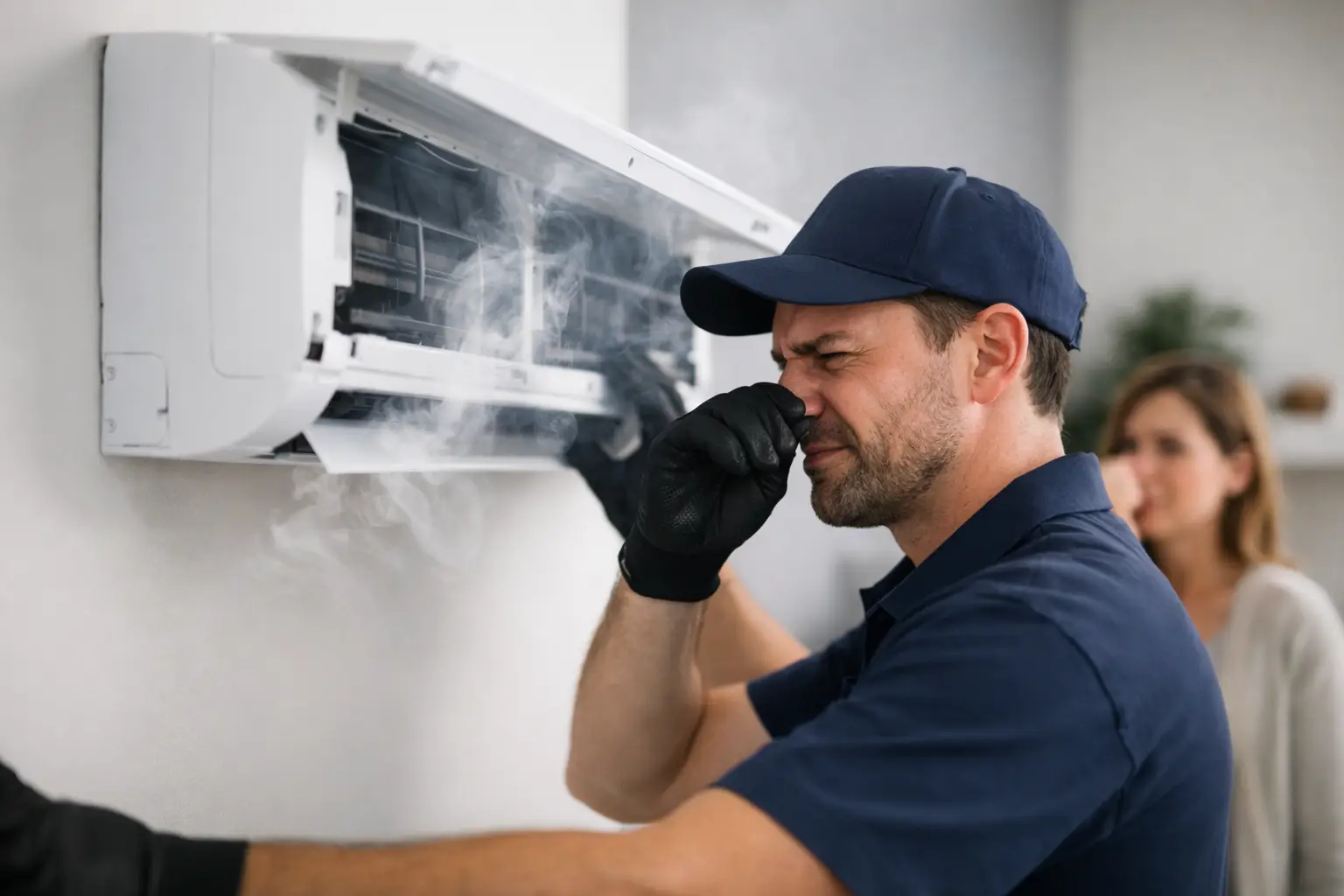
A musty odor that hits when your air conditioner starts is more than an annoyance, especially during a hot, humid Mississippi or Louisiana summer. If you are asking, why does AC smell musty, the short answer is usually moisture. Somewhere in or around the system, dampness is lingering long enough for mildew, mold, or bacteria to grow.
The good news is that many musty AC smells are fixable. The key is finding the source instead of covering the odor with candles, air freshener, or scented filters. Your AC should cool your home without making it smell like a damp closet.
Why Does AC Smell Musty When It Turns On?
Air conditioners naturally create water as they pull humidity from indoor air. That moisture is supposed to collect on the evaporator coil, flow into a drain pan, and leave through a condensate drain line. When that process is working correctly, there should not be a lingering odor.
But if water sits in the drain pan, the drain line clogs, the coil stays dirty, or humid air reaches parts of the system it should not, microbial growth can follow. When the blower starts, it can carry that smell through the vents and into the rooms where your family spends time.
Sometimes the odor is strongest for the first few minutes of a cooling cycle and then fades. That can still point to moisture on the coil or inside the air handler. If the smell gets stronger, returns often, or is present throughout the day, it is time to look deeper.
The Most Common Causes of a Musty AC Smell
A dirty evaporator coil
The evaporator coil is inside the indoor portion of your HVAC system. It stays cold while the AC runs, which makes it a natural place for condensation. Dust, pet hair, and household debris can stick to that damp surface. Over time, the buildup gives mildew and bacteria a place to grow.
A dirty coil may also reduce airflow and efficiency. Your system has to work harder to cool the house, which can raise energy use while leaving you with uneven comfort and an unpleasant odor.
A clogged condensate drain line or pan
Your AC drain line carries collected moisture outside or to a drain. Algae, sludge, dirt, and other debris can block that line. Once water backs up, it can sit in the drain pan and create a stale, musty smell.
This issue deserves prompt attention. A clogged line can eventually lead to water leaks, ceiling damage, or a system shutdown if your unit has a safety float switch. If you notice water around the indoor unit, a wet spot near the air handler, or a drain pan that looks full, schedule service rather than waiting for the problem to worsen.
A neglected air filter
An air filter does not cause every musty smell, but a clogged filter can make the problem worse. It limits airflow, allowing the evaporator coil to stay colder and wetter for longer. A dirty filter can also hold dust and odors that circulate when the system runs.
Check the filter first because it is one of the simplest maintenance tasks a homeowner can handle. If it looks gray, matted, or overdue for replacement, install the correct size and type recommended for your system. In homes with pets, heavy dust, or frequent AC use, filters may need attention more often.
Moisture or contamination in the ductwork
Ducts can develop odors when humid air enters through leaks, insulation gets wet, or dust and debris collect in areas with poor airflow. This is more common in attics, crawl spaces, and other unconditioned areas where Gulf Coast humidity is a constant challenge.
Ductwork is not always the culprit, and it should not be blamed automatically. A professional inspection can help determine whether the smell starts at the air handler, in one specific duct run, or throughout the system. If moisture has affected ducts or insulation, simply spraying a deodorizer will not solve the underlying issue.
The system is oversized or short cycling
An oversized AC can cool the home quickly but shut off before it has removed enough humidity. That leaves the indoor air damp, which contributes to a clammy feeling and can encourage musty odors around the system.
Short cycling can also happen because of a thermostat issue, refrigerant problem, dirty coil, or equipment malfunction. This is one reason an odor issue sometimes needs more than a cleaning. The right repair depends on why moisture is building up in the first place.
What You Can Safely Do Before Calling for AC Service
There are a few practical checks worth making, as long as you do not remove electrical panels or try to clean internal components yourself. Turn off the system before inspecting anything near the indoor unit.
Start by replacing a dirty filter. Then check around the air handler for standing water, a visibly overflowing drain pan, or signs of a drain leak. If you can safely see the drain line outlet outside, look for obvious blockage or no drainage while the AC has been running.
It also helps to lower indoor humidity where possible. Keep windows and exterior doors closed while the AC is operating, use bathroom exhaust fans during showers, and make sure dryer vents exhaust outdoors. These steps will not remove existing growth in the system, but they can reduce the moisture feeding the problem.
Avoid pouring harsh chemicals into your drain line or spraying cleaners deep into the unit. The wrong product can damage components, create fumes, or push debris farther into the line. If the smell persists after a fresh filter and basic visual check, professional cleaning and diagnosis is the safer path.
When a Musty AC Smell Needs Professional Attention
Call an HVAC technician if the odor keeps coming back, if you see water near the unit, or if your home feels unusually humid even when the AC is running. You should also schedule service when airflow is weak, cooling is uneven, or the system turns on and off repeatedly.
A trained technician can inspect the evaporator coil, blower compartment, drain pan, condensate line, duct connections, and overall system operation. Depending on the cause, the solution may involve cleaning the coil, clearing the drain, treating the pan, repairing duct leaks, or correcting a performance issue that is keeping humidity too high.
For households with allergies, asthma, young children, or older family members, it is especially reasonable to address persistent indoor odors promptly. A musty smell does not automatically mean there is dangerous mold throughout the home, but it does mean your HVAC system needs attention. Getting a clear diagnosis brings more peace of mind than guessing.
Can Maintenance Prevent the Musty Smell From Returning?
In many cases, yes. Regular maintenance helps keep the coil clean, the drain system flowing, and the equipment operating at the right capacity for your home. It also gives a technician a chance to spot worn drain components, airflow restrictions, and humidity concerns before they become a bigger repair.
There is no one schedule that fits every household. A home with several pets, high humidity, lots of foot traffic, or heavy year-round AC use may need more frequent filter changes and closer attention than a lightly used vacation property. The goal is not unnecessary service. It is preventing the small moisture problems that turn into odors, leaks, and comfort trouble.
If your AC smells musty in Picayune or along the Gulf Coast, Campo Heating & Air can help identify what is causing it and recommend a practical fix for your home or business. A clean, properly draining system does more than smell better – it helps your space feel like the comfortable place it should be.
0 Comments