
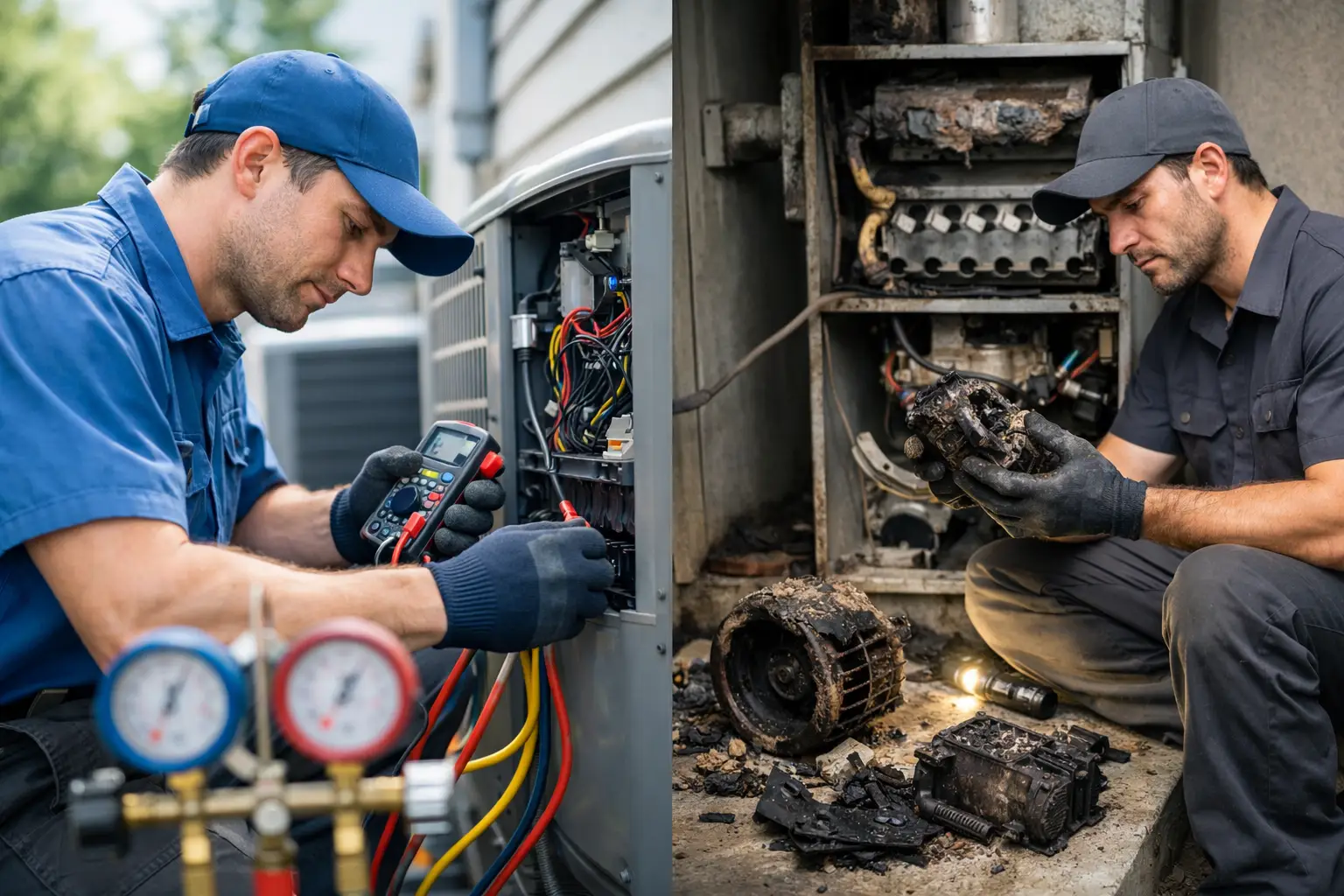
A $100 maintenance visit can feel easy to postpone when your air conditioner is still cooling. But along the Mississippi Gulf Coast, where systems work hard against long, humid summers, that small decision can turn into a much larger service call. Understanding HVAC maintenance versus repair costs helps homeowners, landlords, and business owners make choices that protect both comfort and the monthly budget.
Maintenance does not guarantee that a part will never fail. It does, however, give a trained technician the chance to catch worn components, drainage issues, airflow restrictions, and electrical concerns before they interrupt a hot afternoon or a cold night. The value is not just lower repair risk. It is knowing your system is being watched over before it has to call for help.
What HVAC Maintenance Usually Costs
A routine HVAC maintenance appointment is planned service, not a response to a breakdown. The exact price depends on the equipment, system condition, number of units, and whether you are enrolled in a maintenance plan. In many cases, a single seasonal tune-up costs far less than an emergency repair visit.
During a professional visit, a technician may inspect electrical connections, test system operation, clean key components, check refrigerant performance, inspect the condensate drain, replace or discuss filters, and look for signs of wear. Heating equipment needs its own seasonal attention, including safety checks that are especially important for gas furnaces.
Think of maintenance as a scheduled cost you can plan for. It is easier to budget for a checkup in spring or fall than to absorb an unexpected repair when the AC stops producing cold air in July. Maintenance plans can make that planning even simpler by spreading service out over the year and often providing practical benefits such as priority scheduling.
What HVAC Repair Costs Can Include
Repair costs vary widely because HVAC problems vary widely. A minor issue such as a clogged condensate drain, failed capacitor, loose electrical connection, or thermostat problem may be a relatively manageable repair. A failed blower motor, compressor issue, refrigerant leak, damaged coil, or major control-board problem can cost significantly more.
The final bill is shaped by more than the replacement part. It can include diagnostic time, labor, equipment access, system age, part availability, and whether the call happens after normal business hours. Emergency service has real value when a family has no cooling during extreme heat or a business needs to protect customers, employees, or inventory, but it may carry different costs than a scheduled weekday appointment.
Older systems can create a difficult repair equation. Parts may be harder to source, and one failed component can expose other worn parts. If repairs are becoming frequent, a trustworthy technician should explain the condition of the system clearly, show you the options, and help you decide whether repair or replacement makes more financial sense. The right answer depends on your equipment, your budget, and how long you plan to remain in the property.
HVAC Maintenance Versus Repair Costs: The Real Difference
The simplest difference is timing. Maintenance is proactive and predictable. Repairs are reactive and usually arrive at the least convenient moment.
That does not mean maintenance is simply an expense you pay to avoid every future repair. Motors, capacitors, electronics, and refrigerant components can fail even in well-maintained equipment. Weather events, power surges, normal wear, installation issues, and age can all create problems that a tune-up cannot prevent.
What regular care can do is reduce avoidable strain. A dirty filter restricts airflow. A clogged drain can create water damage or shut a system down. Loose electrical connections can worsen over time. An outdoor unit packed with leaves and debris cannot release heat efficiently. Left alone, these conditions can force the system to run longer, reduce comfort, and place extra pressure on expensive components.
Maintenance can also protect efficiency. When an AC system has to work harder to move air or reject heat, it often runs longer to reach the thermostat setting. Your utility bill may rise before the equipment fully fails. For budget-conscious households, that monthly energy waste matters just as much as avoiding a repair invoice.
When Paying for Maintenance Makes the Most Sense
Routine service is especially worthwhile when your system is still operating normally. That is when a technician can inspect it without the pressure of a same-day failure and give you a clearer picture of what may need attention next.
It also makes sense for homes with older equipment that is still worth keeping. A well-cared-for older system may provide more useful years, while a neglected one is more likely to develop avoidable airflow, drainage, or electrical problems. Maintenance is not a substitute for eventual replacement, but it can help you plan for replacement on your terms rather than during an emergency.
For rental properties and commercial spaces, preventive service can be even more valuable. One HVAC failure can mean tenant complaints, interrupted operations, uncomfortable customers, or a rushed decision when there is little time to compare options. Scheduled maintenance creates a record of care and reduces the odds that a minor issue becomes a disruptive event.
Signs You Should Schedule a Repair Instead of Waiting
Maintenance appointments are for keeping a working system on track. If you notice a performance problem, it is time to request a repair visit rather than wait for the next tune-up.
Call for service if your system is blowing warm air in cooling mode, cycling on and off repeatedly, making grinding or buzzing noises, leaking water, producing unusual odors, or leaving rooms unevenly heated or cooled. A sudden increase in energy use, weak airflow from vents, or a thermostat that does not seem to match how the home feels can also point to a problem worth diagnosing.
Do not keep resetting breakers or ignoring repeated shutdowns. Electrical and safety concerns need professional attention. Likewise, if your furnace has a gas smell, soot, a yellow burner flame, or a carbon monoxide alarm, treat the situation seriously and follow appropriate safety steps before requesting immediate help.
How to Keep Both Costs Under Control
The most practical approach is not choosing maintenance or repairs. It is using maintenance to reduce preventable repairs, then addressing genuine problems before they spread.
Start with the basics between professional visits. Check filters regularly and replace them as needed for your household, pets, and filter type. Keep the outdoor unit clear of grass clippings, leaves, and stored items. Make sure supply and return vents are not blocked by furniture or rugs. These simple habits support airflow, which is one of the biggest factors in system performance.
Then schedule professional service before the demanding season begins. For most homes in this region, cooling maintenance before summer is a smart move, while heating service before colder weather provides reassurance when you need heat. Homes with heat pumps may benefit from attention to both heating and cooling performance because the same equipment serves year-round.
Finally, ask for clear recommendations. A dependable HVAC company should distinguish between an urgent repair, a repair that should be planned soon, and an optional improvement. You deserve an understandable estimate, not pressure. If replacement becomes the better path, ask about efficiency, warranty coverage, installation quality, and financing options that fit your budget.
The Cost of Waiting Is Not Always a Repair Bill
Some HVAC problems cost money quietly. A slow drain issue can lead to ceiling or wall damage. Poor airflow can leave bedrooms uncomfortable and push family members to lower the thermostat unnecessarily. A struggling system can waste energy for months before it stops altogether.
There is also the cost of lost comfort. In Picayune and across the Gulf Coast, a reliable air conditioner is not a luxury during peak summer heat. Fast service matters when a system fails, but avoiding the failure in the first place is even better when possible.
Campo Heating & Air approaches maintenance as part of a long-term comfort relationship, not a one-time transaction. Whether your system needs a seasonal checkup or you are facing an unexpected breakdown, the goal should be the same: straightforward answers, dependable work, and a solution that respects your home and your budget.
A scheduled tune-up may not be the most exciting item on a household to-do list, but it can be one of the calmest decisions you make before the next stretch of extreme weather arrives.
0 Comments