
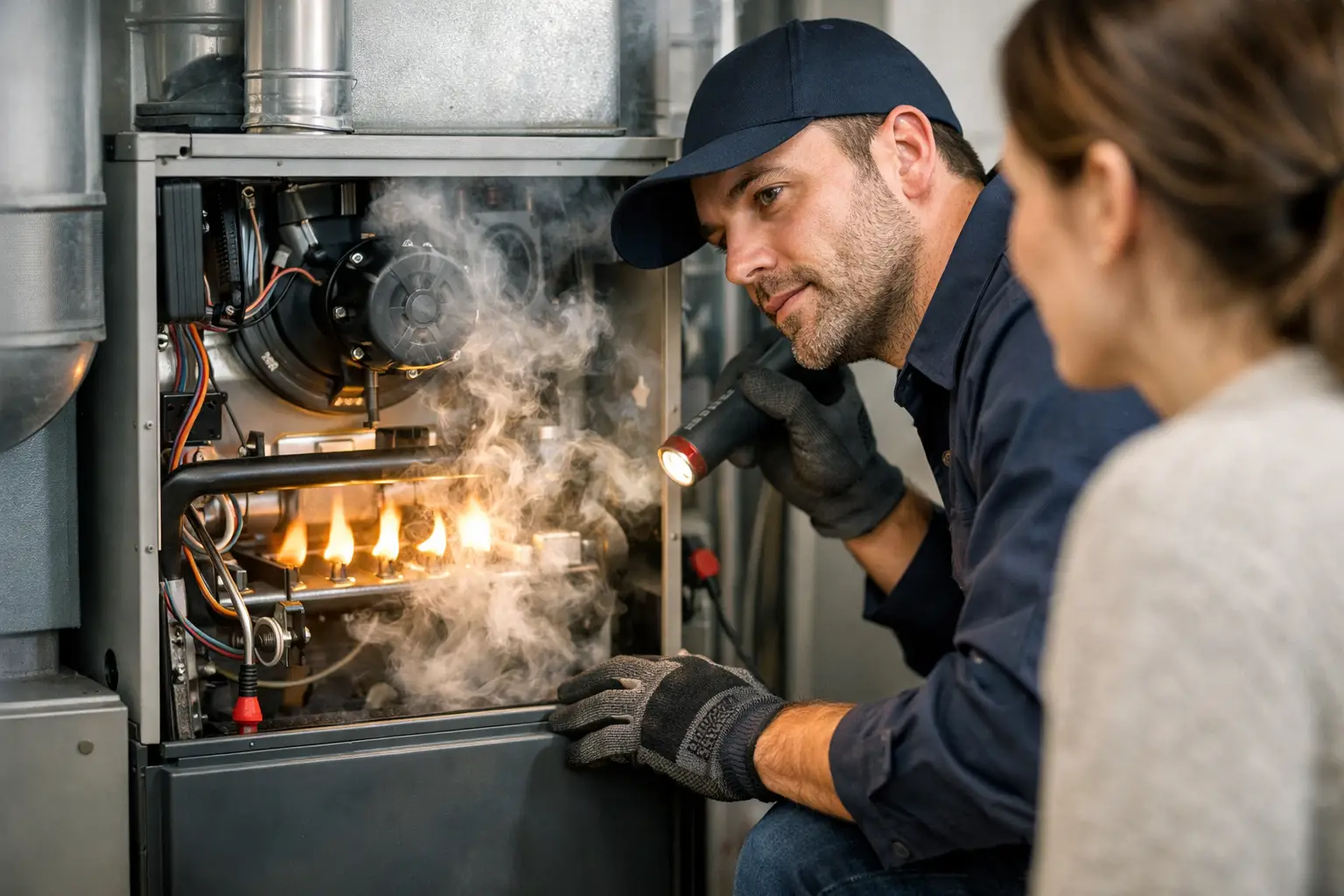
The first time you turn on the heat after a long Mississippi Gulf Coast summer, a brief burning smell can make the whole house feel alarming. If you are asking, “why does furnace smell burning,” the answer may be as simple as dust warming up – or it may be a warning that needs prompt attention. The difference comes down to the type of odor, how long it lasts, and whether you notice other signs such as smoke, strange sounds, or a system that keeps shutting off.
A furnace should provide dependable warmth, not leave you guessing about your family’s safety. Here is how to tell what is normal, what needs a service call, and when to turn the system off immediately.
Why Does a Furnace Smell Burning When It First Starts?
A light dusty or dry burning odor at the start of heating season is often normal. Dust settles on the heat exchanger, burners, and nearby components while the system sits unused through much of the year. When those parts heat up, the dust burns away.
This smell should fade within a few minutes to an hour of operation. Opening a window briefly can help clear the odor, but keep an eye on the system while it runs. Replacing a clogged air filter is also a smart first step. A dirty filter restricts airflow, allowing heat to build up and making ordinary dust smells more noticeable.
If the smell returns every time the furnace runs, lasts longer than a day, or grows stronger instead of fading, it is no longer something to brush off as seasonal dust. Shut the system down and have it checked.
Burning Odors That Need Immediate Attention
Not every burning smell means the same thing. Some odors point to an urgent electrical or fire risk, while others suggest a maintenance issue that can become more expensive if ignored.
Burning Plastic, Rubber, or Electrical Smell
A sharp smell like melting plastic, hot wiring, or burning rubber is not normal. It can come from overheated electrical wiring, a failing blower motor, a damaged circuit board, a loose connection, or an object that has fallen near a hot component.
Turn the furnace off at the thermostat. If the smell is strong, if you see smoke, or if you hear buzzing or popping, turn off power to the furnace at the breaker only if it is safe to do so. Then call for professional help. Do not restart the unit to see whether the smell goes away. Electrical issues can worsen quickly and may damage the furnace even if it begins running again.
Burning Dust That Will Not Go Away
A dusty smell that lingers can be a sign of restricted airflow. A packed air filter, closed supply vents, a blocked return grille, or dirty internal components can cause the furnace to overheat. Many modern furnaces have safety limits that shut the burners down when temperatures rise too high, but repeated overheating puts unnecessary strain on the system.
Start by checking the filter. If it is visibly gray, packed with debris, or has not been changed in several months, replace it with the correct size and type. Make sure return vents are clear of furniture, rugs, and storage. If the odor continues after these simple checks, schedule a heating inspection.
Smoke or a Hot, Acrid Odor
Visible smoke is never a wait-and-see situation. Turn off the furnace, leave the area if smoke is building, and call emergency services if there is any immediate fire danger. Once the home is safe, an HVAC technician can identify whether the issue involves the blower motor, wiring, insulation, debris in the equipment, or another failed part.
Avoid spraying air freshener to cover the smell. It can make it harder to notice whether the problem is worsening, and it does nothing to address the source.
A Burning Smell Can Start Outside the Furnace
Sometimes the furnace is running normally, but the smell is coming from another part of the heating system. This is especially common when a home has floor registers, older ductwork, or equipment in an attic, closet, crawl space, or garage.
Debris in a duct can create an odor when warm air moves through it. A foreign object near a register, such as a toy, paper, or piece of plastic, may also heat up and smell. Look around accessible vents and remove anything sitting directly on or against them.
Duct problems are more likely when the odor is strongest in one room rather than throughout the home. In that case, turn the system off and have the ductwork and nearby electrical connections evaluated. Do not reach into ducts where you cannot see, especially around sharp metal edges or wiring.
What About a Musty or Burning Smell From Heat Pumps?
Many homes in South Mississippi and Southern Louisiana rely on heat pumps rather than traditional gas furnaces. A heat pump can produce a brief odor when its auxiliary heat turns on or when its defrost cycle runs during colder weather. Dust on electric heat strips can smell similar to a furnace warming up for the first time.
The same rule applies: a mild dust odor that disappears promptly may be expected, but a persistent burning-plastic smell, smoke, tripped breakers, or poor heating is not. Electric heat strips and their wiring should be inspected by a trained technician, not handled as a DIY repair.
If You Smell Gas, Treat It Differently
Natural gas is not a burning smell. Utility companies add a sulfur-like odorant to gas so leaks can be detected. If you notice a rotten-egg or sulfur odor near a gas furnace, do not operate switches, light matches, use a phone inside the home, or try to locate the leak yourself.
Leave the building, move to a safe distance, and call your gas utility or emergency services from outside. A gas odor requires immediate action, even if the furnace seems to be operating normally.
Carbon monoxide is another reason to take furnace concerns seriously, but it has no smell at all. Every home with fuel-burning equipment should have working carbon monoxide detectors, ideally near sleeping areas and according to the manufacturer’s instructions. If a carbon monoxide alarm sounds, get everyone outside and call emergency services.
What You Can Safely Check Before Calling
Homeowners can handle a few basic checks without taking apart the furnace. Replace the air filter if needed, confirm that supply and return vents are open and unobstructed, and look around the furnace for stored boxes, paint cans, laundry products, or other items that should not be near heating equipment.
You can also note what happened before the odor started. Did the furnace struggle to start? Did a breaker trip? Is the smell strongest at one vent? Does it occur only when the blower runs? These details help a technician diagnose the problem faster and may prevent repeat visits.
Do not remove furnace panels, touch wiring, clean burners, or reset a tripped breaker repeatedly. A furnace has safety controls for a reason. Resetting it over and over can conceal a serious fault while placing more stress on the equipment.
When to Schedule Furnace Service
Schedule service if a burning smell lasts beyond the first heating cycle, returns repeatedly, or comes with weak airflow, unusual noises, frequent cycling, high utility bills, or inconsistent temperatures. Early service is usually less disruptive and less costly than waiting for a complete heating failure on a cold night.
A professional inspection can identify dirty components, airflow restrictions, worn blower parts, electrical hot spots, combustion concerns, and duct issues before they become a bigger problem. Routine maintenance also gives your system a better chance of lasting longer and operating efficiently when your family needs it most.
For homeowners in Picayune and across the Gulf Coast, Campo Heating & Air provides dependable heating service with the straightforward answers and respectful care you should expect from a local team. If your furnace smell feels wrong, trust that instinct. Turning it off and getting it checked is a small step that can protect your comfort, your equipment, and your peace of mind.
0 Comments