
A furnace that suddenly sends cool air through the vents can make a chilly night feel a lot longer. If you are asking, “why is furnace blowing cold,” the answer may be as simple as a thermostat setting or air filter. It can also point to a furnace problem that needs prompt attention before your home loses heat completely.
The good news is that a few safe checks can rule out common issues. The key is knowing when to stop troubleshooting and call a qualified HVAC technician, especially if you smell gas, notice repeated shutdowns, or have no heat at all.
Why Is Your Furnace Blowing Cold? Start With These Checks
Before assuming the furnace has failed, check the thermostat. Make sure it is set to Heat, not Cool or Fan Only, and set the temperature several degrees above the current room temperature. If the thermostat uses batteries, replace them. Weak batteries can prevent the thermostat from properly signaling the furnace.
Next, check the fan setting. When the thermostat fan is set to On, the blower runs continuously, even during breaks between heating cycles. That means it may push room-temperature air through your vents after the burners shut off. Set the fan to Auto so it runs only while the furnace is actively heating.
Also confirm that the furnace has power. Look for a tripped breaker in your electrical panel and check the furnace service switch, which often looks like a standard light switch near the unit. If a breaker trips again after you reset it once, leave it alone and schedule service. Repeated tripping can signal an electrical or equipment issue.
A Dirty Air Filter Can Cause Cold Air
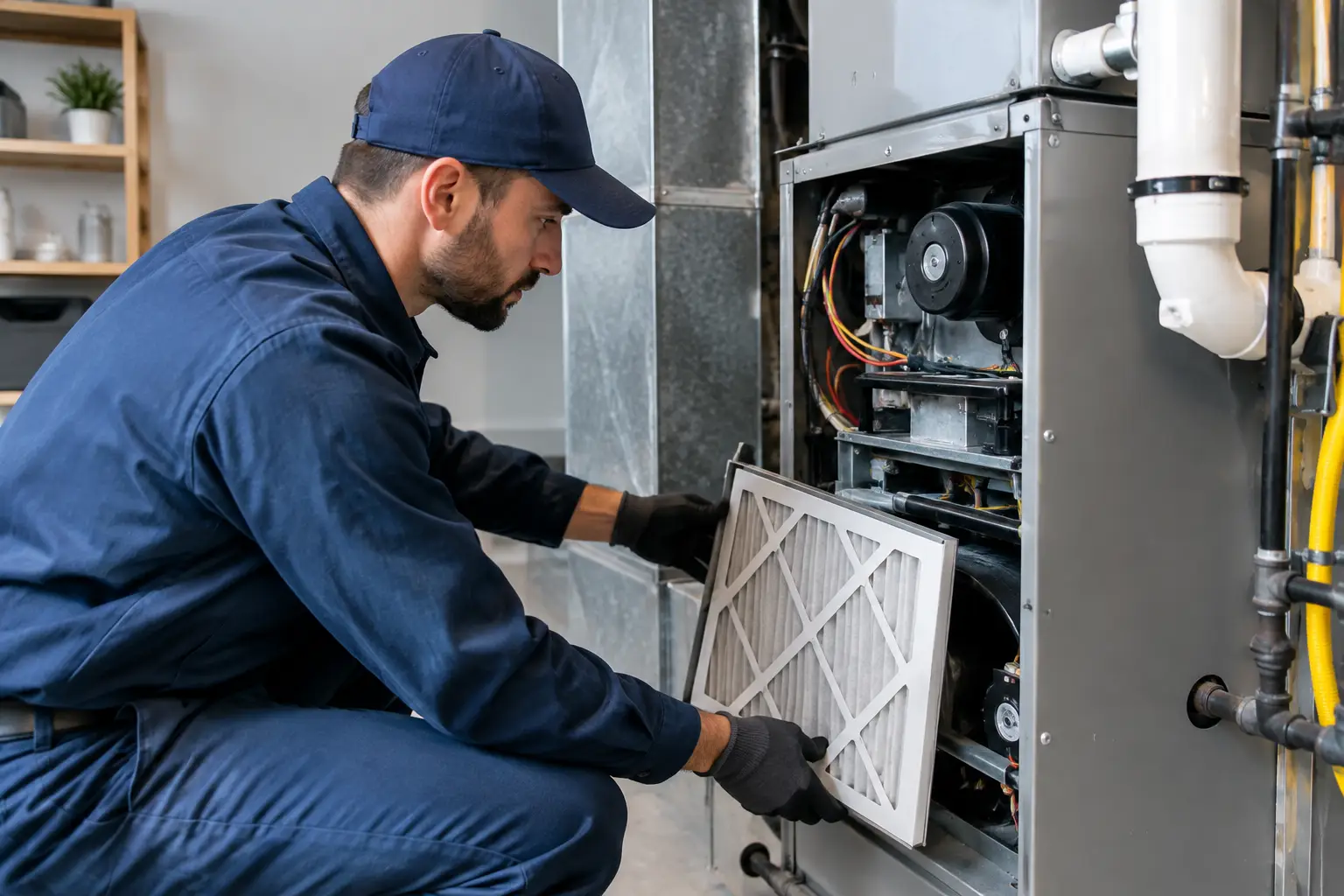
A clogged air filter is one of the most common and most preventable heating problems. Your furnace needs adequate airflow to operate safely. When the filter is packed with dust, pet hair, or debris, heat can build up inside the system.
Most furnaces have a high-limit safety switch that shuts down the burners when overheating occurs. The blower may continue running to cool the equipment, but the air coming from the vents will feel cold. In some cases, the furnace may restart after cooling down, then overheat and shut down again. This pattern can leave your home uncomfortable and add wear to important components.
Check the filter monthly during heating season and replace it when it looks dirty. The right replacement schedule depends on the filter type, pets, household dust, and how often the system runs. A basic filter may need changing every one to three months, while some higher-efficiency filters can last longer. If you are unsure about the correct size or type, a technician can help you avoid restricting airflow with the wrong filter.
The Furnace May Be Overheating or Short Cycling
Short cycling means the furnace starts, runs briefly, shuts off, and starts again before properly heating the home. A dirty filter can cause it, but so can blocked return vents, a failing blower motor, a dirty flame sensor, or a problem with the thermostat.
Keep return grilles open and clear of furniture, rugs, curtains, and storage boxes. Closing too many supply vents can also affect airflow. It might seem like a smart way to direct heat to certain rooms, but modern forced-air systems are designed to move a specific amount of air. Restricting too much airflow can contribute to overheating and uneven comfort.
If the furnace keeps cycling after you replace the filter and clear the vents, it is time for professional diagnosis. Continuing to run an overheating furnace can turn a smaller repair into a larger one.
Ignition Problems Prevent the Burners From Heating
A gas furnace needs a working ignition sequence to produce heat. When the thermostat calls for warmth, the system starts the inducer motor, verifies safe venting, opens the gas valve, ignites the burners, and confirms the flame. If any step fails, the furnace may run its blower without delivering warm air.
Older furnaces may use a pilot light, while newer models typically use a hot surface igniter or electronic ignition. A pilot light that has gone out, a worn igniter, a dirty flame sensor, or a faulty control board can all lead to cold air from the vents.
You may hear the furnace attempt to start, then shut down after a few seconds. Some systems display a blinking diagnostic light through a small viewing window on the cabinet. While that light can help a technician identify the problem, do not remove panels or attempt gas-related repairs yourself. A trained technician can test the components, confirm safe operation, and make the needed repair.
A Condensate Drain Issue Can Shut Down a High-Efficiency Furnace
High-efficiency furnaces produce water during normal operation. That water drains through a condensate line. If the line becomes clogged, frozen, disconnected, or backed up, a safety switch may shut the furnace down to prevent water damage.
This issue is more common during colder weather, when the furnace runs longer. You may notice water near the unit, gurgling at the drain line, or a furnace that tries to start but will not complete a heating cycle. Because drainage problems can involve electrical parts and pressure switches, they are best handled by an HVAC professional.
Your Gas Supply or Exhaust Venting May Be the Problem
If other gas appliances are not working, such as a gas stove or water heater, there could be a gas supply issue. Check whether the gas shutoff valve near the furnace appears to be in the open position. Do not force the valve or try to repair gas lines.
A furnace can also stop heating if its exhaust vent is obstructed. High-efficiency units often vent through PVC pipes that exit outside the home. Leaves, nests, ice, or debris near the pipe termination can interfere with safe operation. You can visually check that the outdoor vent area is clear, but do not insert tools into the pipe or dismantle venting components.
If you smell gas, hear hissing near a gas line, or suspect a carbon monoxide concern, leave the home immediately if it is safe to do so. Call your gas utility or emergency services from outside, then arrange for professional HVAC service. Do not turn switches, appliances, or electronics on and off near a suspected gas leak.
Cold Air Can Come From Ductwork, Not the Furnace
Sometimes the furnace is producing heat, but that heat is not reaching the rooms where you need it. Leaky ducts in an attic, crawlspace, garage, or unconditioned area can lose a surprising amount of warmth before air reaches the vents. Disconnected duct sections, crushed flexible ducts, and poorly balanced airflow can create rooms that stay cold while others feel too warm.
Duct concerns tend to show up as uneven temperatures, weak airflow, higher heating bills, or rooms that never seem comfortable. These problems require a different solution than a furnace repair. A full system evaluation can identify whether the issue is airflow, duct leakage, equipment sizing, or a combination of factors.
When to Call for Furnace Repair
Homeowner checks are useful for thermostat settings, filters, breakers, and visible vent obstructions. Beyond that, furnace work involves electricity, combustion, gas, and safety controls. Calling early can protect both your comfort and your budget.
Schedule service promptly if your furnace blows cold air after basic checks, runs constantly without heating, short cycles, makes new banging or squealing noises, leaks water, or shows a flashing error code. A repair visit is also the right call if your home has inconsistent heat, unusually high utility bills, or a furnace that is more than 15 years old and becoming unreliable.
For families in Picayune and nearby communities, Campo Heating & Air provides dependable heating repair with same-day appointments when available and 24/7 emergency response for urgent comfort problems. A qualified technician can find the actual cause instead of guessing, explain the repair clearly, and help you choose a practical path forward.
A warm home should not depend on crossing your fingers every time the furnace starts. Replace the filter, check the thermostat, keep vents clear, and trust a professional with anything involving ignition, gas, electrical components, or repeated shutdowns. That quick response can restore your heat and help your system stay reliable through the next cold spell.
0 Comments