
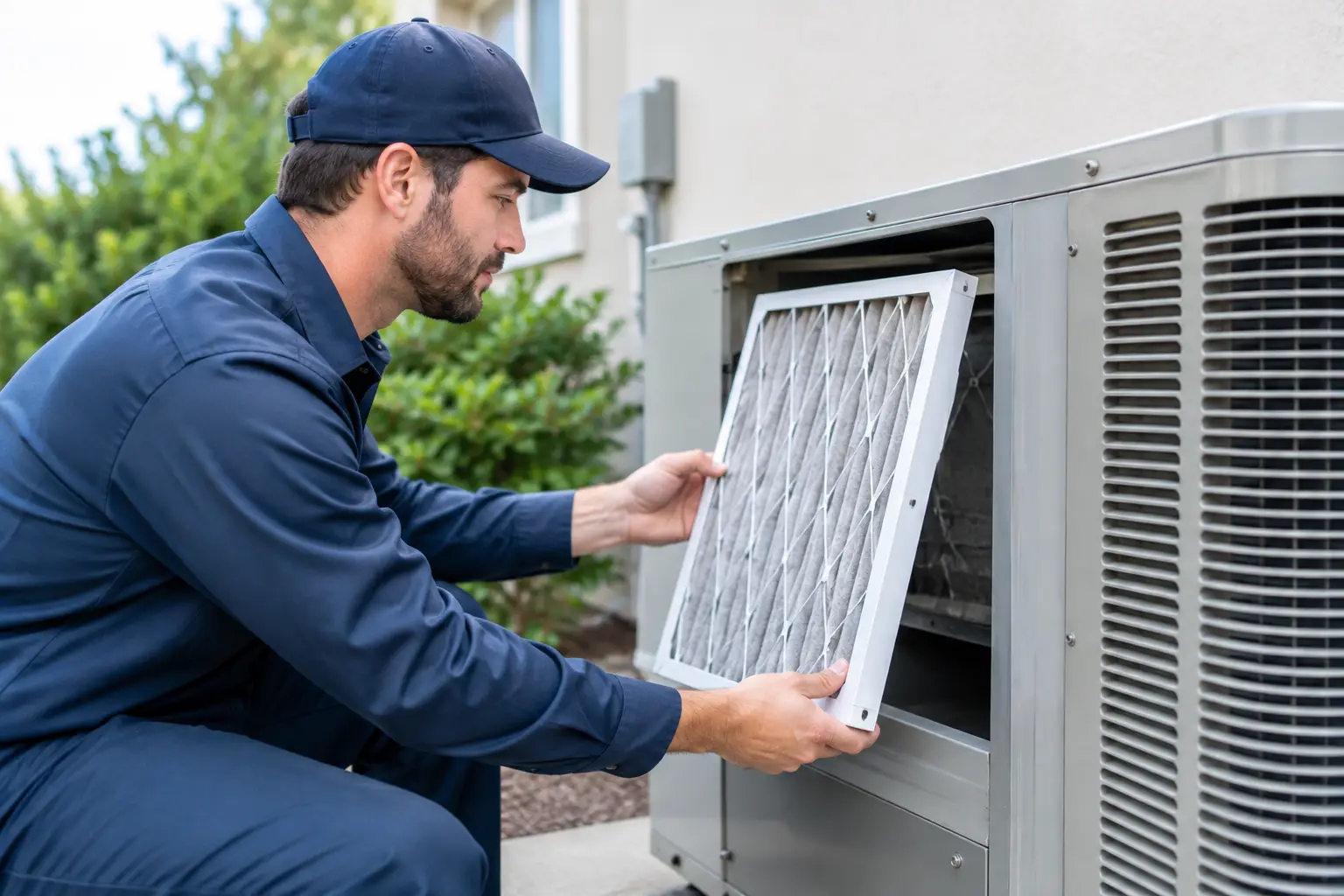
A clogged air filter can turn a perfectly good heating and cooling system into a source of higher bills, uneven temperatures, and frustrating airflow. HVAC filter replacement is one of the simplest ways to care for your home, but it is also one of the easiest maintenance tasks to put off. In South Mississippi and Southern Louisiana, where air conditioners often work hard for much of the year, a clean filter helps your system keep up when comfort matters most.
HVAC Filter Replacement Is Small Maintenance With a Big Job
Your HVAC filter does not just collect visible dust. As air moves through your return vents, the filter catches pollen, pet dander, lint, dirt, and other particles before they reach the indoor equipment. That protection matters for your family’s air quality, but it also matters for the blower, evaporator coil, and other parts that need steady airflow to work properly.
When a filter becomes full, your system has to pull air through a layer of buildup. The blower works harder, rooms may take longer to cool or heat, and the equipment can run longer than it should. During a hot Picayune summer, that extra strain can show up quickly in both comfort and energy use.
A fresh filter is not a cure for every HVAC problem. If your system is blowing warm air, making unusual noises, freezing up, or shutting off repeatedly, replacing the filter may not solve the underlying issue. Still, it is the right first maintenance step and an easy way to avoid creating unnecessary strain on the system.
How Often Should You Change Your Filter?
There is no one schedule that fits every home. A common starting point is every 30 to 90 days, but your household and the type of filter you use should guide the final decision. A basic one-inch filter usually needs more frequent attention than a thicker media filter designed to last several months.
Change the filter closer to every 30 days if you have multiple pets, smokers in the home, allergy concerns, construction dust, or a system that runs nearly every day. Homes with one or two occupants, no pets, and light system use may be able to go longer. Even then, checking the filter monthly is smarter than waiting until the calendar says it is time.
Commercial spaces need their own schedule. Offices, shops, rental properties, and businesses with frequent foot traffic often bring more dust and debris into the building. A property manager who changes filters on a consistent schedule can help protect equipment and catch airflow concerns before tenants or customers start complaining.
The simplest test is visual. Hold the filter up to a light source. If you cannot see much light through it, or if the surface is visibly gray and packed with debris, replace it. Do not wait for it to look completely black. By then, airflow may already be restricted.
Signs Your HVAC Filter Needs Attention Now
A dirty filter is often quiet at first. You may not notice a problem until a room feels stuffy or the system seems to run all afternoon. Watch for changes such as weaker airflow from supply vents, more dust around the home, hot or cold spots between rooms, or an increase in allergy irritation while indoors.
You may also hear the system running longer without reaching the temperature set on the thermostat. That does not automatically mean the filter is to blame, since low refrigerant, duct leaks, thermostat issues, and aging equipment can cause similar symptoms. But checking the filter takes only a few minutes and can rule out a common cause right away.
If your indoor unit or evaporator coil freezes, turn the system off and call for service. Restricted airflow from a clogged filter can contribute to icing, but continuing to run a frozen system can cause more damage. The same goes for burning odors, electrical smells, water around the indoor unit, or a breaker that keeps tripping. Those are not do-it-yourself filter issues.
Choosing the Right Filter for Your System
The size printed on your current filter is the best place to start. Look for the actual dimensions, such as 16 x 25 x 1, and match the thickness as well as the length and width. A filter that is too small can allow unfiltered air to bypass it. One that is forced into place can bend, leave gaps, or damage the filter rack.
You will also see MERV ratings, which indicate how effectively a filter captures particles. A higher number can capture smaller particles, but it can also restrict airflow if your system is not designed for it. More filtration is not always better.
For many homes, a mid-range MERV filter provides a practical balance between everyday particle control and healthy airflow. Families with allergies, pets, or specific indoor air quality concerns may benefit from a higher-rated option, but it is wise to ask an HVAC professional before making a major change. Older systems and some return setups may not handle a dense filter well.
Avoid treating a filter as a substitute for whole-home air quality solutions. If odors linger, humidity stays high, dust returns quickly, or family members are dealing with ongoing respiratory irritation, the answer may involve ductwork, ventilation, humidity control, or indoor air quality equipment. The filter is one piece of the comfort picture.
How to Replace an HVAC Filter Correctly
Start by turning the system off at the thermostat. Locate the filter, which may be behind a return-air grille inside the home, in a filter slot near the indoor air handler, or at the furnace cabinet. If you are not sure where it is, do not remove panels at random. Your maintenance technician can show you the correct location during a visit.
Slide the old filter out carefully and check the arrow printed on the frame. The arrow should point in the direction of airflow, usually toward the indoor unit or ductwork. Install the new filter with that arrow facing the same direction. A backward filter may still catch some debris, but it can perform poorly and may be more likely to sag or make noise.
Once the filter is seated, close the grille or panel securely and turn the thermostat back on. Write the installation date on the filter frame or set a reminder on your phone. That small habit makes it far easier to stay ahead of replacement instead of guessing months later.
A Clean Filter Does Not Replace Professional Maintenance
Regular filter changes help, but they do not inspect electrical components, clean coils, verify refrigerant performance, or identify a failing part before it leaves you without cooling. Seasonal HVAC maintenance gives a trained technician a chance to look at the full system, not just the piece you can see.
That is especially valuable before peak cooling season along the Gulf Coast. Your air conditioner may seem fine on a mild day, then struggle when temperatures and humidity rise. Preventive service can help spot concerns while there is time to address them on your schedule rather than during an emergency.
If you are replacing filters regularly and still dealing with poor airflow, rising utility bills, frequent cycling, or rooms that never feel comfortable, it is time for a professional evaluation. Campo Heating & Air can help homeowners and property decision-makers identify whether the issue is a filter, ductwork, equipment performance, or another comfort concern.
A fresh filter is a small act of care for a system that works hard for your home every day. Keep a spare on hand, check it monthly, and let a qualified technician step in when clean filters are not bringing comfort back.
0 Comments