
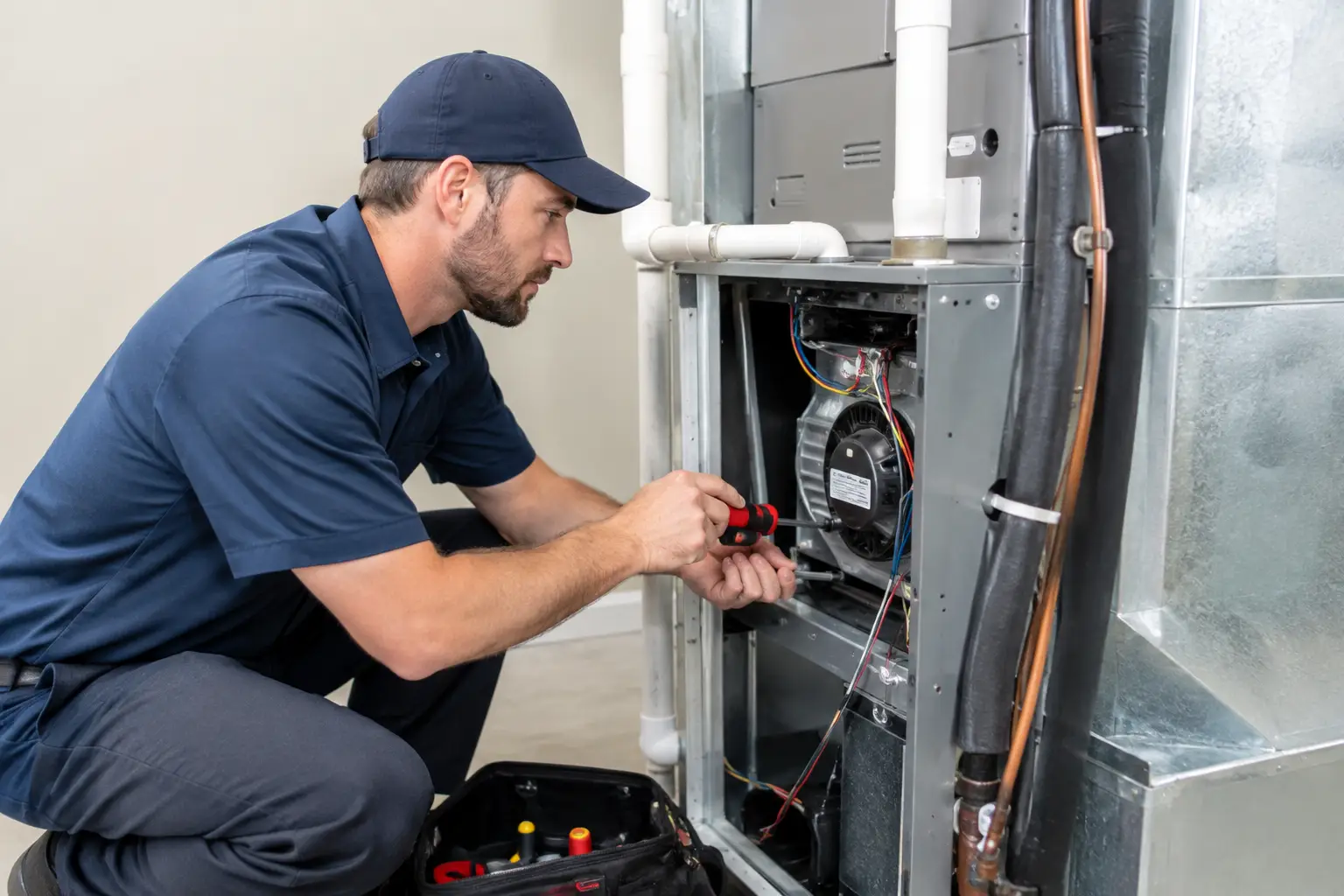
Your thermostat may be set to cool, but the rooms still feel sticky, warm, or strangely uneven. Before assuming the entire AC system has failed, start with the indoor unit. This air handler troubleshooting guide helps homeowners identify the safe, simple checks that can explain a comfort problem and the warning signs that call for professional HVAC service.
An air handler is the indoor equipment that moves conditioned air through your ducts. Depending on your system, it contains the blower motor, evaporator coil, filter compartment, electrical controls, and condensate drain. When one of those parts is not doing its job, you may have weak airflow, water around the unit, unusual noises, or an AC that runs without properly cooling the house.
Start With the Safest Air Handler Checks
A few minutes of observation can save you from an unnecessary service call, but HVAC equipment involves electricity, moving parts, refrigerant, and water. Keep panels closed unless you know exactly how to safely access them. Never bypass a safety switch, force a breaker back on repeatedly, or attempt to handle refrigerant components.
First, check the thermostat. Confirm it is set to Cool during warm weather, the temperature setting is below the current indoor temperature, and the fan setting is on Auto rather than On. The On setting runs the blower continuously, which can make it seem as if the system is not cooling between cycles.
Next, look at the electrical panel. If the air handler breaker has tripped once, you can turn it fully off and then back on. If it trips again, leave it off and call for service. A recurring trip can point to a wiring issue, failing blower motor, control problem, or another condition that needs a trained technician.
Finally, inspect the return-air filter. A filter packed with dust restricts airflow, puts extra strain on the blower, and can contribute to a frozen indoor coil. Replace a disposable filter if it looks gray, clogged, or visibly coated in debris. In our hot, humid South Mississippi and Louisiana climate, many homes need this done more often during heavy cooling season.
Air Handler Troubleshooting Guide for Common Symptoms
Weak airflow from vents
If air is coming from some vents but feels weak throughout the home, begin with the filter and make sure supply and return vents are open and unobstructed. Furniture, rugs, curtains, and closed interior doors can interfere with air circulation, especially in rooms farthest from the air handler.
If the filter is clean but airflow remains weak, the problem may be inside the unit. A blower wheel can collect dirt, a blower capacitor can weaken, the motor may be failing, or ductwork may have leaks or restrictions. You may also hear humming, squealing, or rattling when the fan tries to start. Those are service-call symptoms, not DIY repair projects.
Uneven temperatures have more than one possible cause. A large sunny room, poor insulation, leaky ducts, thermostat placement, and an improperly sized system can all play a part. The right answer depends on the home, which is why replacing parts without diagnosis often wastes money.
Air handler runs, but the house is not cooling
When the blower runs but the air from the registers is not cold, check the outdoor unit as well. If the outdoor condenser is silent while the indoor fan is running, the issue may involve the thermostat, breaker, disconnect, capacitor, contactor, or another electrical component.
If both units are running but cooling is poor, look for ice on the refrigerant line near the indoor unit or on any visible portion of the evaporator coil. Ice is a sign to turn the system off at the thermostat and set the fan to Auto. Do not chip at the ice or keep operating the AC in hopes it will push through.
A dirty filter can cause coil freezing, but so can low refrigerant, a blower issue, or a dirty coil. Refrigerant is not something that simply gets “used up.” If the level is low, there is usually a leak that should be located and repaired. A technician can determine the actual cause before recommending the next step.
Water around the air handler
Water near an air handler deserves quick attention. During cooling, the indoor coil removes moisture from the air, and that water should travel through a condensate drain line. In humid weather, that drain works hard.
A clogged drain line, blocked drain pan, failed condensate pump, or tripped float switch can stop the system or create a leak. Check for standing water around the cabinet, a wet ceiling below an attic installation, or water marks near a closet unit. If you see active leaking, turn the system off to limit damage and arrange service.
Some homeowners can see an exterior drain outlet and notice whether it is draining normally, but avoid pouring chemicals into the system or taking apart drain connections. A professional cleaning can clear the blockage, inspect the pan, verify the safety switch, and help prevent another overflow.
Strange sounds or smells
A brief click at startup is normal for many systems. Loud or repeated sounds are different. Screeching can indicate a motor or bearing issue. Banging, scraping, or metal-on-metal noises can mean a loose or damaged blower component. Electrical buzzing may come from a relay, transformer, capacitor, or wiring issue.
A musty smell can be caused by moisture, dirty components, or biological growth around the coil and drain area. A burning odor, melting-plastic smell, or smoke is more urgent. Shut the system down at the thermostat and breaker if it is safe to do so, then call for immediate help. Do not continue running equipment that smells like it is overheating.
When a Reset Is Reasonable and When It Is Not
A single power interruption can occasionally leave a thermostat or system control confused. After confirming the filter is clear and the breaker is not repeatedly tripping, turning the thermostat off for five minutes and restoring it can be a reasonable first step.
A reset is not a repair. If your unit needs repeated resets, shuts down during every cooling cycle, leaks water, freezes up, or makes new noises, there is an underlying issue. Continuing to reset it can turn a small repair into a larger failure and leave your family without cooling when temperatures are at their highest.
Prevent Problems Before They Interrupt Comfort
The most useful air handler maintenance is also the most consistent. Check the filter monthly and replace it as needed. Keep return grilles clear, watch for drainage changes, and pay attention when a system starts sounding or performing differently. Small changes are often the first sign that service is needed.
Professional maintenance goes further by checking electrical connections, blower performance, drain operation, coil condition, safety controls, and overall system operation. It is particularly valuable before summer, when humidity and long run times place more demand on indoor equipment.
For homeowners in Picayune and nearby communities, Campo Heating & Air can diagnose air handler problems with clear recommendations and a focus on practical, long-term comfort. Whether the fix is a clogged drain, a worn blower component, ductwork concern, or a larger system decision, you deserve to know what is happening before work begins.
If your air handler is leaking, freezing, tripping breakers, or leaving your home uncomfortable, turn it off when appropriate and get help sooner rather than later. A prompt inspection can protect your equipment, your home, and your peace of mind.
0 Comments