
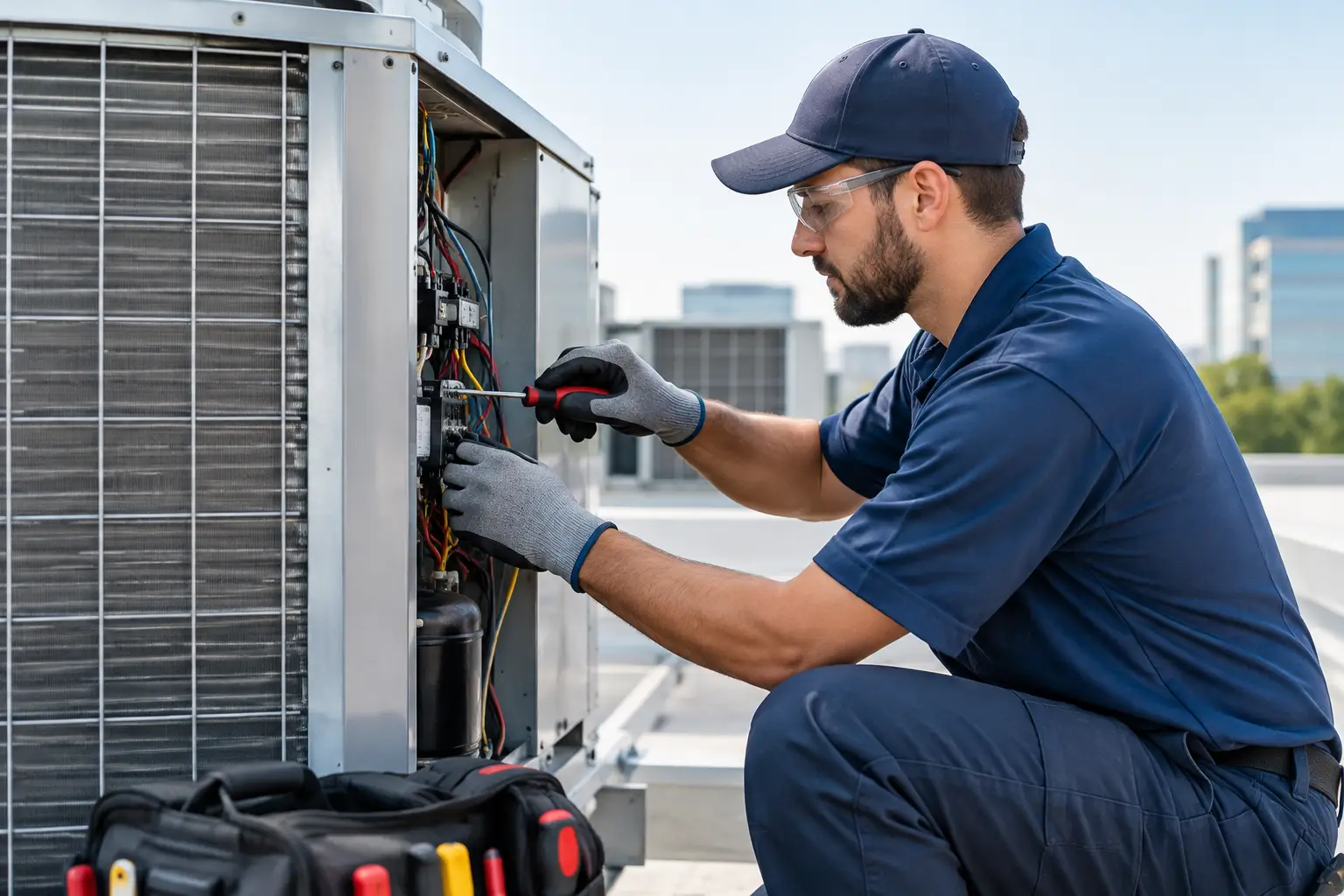
A hot dining room, a muggy office, or a rental property with no heat can become a business problem fast. A commercial hvac maintenance contract gives property owners and business managers a plan for preventing many of those disruptions before they turn into expensive, urgent calls.
For businesses along the Mississippi Gulf Coast and Southern Louisiana, HVAC equipment works hard against long cooling seasons, humidity, salt air, and sudden temperature changes. Regular professional care helps protect comfort for customers, tenants, and employees while giving you a clearer picture of your system’s condition and operating costs.
What Is a Commercial HVAC Maintenance Contract?
A commercial HVAC maintenance contract is an ongoing service agreement between your business and an HVAC provider. Instead of waiting for equipment to fail, you schedule routine inspections, cleanings, adjustments, and performance checks throughout the year.
The exact agreement should fit your building and equipment. A small retail shop with one split system needs a different level of care than an office building, restaurant, medical practice, or multi-unit rental property. The goal is the same: keep heating and cooling equipment dependable, efficient, and less likely to surprise you at the worst possible time.
A good contract also creates continuity. The same service team can track recurring issues, note aging components, and help you plan repairs or replacement before an unexpected breakdown puts your operations on hold.
What Should a Commercial HVAC Maintenance Contract Include?
Not every maintenance plan offers the same value. Before signing, ask for a clear explanation of what is included at each visit, how often visits occur, and what happens if the technician finds a concern.
Seasonal system inspections
Most commercial systems benefit from maintenance before the peak cooling season and again before heavy heating use. During an inspection, a trained technician should check overall operation, thermostat response, airflow, electrical connections, safety controls, refrigerant performance, and visible wear.
That work matters because HVAC problems often start small. A loose wire, worn contactor, dirty coil, or drainage issue may not stop the system immediately. Left alone, however, it can put extra strain on major components and lead to a much larger repair.
Cleaning that supports airflow and efficiency
Dirt is not just a cosmetic issue inside HVAC equipment. Clogged filters, dirty evaporator coils, blocked condensate drains, and debris around outdoor units can restrict airflow and force a system to work harder than it should.
Your agreement may include filter changes or identify filters as an owner-provided item. Either approach can work, but responsibilities should be clear. For a business with high foot traffic, kitchens, pets, dusty work areas, or extended operating hours, filters may need attention more often than a standard schedule suggests.
Drain line and humidity control checks
On the Gulf Coast, moisture management deserves special attention. A clogged condensate drain can cause water damage, unpleasant odors, ceiling stains, or unexpected system shutdowns. Regular drain cleaning and pan inspections are practical protections, particularly for rooftop units and systems located above finished spaces.
Technicians should also look for signs that humidity is not being controlled well. A space can reach the thermostat setting and still feel uncomfortable if the equipment is oversized, short-cycling, poorly maintained, or facing airflow problems.
Written findings and repair recommendations
A maintenance visit should leave you with more than a verbal update. You should know what was checked, what was found, what needs attention now, and what may need budgeting later.
This documentation is especially valuable for landlords, property managers, and business owners responsible for multiple locations. It helps you make decisions based on the condition of the equipment rather than guessing after a failure.
The Value Is Fewer Business Interruptions
A maintenance contract cannot promise that a mechanical part will never fail. Motors, capacitors, compressors, and electronics can still wear out, and severe weather can create problems no one can prevent. The honest value is lower risk, earlier detection, and a faster, more informed response when repairs are needed.
That difference can be significant. An AC failure during a crowded lunch shift, a heat outage in an occupied rental, or poor airflow in an office can affect customer experience, employee productivity, inventory, and tenant satisfaction. Preventive service gives your HVAC team more chances to catch warning signs on a planned visit instead of during an emergency.
It can also support more predictable spending. Major replacement decisions are rarely convenient, but learning that a system is approaching the end of its service life gives you time to compare options, consider financing, and choose a solution that fits your business instead of settling for the fastest available answer.
How Often Does Commercial Equipment Need Maintenance?
For many small and mid-sized businesses, twice-yearly maintenance is a sensible starting point: once before cooling season and once before heating season. Some equipment needs more frequent attention.
Restaurants, salons, daycares, medical offices, commercial kitchens, workshops, and properties with heavy occupancy may need additional filter changes, coil cleaning, or inspections. Buildings near the coast may also require closer attention because salt air and humidity can accelerate corrosion on outdoor equipment.
The right schedule depends on equipment age, manufacturer recommendations, building use, operating hours, indoor air quality concerns, and the cost of downtime. A dependable contractor should recommend a level of service based on those realities, not push a one-size-fits-all package.
Questions to Ask Before You Sign
A maintenance agreement should be easy to understand. If the language is vague, ask for details before committing. You are paying for peace of mind, and that starts with knowing what service you will receive.
Ask whether the plan includes priority scheduling, discounted repair rates, emergency service availability, detailed service reports, filter service, and reminders for upcoming visits. Also ask what is excluded. Parts, refrigerant, major repairs, after-hours labor, and replacement equipment are often separate costs, even when a plan offers preferred pricing.
It is also smart to ask who will service your equipment and whether the technicians are trained to work on your system type. Commercial HVAC can include package units, split systems, heat pumps, ductless equipment, thermostats, ventilation components, and more. Familiarity with your setup helps make each visit more productive.
When a Maintenance Contract May Need to Be Expanded
Sometimes basic seasonal service is enough. Other times, your property needs more support. If you are dealing with recurring hot and cold spots, frequent breakdowns, excessive humidity, rising utility bills, complaints from tenants, or equipment that is more than a decade old, a broader maintenance strategy may make sense.
That may include airflow testing, ductwork evaluation, indoor air quality recommendations, thermostat upgrades, or a replacement plan for aging units. The answer is not always to replace equipment immediately. A well-maintained system can often provide dependable service for years, but a professional assessment can show whether continued repairs are still the cost-effective choice.
Campo Heating & Air works with local business owners and property decision-makers who need straightforward answers, dependable maintenance, and responsive help when comfort cannot wait. The best service relationship is not built around selling the biggest solution. It is built around keeping your building comfortable and helping you make informed decisions as your needs change.
A well-managed HVAC system rarely gets attention when it is doing its job. That is exactly the point. Put a maintenance plan in place before the next busy season, and let your customers, employees, and tenants experience the comfort they expect without having to think about it.
0 Comments