
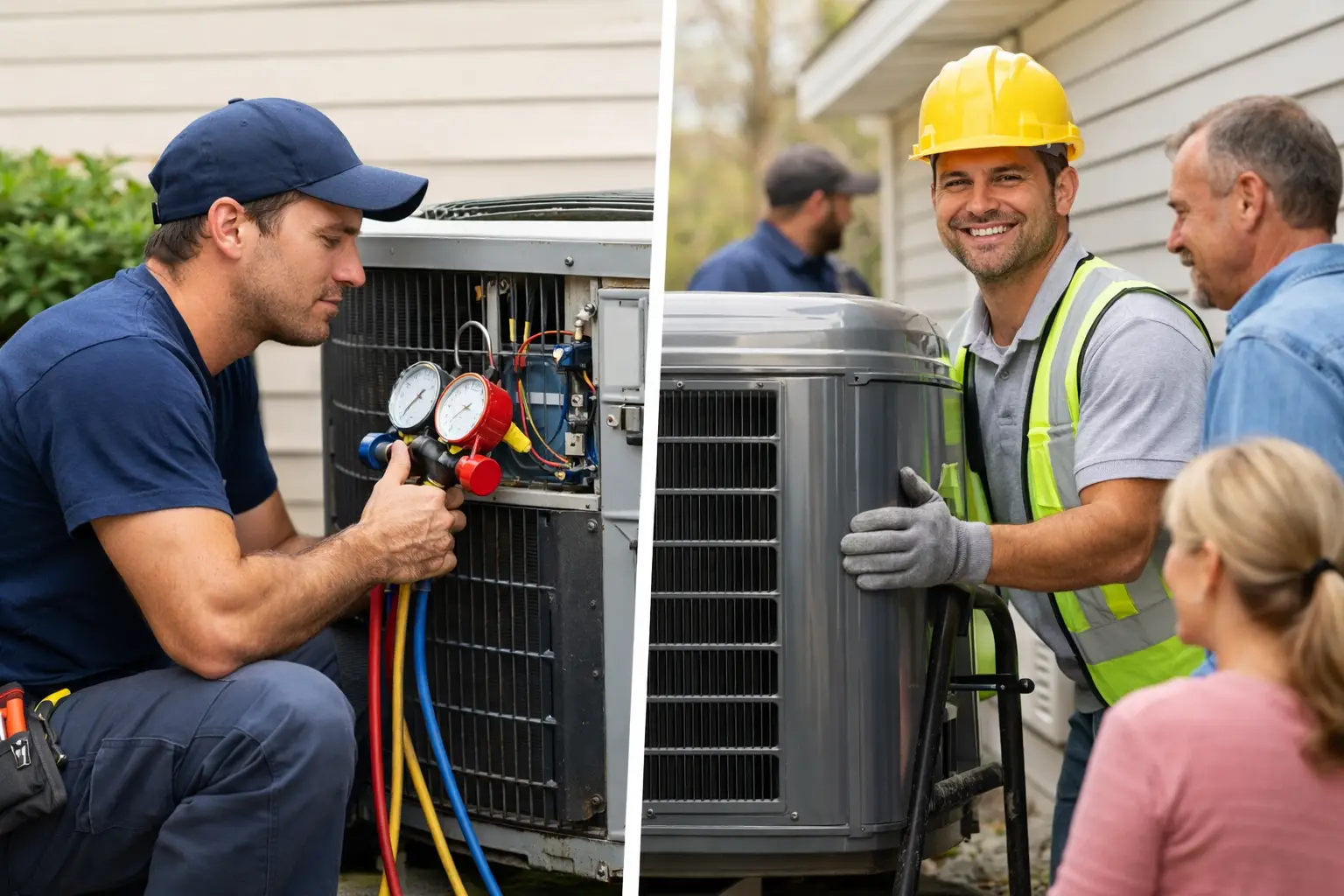
A system that quits cooling during a Picayune summer or leaves your home cold on a damp winter night creates one urgent question: can it be fixed today? Repair versus replacement HVAC is not always a simple choice, especially when an unexpected expense is already putting pressure on the household budget. The right answer depends on what failed, how old the equipment is, what the repair will cost, and whether your system has been warning you about a larger problem for months.
A dependable technician should never push a replacement when a sound repair will restore safe, reliable comfort. At the same time, repeatedly investing in an aging, inefficient system can cost more than homeowners realize. A clear assessment gives you the information to make a decision that protects both your comfort and your budget.
When an HVAC Repair Makes Good Sense
Many heating and cooling problems are repairable. A failed capacitor, worn contactor, clogged drain line, damaged thermostat, or electrical connection issue can stop a system from running properly without meaning the entire unit is finished. These repairs are often far less expensive than installing new equipment and can give a well-maintained system several more productive years.
Repair is usually the practical choice when your system is under 10 years old, has had few major issues, and has kept your home comfortable before this problem. It also makes sense when the repair addresses a specific, isolated failure rather than a pattern of breakdowns. For example, an air conditioner that suddenly stops because of a failed capacitor may be back in service quickly once that part is replaced.
Maintenance history matters here. Equipment that receives routine tune-ups, filter changes, and cleaning typically has fewer avoidable failures. If the system is otherwise in good condition, repairing it can be the affordable, responsible path forward.
A Repair Can Also Buy You Time
Sometimes replacement may be on the horizon, but it is not the best move this minute. A safe, cost-effective repair can keep your system running while you plan for an installation, compare options, or arrange financing. That can be especially helpful for landlords, small business owners, and families managing several home expenses at once.
The key is being honest about what the repair can accomplish. A temporary repair should be presented as temporary, not as a promise that an older system will suddenly perform like new.
Signs Replacement May Be the Better Investment
An HVAC system does not have to completely fail before replacement becomes the smarter financial decision. In fact, planning ahead can prevent the stress of making a major purchase during an emergency heat wave or cold snap.
Age is one of the clearest factors. Central air conditioners and heat pumps often last around 10 to 15 years, while furnaces may last longer with proper care. Those are not guarantees. Coastal humidity, heavy summer use, installation quality, maintenance habits, and repair history all affect actual lifespan. Still, a system approaching or beyond its expected service life deserves a closer look before you approve a costly repair.
Frequent service calls are another warning sign. One repair is normal. Two unrelated breakdowns in a short period may mean multiple components are wearing out. If you are regularly scheduling repairs, paying diagnostic fees, and worrying about whether the next hot day will trigger another failure, replacement can offer more value and more peace of mind.
Pay attention to performance, too. Uneven temperatures between rooms, weak airflow, persistent humidity, rising utility bills, loud operation, and difficulty maintaining the thermostat setting can all point to an aging system. Some of these problems may come from ductwork, insulation, thermostat settings, or indoor air quality concerns rather than the equipment itself. That is why a full evaluation matters before deciding.
Consider the Cost of the Repair in Context
A useful rule of thumb is to compare the repair cost with the system’s age and overall condition. A minor repair on an eight-year-old unit is very different from a major compressor repair on a 15-year-old unit with a history of refrigerant leaks and poor efficiency.
If a repair is expensive and the equipment is near the end of its useful life, putting that money toward replacement may be wiser. New equipment comes with warranty protection, improved efficiency, and the chance to correct installation, sizing, airflow, or humidity problems that repairs alone cannot solve.
This does not mean every large repair requires a new system. A qualified technician should explain the likely life remaining after the repair, the risks of future failures, and the replacement options available. You deserve clear numbers, not pressure.
Repair Versus Replacement HVAC: Questions to Ask
Before making a decision, ask your technician to walk through the condition of the entire system, not just the failed part. A helpful conversation should cover the equipment’s age, the cause of the problem, repair cost, expected performance afterward, and whether other parts show signs of wear.
It is also worth asking whether your current system is properly sized for your home or business. An oversized unit can short-cycle, leaving humidity behind and wearing parts out faster. An undersized unit may run constantly without delivering consistent comfort. Duct leaks, blocked returns, and poor airflow can create similar symptoms, so replacing equipment without addressing those issues may leave you disappointed.
For homes with high humidity, allergies, or dust concerns, replacement can also be an opportunity to improve indoor air quality. Better filtration, humidity control, duct repairs, and properly matched equipment can make a meaningful difference in how the home feels, not just the temperature displayed on the thermostat.
What New HVAC Equipment Can Change
Modern heating and cooling systems are generally more efficient than older units, particularly equipment installed more than a decade ago. Greater efficiency can lower monthly operating costs, although the actual savings depend on your home’s condition, utility rates, thermostat habits, and the system selected.
Replacement can also bring quieter operation and more consistent temperatures. Variable-speed systems and properly designed ductless mini-splits can be strong options for certain homes, room additions, garages, and spaces with persistent comfort issues. The best fit is not always the most expensive model. It is the system that matches your property, comfort needs, and budget.
Installation quality is just as important as the equipment itself. Correct sizing, refrigerant charging, electrical work, drainage, airflow testing, and duct connections all affect reliability and efficiency. A quality installation should begin with an assessment of the home or building, not a guess based only on the size of the old unit.
Avoid Making the Decision in a Panic
When the system fails, it is natural to focus on getting cool or warm air back as fast as possible. Same-day and emergency service can help restore comfort quickly, but you should still receive a straightforward explanation of your options. If a repair is possible, understand what it fixes. If replacement is recommended, understand why it is recommended now.
Keep records of past repairs and maintenance visits. They help reveal whether a breakdown is unusual or part of an expensive trend. They also give your technician a clearer picture of how the system has performed over time.
If replacement is the right choice, ask about available financing rather than settling for equipment that does not meet your needs simply because of the upfront price. A manageable monthly payment may allow you to choose reliable, properly sized equipment that delivers better comfort for years. The goal is affordability without cutting corners on the work that keeps your home safe and comfortable.
Get Advice Built Around Your Comfort
The best repair versus replacement HVAC decision is the one based on facts, not fear. Campo Heating & Air can assess the problem, explain the condition of your equipment in plain language, and help you weigh a repair against a replacement without the runaround. Whether you need a fast fix or a long-term comfort plan, a trusted local technician can help you make the next step with confidence.
Before the next breakdown makes the choice for you, schedule routine maintenance and ask how much useful life your system may have left. A little planning today can spare your family a difficult decision on the hottest or coldest day of the year.
0 Comments