
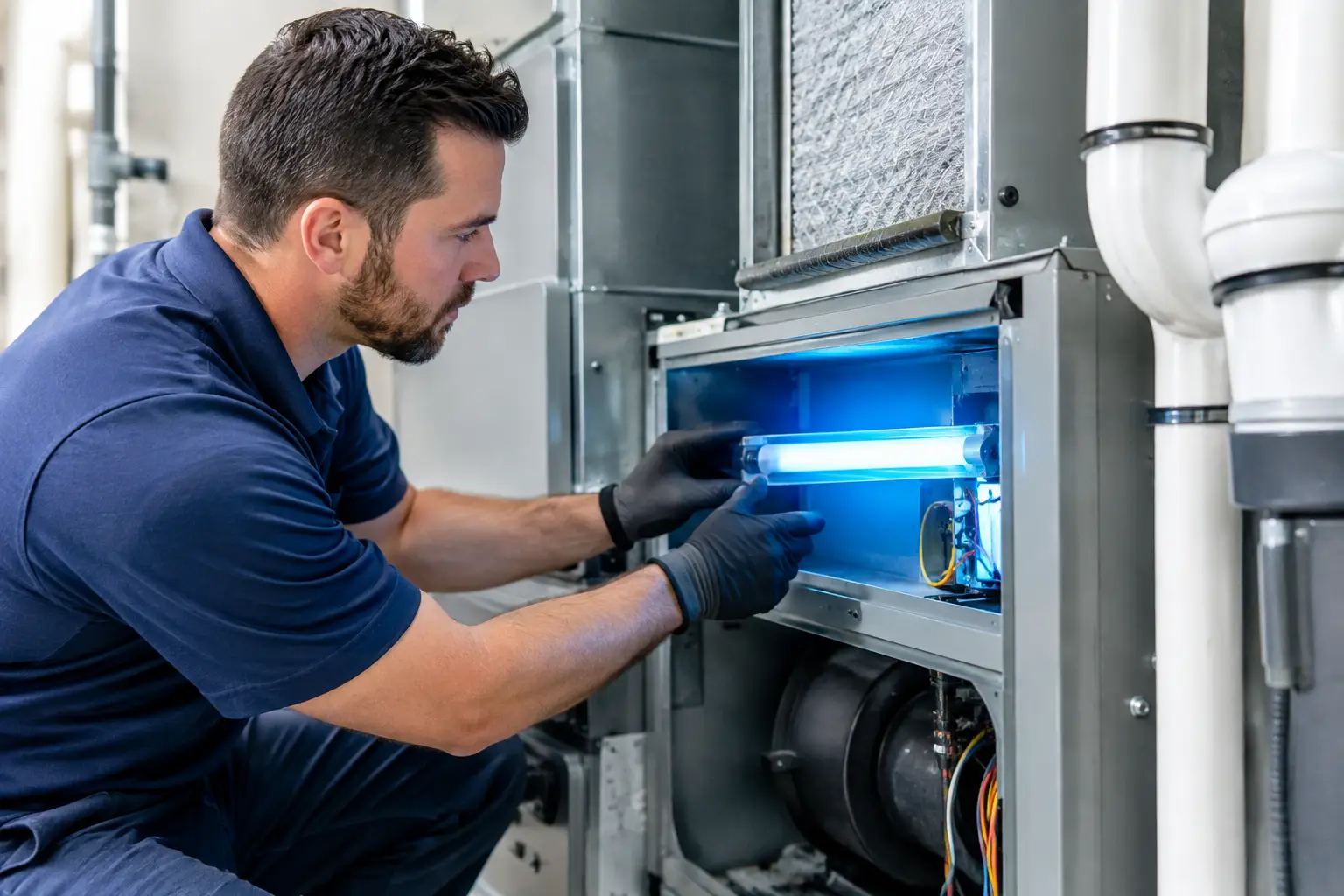
A musty smell when the AC starts is not always a duct problem. In our hot, humid climate, moisture can collect around your indoor coil and drain pan, creating an ideal place for biological growth. A uv light for hvac system use is designed to address that specific issue at the source – but it is not a cure-all for every indoor air quality concern.
For many homeowners in Picayune and along the Gulf Coast, a properly selected and professionally installed UV light can be a worthwhile addition to routine HVAC maintenance. The key is understanding what it does, what it does not do, and whether your system has the conditions that make it useful.
What a UV Light for an HVAC System Actually Does
Most HVAC UV lights use UV-C energy. This type of light is aimed at surfaces inside the equipment, usually the evaporator coil, drain pan, or nearby cabinet area. Those are the damp components where mold, mildew, and other microorganisms can grow over time.
When installed in the right position, UV-C light can help limit biological growth on those surfaces. That may help keep the coil cleaner, reduce odor concerns connected to the equipment, and support better system operation. A dirty coil has a harder time transferring heat, which can make an air conditioner run longer and put more strain on parts.
It is helpful to keep expectations realistic. A UV light does not remove dust, pet hair, pollen, or other particles from your air. It also does not replace a quality air filter, duct cleaning when it is truly needed, humidity control, or regular maintenance. Think of it as one layer of protection for a common trouble spot inside your HVAC system.
Why Humid Homes Often Benefit Most
Southern Mississippi and Southern Louisiana summers bring a combination HVAC systems have to work hard against: heat and humidity. Your air conditioner removes moisture as it cools your home, and that condensation collects at the indoor coil and drains away through the condensate system.
Under normal conditions, that process works quietly in the background. But when airflow is restricted, the drain line is dirty, maintenance has been delayed, or the system runs for long periods, moisture-related buildup can become more likely. A UV light may be especially useful for homes that have had recurring mildew odors, visible growth around the air handler, or repeated coil-cleaning needs.
Homes with allergy-sensitive family members may also ask about UV lights. While a UV lamp can help control growth on HVAC surfaces, it should not be presented as a medical solution or a guarantee against allergies. For particle-related concerns, a technician may recommend better filtration, air sealing, humidity adjustments, or a whole-home air quality assessment alongside a UV light.
Coil Lights vs. In-Duct Air Lights
Not every UV product works the same way. The two common categories are coil-sanitizing lights and in-duct air lights.
A coil light remains on and shines directly on the evaporator coil and drain pan. Because the light has continuous exposure to one targeted area, this style is often the practical choice for controlling surface growth where moisture is most likely to occur. It is a good fit for many residential systems, particularly in humid areas.
An in-duct air light is installed so the air moving through the ductwork passes by the light. It is intended to treat airborne microorganisms as they travel through the system. The challenge is exposure time. Air moves quickly through ducts, so performance depends heavily on the unit’s design, light intensity, airflow, and installation location.
For that reason, the best option depends on the problem you are trying to solve. If your main concern is buildup on a damp evaporator coil, a coil light is usually the more direct approach. If you are considering an air-treatment unit, ask your HVAC professional to explain the product’s intended use instead of relying on broad claims on the box.
Signs Your System May Be a Good Candidate
A UV light is not necessary in every home. A clean, well-maintained system with good drainage, appropriate filtration, and controlled indoor humidity may not need one right away. Still, there are situations where it can make sense as preventive care.
Consider asking about a UV light if you notice recurring musty odors when cooling begins, visible growth near the indoor unit, frequent coil buildup, or a drain pan that has needed repeated attention. It can also be worth discussing after a coil cleaning, so the cleaned area has ongoing protection going forward.
Commercial properties may benefit as well. Offices, rental homes, small retail spaces, and other buildings with long operating hours can place more demand on the HVAC equipment. Keeping coils cleaner can support reliable operation and make maintenance planning more predictable.
Before installing anything, the underlying issue should be checked. A clogged condensate drain, an oversized system that short-cycles, a poorly insulated duct, or a filtration problem needs its own repair. Adding UV equipment without correcting a moisture or airflow issue can leave you paying for an accessory while the real problem continues.
Professional Installation Matters
UV-C light is effective only when it is installed correctly and safely. The lamp needs the right placement, the correct mounting angle, and enough clearance to treat the intended surface. It also needs to be positioned so the light does not damage certain plastic, wire insulation, or other HVAC components over time.
More importantly, direct exposure to UV-C can harm eyes and skin. This is not a project to handle with a loose lamp, improvised wiring, or a product placed where household members could be exposed. A trained technician can select an appropriate unit, install it inside the equipment cabinet, verify safe operation, and make future service straightforward.
A professional visit is also a good time to inspect the coil, drain pan, drain line, blower, filter rack, and ductwork. If the coil is already coated with debris or biological buildup, it may need cleaning first. UV light helps with ongoing control, but it does not magically restore a neglected coil to clean condition.
What Ongoing Care Looks Like
UV lamps do not last forever. Many need replacement about once a year, although the schedule varies by product. A lamp may still appear to glow after its useful UV-C output has dropped, which is why replacing it on the recommended schedule matters.
Your regular maintenance visit should include checking the lamp, electrical connections, coil condition, drainage, and filter. Keep changing your HVAC filter on schedule as well. A UV light and a filter serve different jobs: the lamp targets growth on or near equipment surfaces, while the filter captures airborne particles before they build up inside the system.
Cost is another reasonable consideration. The value of a UV light is strongest when it addresses a real condition in your home or building. If your system regularly develops coil-related growth or odor issues, the investment may help protect cleanliness and performance. If there is no moisture-related concern, your money may be better spent on maintenance, sealing air leaks, upgrading filtration, or repairing a drainage problem.
A Better Plan Than Buying a Box Off the Shelf
Indoor air quality solutions work best when they are matched to the home, not chosen by marketing claims alone. Start with an HVAC inspection and explain what you have noticed: odors, allergy concerns, visible buildup, humidity, frequent drain problems, or uneven comfort. From there, a technician can tell you whether a UV light is appropriate and what other improvements would make the biggest difference.
At Campo Heating & Air, the goal is not to sell a one-size-fits-all add-on. It is to help your equipment stay clean, dependable, and ready for the demanding weather we get here. If a UV light is right for your system, proper installation and routine maintenance will give it the best chance to earn its place in your home.
0 Comments