
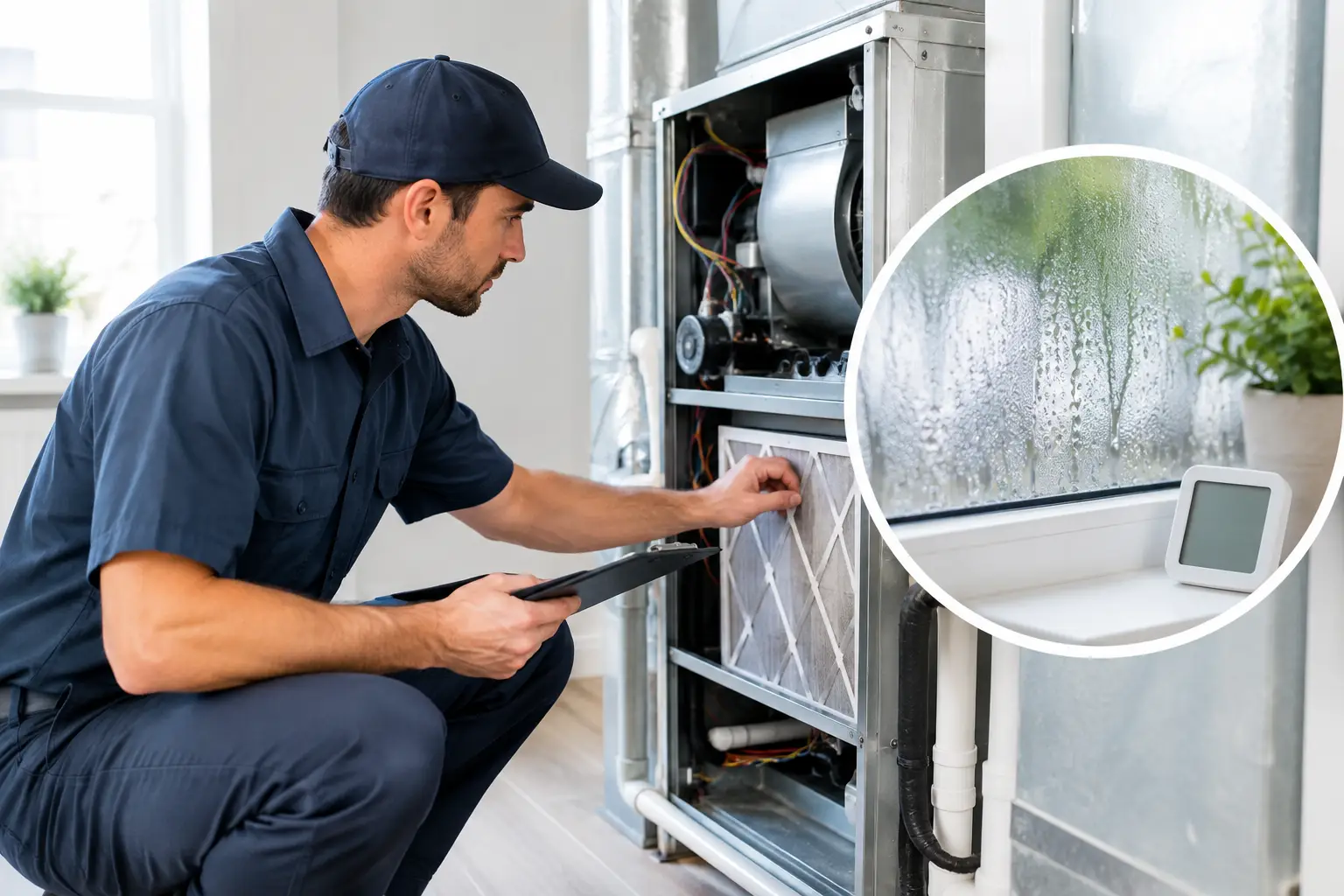
A Gulf Coast summer can make a home feel sticky within minutes. If you are asking, “why is indoor humidity high?” even when your air conditioner is running, the answer may be more than the weather outside. Excess moisture can point to an HVAC issue, an air leak, a plumbing problem, or a combination of everyday habits and home conditions.
Indoor humidity is not just a comfort concern. When it stays too high, it can encourage mold growth, make rooms feel warmer than the thermostat setting, and put added strain on your cooling system. The good news is that most moisture problems have a clear cause – and a practical next step.
What Indoor Humidity Should Be
For most homes, indoor relative humidity should stay between 30% and 50%. In hot, humid areas like Picayune and the Mississippi Gulf Coast, reaching the lower end of that range during the summer is not always realistic. Still, a properly working AC system should generally keep humidity near or below 55% during normal operation.
A simple digital hygrometer can tell you where your home stands. You may also notice the signs before you see a number: damp or clammy air, musty odors, condensation on windows, warped wood, peeling paint, or rooms that never seem comfortable despite cool air coming from the vents.
Why Is Indoor Humidity High When the AC Is Running?
Your air conditioner does two jobs. It cools the air and removes moisture as warm indoor air passes over the cold evaporator coil. That moisture drains away through a condensate line. When either part of that process is interrupted, your home can feel humid even with the thermostat set low.
Your AC may be oversized
An oversized air conditioner can cool a home too quickly. That may sound like a benefit, but short cooling cycles do not give the system enough time to pull sufficient moisture from the air. The thermostat reaches its temperature setting, the system shuts off, and the home is left cool but damp.
This is one reason HVAC sizing matters. The right system is based on more than square footage. Insulation, windows, ductwork, sun exposure, ceiling height, and local climate all affect the load your equipment needs to handle.
The system is short-cycling or not running long enough
Even a correctly sized AC can run in short cycles because of a thermostat issue, dirty components, low refrigerant, electrical trouble, or restricted airflow. If your system turns on and off every few minutes, moisture removal often suffers.
A thermostat set very low can also create problems in some homes. It may run the system hard without solving the underlying humidity source, particularly if outdoor air or moisture is continually entering the house.
Dirty filters and coils restrict airflow
A clogged air filter limits the air moving across the evaporator coil. Dirty coils can have a similar effect. When airflow is restricted, your system cannot cool or dehumidify as effectively, and it may eventually freeze up.
Check the filter monthly during heavy-use seasons and replace it as needed. If the filter looks gray, clogged, or bowed inward from suction, it has likely been in place too long. Professional maintenance can address the deeper cleaning and performance checks that a filter change cannot.
The drain line may be clogged
As your AC removes moisture, it sends water through a condensate drain line. In our humid climate, algae, sludge, and debris can clog that line over time. A blockage can cause water backup, system shutoffs, ceiling stains, or drain-pan overflow.
A clogged drain does not always explain every humidity issue, but it is a common maintenance concern that deserves prompt attention. Water where it does not belong can quickly become a bigger repair.
Moisture May Be Entering From Outside
Your AC cannot keep up if humid outdoor air has an easy path indoors. Small gaps can add up, especially during a long stretch of hot, rainy weather.
Check weatherstripping around exterior doors, seals around windows, and openings where plumbing lines, electrical wiring, or vents pass through exterior walls. An attic access panel that does not seal well can also allow heat and humidity into the living space.
Duct leaks matter, too. Leaky return ducts can pull hot, humid air from an attic, crawl space, or garage into the HVAC system. Supply duct leaks waste conditioned air before it reaches the rooms that need it. Besides making the house feel muggy, duct leakage can increase energy bills and uneven temperatures.
Everyday Activities Can Raise Humidity
Some humidity is simply part of living in a home. Showers, cooking, laundry, dishwashing, and even a full house of people all release moisture into the air. Usually, a healthy ventilation system and properly operating AC can manage it.
The issue arises when moisture-producing activities happen without adequate exhaust. Run the bathroom fan during showers and for at least 15 to 20 minutes afterward. Use a kitchen exhaust fan when boiling water or cooking on the stove. If your dryer vents indoors, is disconnected, or has a crushed vent pipe, it can release a surprising amount of moisture into your home.
Be careful with portable humidifiers, too. They can help during occasional dry winter weather, but they are often unnecessary in South Mississippi and Southern Louisiana. If you are seeing condensation or musty smells, turn them off until you know your actual humidity level.
Hidden Water Problems Can Be the Real Cause
If humidity is high in one room or one section of the building, look beyond the air conditioner. A slow plumbing leak, a roof leak, a wet crawl space, poor drainage near the foundation, or water intrusion after a storm can raise indoor moisture levels.
Watch for soft drywall, discolored ceilings, wet carpet edges, bubbling paint, or an odor that does not improve when the AC runs. These are not problems to cover up with air freshener or a dehumidifier alone. The water source needs to be found and corrected first.
For commercial properties, high humidity can also come from frequently opened doors, outside air ventilation issues, roof leaks, or equipment that is no longer sized for the building’s current use. A space that was once lightly occupied may need a different comfort strategy after renovations, added staff, or new equipment.
Steps You Can Take Right Now
Start with the basics: check your filter, confirm that bathroom and kitchen exhaust fans vent outside, and use a hygrometer to track humidity in several rooms. Keep windows and exterior doors closed while the AC is running, especially on humid days.
Set your thermostat to a steady, reasonable temperature instead of making large up-and-down adjustments. For many households, 72 to 76 degrees is comfortable, though personal preference and home conditions vary. Lowering the thermostat repeatedly is not a reliable way to remove moisture and can increase utility costs.
A portable dehumidifier can help in a single problem area, such as a basement, laundry room, or bedroom. It is a useful short-term tool, but it should not be the only answer if the entire home remains humid. Empty and clean the unit regularly, and make sure it is sized for the area it serves.
When to Call an HVAC Professional
Schedule an evaluation if your indoor humidity stays above 55% for several days, your AC runs constantly without making the home comfortable, or you see water around the indoor unit. You should also call for help if you notice ice on refrigerant lines, weak airflow, musty odors from vents, or a system that starts and stops repeatedly.
A trained technician can check refrigerant levels, airflow, coils, drainage, duct leakage, thermostat operation, and equipment sizing. Depending on what is found, the best solution might be a repair, duct improvement, maintenance, a whole-home dehumidifier, or a system replacement planned around your budget.
At Campo Heating & Air, the goal is not to sell a one-size-fits-all fix. It is to identify why your home feels damp and recommend a solution that protects your comfort, your equipment, and your peace of mind.
High humidity has a way of making a home feel less like home. Address it early, before a sticky room becomes mold damage, a high utility bill, or an AC breakdown on the hottest day of the year.
0 Comments