
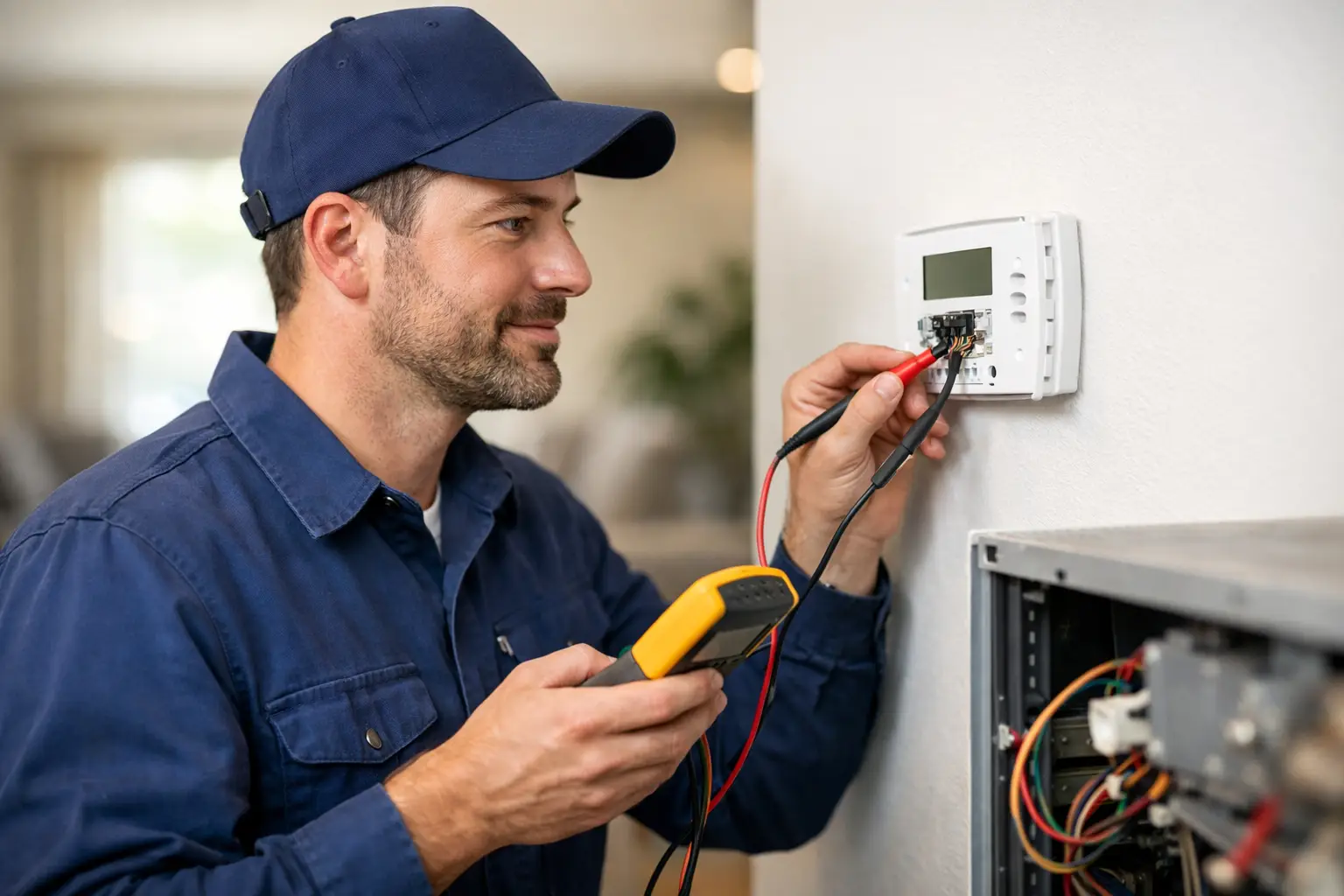
A thermostat can make a perfectly good HVAC system seem broken. The screen may be blank, the air may not come on, or your home may feel several degrees warmer or colder than the setting. Knowing how to troubleshoot thermostat problems can help you rule out a simple issue before scheduling a repair. It can also keep you from changing settings repeatedly while a more serious electrical or equipment problem gets worse.
Start with safe, basic checks. If your thermostat needs more than a setting adjustment, battery change, or gentle cleaning, it is time to let a trained HVAC technician take a closer look.
Start With the Thermostat Settings
Before assuming the thermostat has failed, confirm that it is set to the correct mode. For cooling, select “Cool.” For heat, select “Heat.” Then set the temperature at least three to five degrees below or above the current room temperature, depending on the season.
Check that the fan setting is on “Auto,” not “On.” When the fan is set to “On,” it can continue circulating air even when the system is not actively heating or cooling. That often makes homeowners think the AC or furnace is running incorrectly, when the thermostat is simply telling the blower to keep moving air.
Programmable and smart thermostats add another possible wrinkle. A schedule, vacation mode, energy-saving setting, or app control may be overriding the temperature you just selected. Review the programmed schedule and temporarily use the manual hold feature. If the system responds correctly on hold, the issue is likely in the schedule rather than the HVAC equipment.
Check Power Before You Troubleshoot Thermostat Problems Further
A blank thermostat display is commonly a power issue. If your model uses batteries, replace them with fresh batteries even if the screen still looks partially active. Weak batteries can cause intermittent operation, inaccurate readings, or a thermostat that will not communicate reliably with the system.
For a hardwired thermostat, inspect your home’s electrical panel for a tripped breaker. Your indoor air handler or furnace may be on a separate breaker from the outdoor AC unit, so look carefully. Reset a breaker once if it has tripped. If it trips again, do not keep resetting it. That can point to an electrical fault, a failing component, or a problem inside the HVAC system that needs professional attention.
Also check the HVAC service switch. It often looks like a standard light switch and may be located near the indoor unit, in a closet, attic, garage, or utility area. Someone may have turned it off accidentally while storing items, cleaning, or working nearby.
Replace a Dirty Air Filter
A clogged air filter affects more than indoor air quality. It restricts airflow, which can cause your system to overheat in winter or freeze up in summer. Some equipment has safety controls that shut the system down when conditions are not right, leaving you with a thermostat that appears to be calling for heating or cooling but no conditioned air.
Pull out the filter and hold it up to a light. If little light passes through, replace it. Most homes benefit from checking the filter monthly and replacing it as needed, especially with pets, high pollen, ongoing construction, or a busy household.
After changing the filter, give the system time to recover. If your AC coil has frozen, turn the thermostat to “Off” and set the fan to “On” to help thaw the unit. Do not try to chip away ice or restart cooling while ice is still present. If freezing returns after the filter is replaced, schedule service because low refrigerant, a blower issue, or a drainage problem may be involved.
Make Sure the Thermostat Can Read the Room
Thermostats measure the air around them, not the comfort in every room. A thermostat placed near a sunny window, exterior door, kitchen, lamp, television, or supply vent can get a false reading. That can make the system cycle too soon, run too long, or leave distant rooms uncomfortable.
Check for nearby heat sources and make sure furniture, pictures, or curtains are not blocking the thermostat. If it is an older mechanical model, carefully remove the cover and use a soft brush to clear visible dust. Do not spray cleaners into the thermostat or pull on any wiring.
A simple accuracy check can be useful. Place a reliable indoor thermometer near the thermostat for 15 to 20 minutes, away from direct sunlight and vents. A small difference is normal. If the readings are consistently several degrees apart, the thermostat may need calibration, relocation, or replacement.
Look for Signs the Problem Is Not the Thermostat
Sometimes the thermostat is doing exactly what it should, but the HVAC system cannot complete the command. A click at the thermostat followed by no heat or cool air can mean the call was sent, yet another component did not respond.
Pay attention to what happens after you adjust the setting. If you hear the indoor blower but the outdoor AC unit does not start, the issue could involve the outdoor unit, capacitor, contactor, wiring, or safety controls. If the furnace starts but shuts off quickly, dirty sensors, venting concerns, or ignition issues may be involved. If there is no airflow at all, a blower motor, control board, power, or condensate safety switch could be the cause.
Water around the indoor unit is another reason to pause troubleshooting. Many Southern Mississippi and Louisiana homes deal with heavy humidity, and a clogged condensate drain can trigger a float switch that turns off the system to prevent water damage. Clearing a drain line may sound simple, but recurring clogs should be addressed so moisture does not create a larger problem.
Know When to Call for Professional Help
Homeowner checks are helpful, but thermostat wiring and HVAC controls are not a place to guess. Turn the system off and call for service if you smell burning, notice scorched wiring, hear buzzing or repeated clicking, see water near electrical components, or have a breaker that keeps tripping.
You should also schedule an HVAC visit if the thermostat keeps losing power, cannot maintain the set temperature, frequently short-cycles, or works only sometimes. Those symptoms can come from a faulty thermostat, but they can also point to airflow restrictions, refrigerant problems, electrical failures, or aging equipment. Replacing the thermostat without identifying the real cause can leave you paying for a part that never solves the comfort issue.
For businesses and rental properties, a thermostat issue can quickly become more than an inconvenience. Uneven temperatures affect employees, customers, tenants, inventory, and equipment. Fast diagnosis helps protect comfort and keeps a minor interruption from becoming a major repair.
Prevent the Next Thermostat Surprise
The best thermostat troubleshooting is often maintenance completed before a hot afternoon or cold night exposes a problem. Keep filters changed, clear clutter around indoor equipment, and have the heating and cooling system inspected seasonally. During a professional tune-up, a technician can check thermostat operation, electrical connections, drainage, airflow, and the components that work behind the wall to keep your home comfortable.
If your thermostat is outdated, difficult to program, or no longer accurate, replacement may be worthwhile. A newer model can offer better scheduling, humidity features, alerts, and easier control. Still, the right thermostat depends on your system, wiring, household routine, and comfort goals. Not every smart thermostat is compatible with every HVAC setup.
When basic checks do not restore reliable comfort, a clear diagnosis is the most affordable next step. Campo Heating & Air provides dependable help for homeowners and property managers who want answers, not guesswork, across Picayune and nearby Gulf Coast communities. A properly working thermostat should fade into the background and let your home feel comfortable when it matters most.
0 Comments