
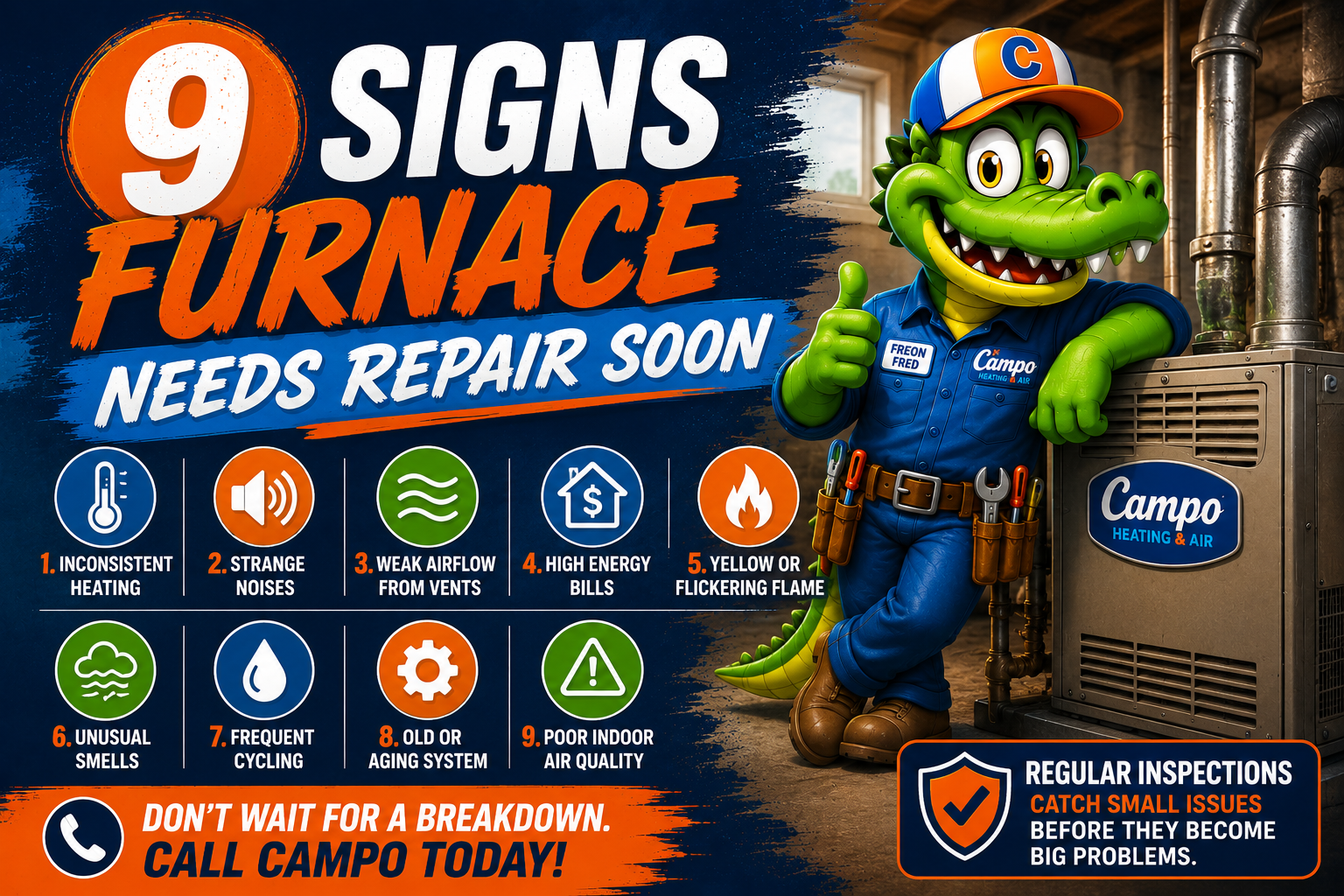
The furnace usually does not quit at a convenient time. It starts with a rattling sound before bed, a room that never quite warms up, or a heating bill that suddenly looks off. If you are noticing signs furnace needs repair, paying attention early can save you from a full breakdown, a bigger repair bill, and a cold house when you need heat most.
For homeowners and property managers, the hard part is knowing what counts as a real warning sign and what is just normal wear. Some issues are minor. Others mean your system is working harder than it should, putting extra strain on parts that are already aging. Here is what to watch for and when it is smart to call for professional help.
Common signs furnace needs repair
A furnace rarely fails without warning. Most systems give you clues, and those clues tend to get more obvious the longer they are ignored.
Strange noises that were not there before
A healthy furnace makes some sound when it starts and runs, but it should not bang, squeal, scrape, or rattle loudly. Different noises can point to different problems. A high-pitched squeal may mean a belt or motor issue. Rattling can suggest loose hardware or a failing component. Banging can happen when ignition is delayed or when parts are expanding and struggling under stress.
The exact cause matters, but the big takeaway is simple. New noises are not something to shrug off. Even a small loose part can lead to damage elsewhere if the system keeps running that way.
Weak airflow from the vents
If the heat is on but the air coming through your vents feels weak, your furnace may be dealing with a blower problem, clogged filter, duct issue, or another airflow restriction. Weak airflow can make the entire home feel uneven, with one room comfortable and the next room chilly.
This is one of those issues that sometimes has an easy fix and sometimes does not. A dirty filter is the best-case scenario. If a fresh filter does not improve airflow, the problem may be deeper in the system and worth having checked before it puts more strain on the furnace.
Uneven heating around the house
When some rooms feel warm and others stay cold, people often assume the furnace is still working well enough. Sometimes that is true. Other times, uneven heating is one of the first signs of a system that is no longer distributing heat properly.
The cause could be airflow imbalance, duct leakage, thermostat trouble, or a furnace that is losing performance. It depends on the age of the system and how suddenly the problem started. What matters is the pattern. If comfort in your home is getting harder to maintain, the furnace deserves a closer look.
Short cycling
Short cycling means the furnace turns on and off more often than normal. Instead of running through a full heating cycle, it starts, stops, and starts again. This can happen because of thermostat problems, airflow restrictions, overheating, or internal component issues.
Short cycling is hard on the equipment and hard on your utility bill. The furnace keeps using energy to restart without heating your home efficiently. Left alone, that repeated stress can wear out parts faster.
Signs furnace needs repair before it stops working
Some of the most important warning signs show up before the furnace actually fails. Catching them early is where homeowners usually save the most money.
Your energy bills are rising without a clear reason
If your heating costs are climbing but your usage has not changed much, your furnace may be losing efficiency. That does not always mean you need a replacement. Sometimes a repair can restore better performance, especially if the issue is tied to airflow, ignition, or a part that is no longer working correctly.
Bills can go up for other reasons too, including colder weather or insulation problems. Still, when the jump feels out of proportion, it is worth considering the furnace as part of the problem.
The thermostat and the furnace do not seem in sync
You raise the thermostat, but the house does not warm up like it should. Or the system runs long after the set temperature is reached. In some cases, the thermostat itself is the issue. In others, it is the furnace failing to respond correctly.
This is where guessing can waste time and money. Replacing the thermostat will not fix a heating system problem, and repairing the furnace will not help if the control is faulty. A proper diagnosis matters.
You notice unusual smells
A dusty smell at the start of heating season can be normal if the furnace has been sitting for months. That should fade fairly quickly. Smells that linger or smell sharp, metallic, musty, or like something is burning are different.
Persistent odors can point to electrical trouble, overheating parts, or dirt buildup affecting performance. If you ever smell gas, leave the area and treat it as an emergency. For any ongoing furnace odor that does not seem normal, it is best not to wait it out.
The pilot light or burner flame looks wrong
Not every home has the same type of furnace, but if yours has a visible flame, its color can tell you a lot. A healthy gas furnace flame is generally blue. If it looks yellow or behaves irregularly, that can signal combustion issues that need professional attention.
This is not the kind of problem to monitor for weeks. Heating equipment should burn cleanly and operate safely. If something looks off, have it checked promptly.
When repair is urgent and when it can wait
Not every furnace problem needs late-night emergency service, but some do. If the system will not turn on, blows cold air during freezing weather, keeps tripping breakers, smells like something is burning, or makes sudden loud noises, it is smart to act quickly.
Other problems, like uneven heating or gradually weaker airflow, may give you a little more time. Even then, waiting too long often changes a manageable repair into a larger one. A struggling furnace does not usually fix itself. It keeps running under stress until another part gives out.
That is especially important for families with kids, older adults, or anyone in the home who is more sensitive to cold indoor temperatures. Dependable heat is not just about comfort. It is part of keeping the home safe and livable.
Repair or replace? It depends
Many homeowners ask the same question once furnace trouble starts. Is this worth repairing, or is it time to replace the unit?
The answer depends on the age of the furnace, the cost of the repair, how often problems have been happening, and how well the system is heating overall. If the furnace is relatively newer and the issue is isolated, repair usually makes sense. If it is older, breaking down repeatedly, and driving up utility costs, replacement may be the better long-term value.
This is where honest guidance matters. A good HVAC company should help you weigh the cost of repairing today against the cost of continuing to own an unreliable system. For budget-conscious households, that kind of clarity makes a big difference.
What you can check before calling
There are a few simple things homeowners can look at before scheduling service. Check the thermostat setting and battery if it has one. Make sure the air filter is not clogged. Confirm the breaker has not tripped. Look at your vents and make sure they are open and not blocked by furniture or rugs.
If those basics are fine and the furnace still is not acting right, it is time to bring in a trained technician. Modern heating systems are not a good place for trial-and-error repairs. A wrong guess can make the problem worse or create a safety issue.
Why early service usually costs less
Small furnace issues tend to spread. A worn motor can affect airflow. Poor airflow can cause overheating. Overheating can shorten the life of other components. By the time the furnace fully stops working, the original issue may have triggered two or three more.
That is why fast service matters. In places like Picayune and across the Gulf Coast, winter may not be constant, but when temperatures drop, you want your heating system ready to do its job. Calling at the first sign of trouble is often the most affordable move, not the most expensive one.
If your system has been making noises, heating unevenly, cycling too often, or sending your utility bill in the wrong direction, trust what your home is telling you. Getting it checked now can protect your comfort, your budget, and your peace of mind later.
0 Comments