
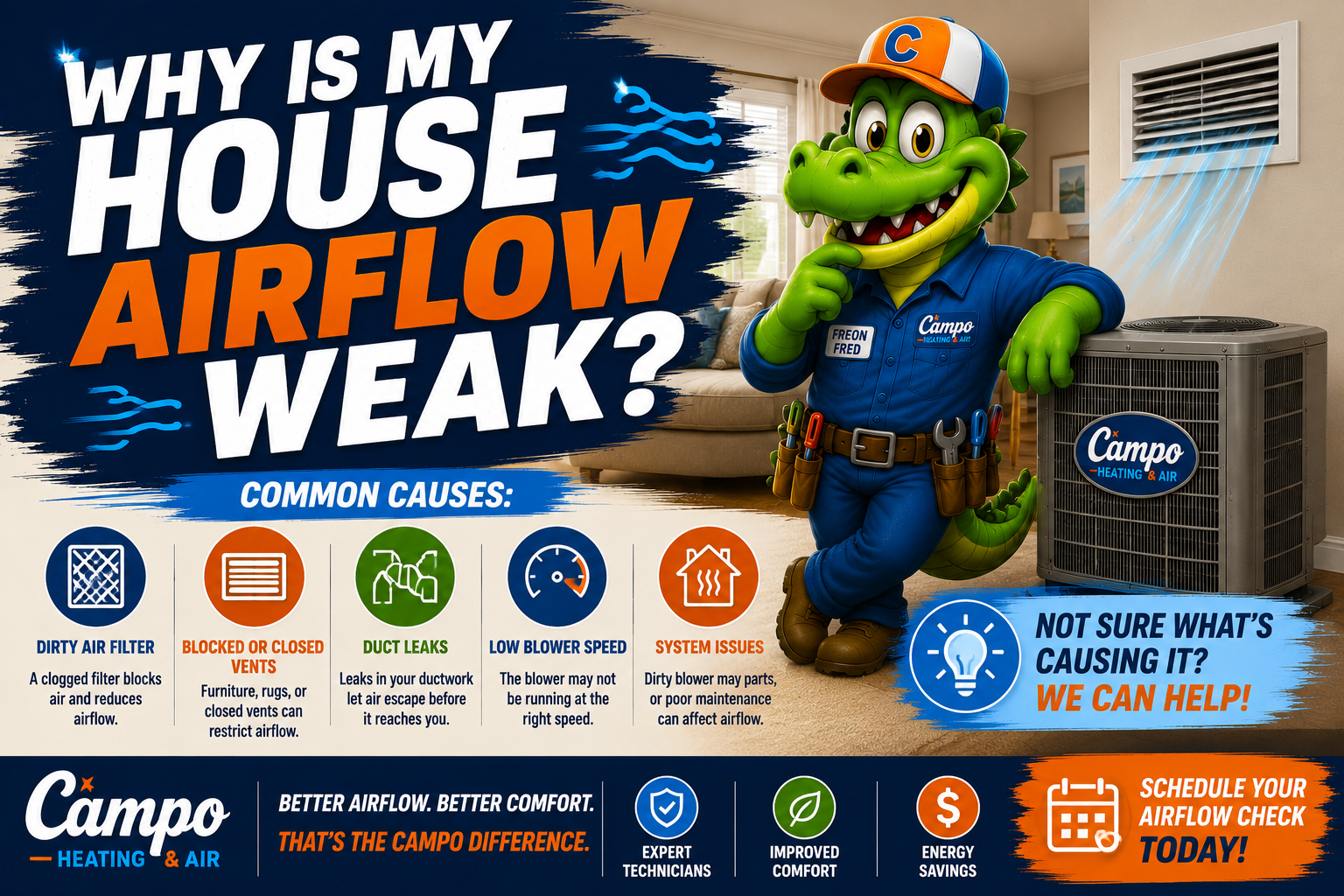
One room feels stuffy, another feels icy, and the vent in your living room barely seems to move the air at all. If you keep asking, why is my house airflow weak, the problem usually comes down to something blocking, leaking, or limiting the way your HVAC system is supposed to move air through the home.
Weak airflow is more than an annoyance. It can make your house feel uneven, push your system to run longer, raise your energy bills, and leave your family less comfortable than you should be. The good news is that many airflow problems have a clear cause, and the sooner you catch it, the easier it usually is to fix.
Why is my house airflow weak in every room?
When airflow feels weak throughout the whole house, the issue is often connected to the central system rather than one isolated vent. In many homes, the first thing to check is the air filter. A clogged filter restricts the amount of air your system can pull in and send back out. That means weaker airflow at the vents, longer run times, and extra strain on the blower.
Another common reason is a blower motor problem. The blower is the part of your HVAC system that actually moves conditioned air through the ductwork. If it is dirty, worn down, improperly set, or starting to fail, the air coming through your vents may feel light even when the system is running.
Dirty evaporator coils can also contribute. When the coil gets coated with dust and debris, airflow can drop and cooling performance usually suffers right along with it. In some cases, the coil can even freeze, which reduces airflow even more.
If your system is older, overall wear may be part of the story. HVAC equipment does not usually fail all at once. It often loses performance little by little, and weak airflow can be one of the first signs that something is not operating the way it should.
Why is my house airflow weak in just a few rooms?
If only one room or one side of the house has poor airflow, the cause is usually more local. A closed or blocked vent is the simplest possibility. Furniture, rugs, curtains, and even decorative covers can interfere with airflow more than homeowners realize.
Closed dampers are another possibility. Some duct systems have balancing dampers that help direct air to different parts of the house. If one damper is partially closed, that area may get far less airflow than the rest of the home.
Leaky or disconnected ductwork is also very common, especially in attics, crawl spaces, or older homes. If a section of duct has a gap, loose connection, or tear, conditioned air may be escaping before it ever reaches the room. That leaves you paying to cool or heat areas you do not use while the rooms you care about stay uncomfortable.
Sometimes the issue comes down to duct design. Certain rooms are harder to serve well because the duct run is too long, too small, or poorly laid out. That does not always show up right away. Home additions, renovations, and changing household use can make an airflow imbalance more noticeable over time.
The most common causes of weak airflow
In real homes across South Mississippi and Southern Louisiana, weak airflow usually traces back to a short list of issues. A dirty air filter is near the top because it is easy to overlook and can affect the entire system quickly. Blocked vents and closed registers are also common, especially in busy family homes where furniture gets moved around.
Duct leaks are a major cause too. Even a good air conditioner or furnace cannot deliver strong airflow if the duct system is losing air before it reaches the rooms. The same goes for crushed flexible duct, collapsed sections, or poor duct insulation in hot attic spaces.
Mechanical trouble inside the HVAC system can also reduce airflow. That includes blower motor problems, dirty coils, failing capacitors, and control issues that keep the fan from operating at the proper speed. In some situations, an oversized or undersized system can play a role. Bigger is not always better with HVAC. If the equipment was not matched well to the home, airflow and comfort can suffer.
What you can check before calling for service
There are a few things homeowners can safely check on their own. Start with the filter. If it looks dirty, replace it with the correct size and type for your system. A fresh filter can make a noticeable difference if restriction is the main issue.
Next, walk through the house and make sure supply vents and return vents are open and not blocked. Supply vents push air into rooms. Return vents pull air back to the system. Both matter. Closing too many vents does not usually help the system work better. In fact, it can create pressure problems and make airflow worse elsewhere.
Take a look at your thermostat settings as well. Make sure the fan setting is correct and the system is operating in the mode you expect. If the airflow suddenly changed after thermostat adjustments, that may be part of the problem.
If you can access visible ductwork safely, look for obvious disconnections, crushed sections, or damaged insulation. Do not try to take apart equipment panels or repair electrical components yourself. Weak airflow can seem simple from the outside, but the actual cause is not always obvious without testing.
Signs weak airflow is turning into a bigger HVAC problem
Sometimes poor airflow is just a maintenance issue. Other times, it is a warning sign that your system needs professional repair. If you notice rooms that never seem to reach the set temperature, your system running constantly, rising energy bills, unusual noises from the indoor unit, or ice on the refrigerant line or indoor coil, it is time to get it checked.
You should also pay attention to indoor air quality changes. More dust, a musty smell, or a home that feels humid even when the AC is running can all point to airflow trouble. Air movement affects comfort, moisture control, and how clean your indoor air feels.
The longer the problem continues, the more stress it can put on your equipment. What starts as a dirty filter or struggling blower can lead to higher wear, reduced efficiency, and bigger repair needs later.
When weak airflow needs a professional fix
If you have already changed the filter and checked the vents, but the airflow still feels weak, it is usually time for a professional inspection. A trained technician can measure static pressure, inspect the blower assembly, check the evaporator coil, evaluate the duct system, and spot hidden issues that a quick visual check will miss.
This matters because weak airflow is not one-size-fits-all. In one home, the problem may be a clogged coil. In another, it may be a duct leak in the attic. In another, it may be a failing blower motor or a system that has not been maintained in years. The right repair depends on the actual cause, not just the symptom.
That is also where long-term value comes in. A proper diagnosis can help you avoid replacing parts you do not need or living with a problem that keeps coming back. For homeowners who want dependable comfort without surprises, getting the issue handled early is usually the more affordable path.
How to prevent weak airflow from coming back
Consistent maintenance is the best protection. Changing filters on schedule, keeping vents clear, and having your system inspected regularly can catch airflow issues before they become expensive. If your ductwork is older or your home has persistent hot and cold spots, a duct inspection may be worth considering too.
Homes in our region deal with long cooling seasons, high humidity, and heavy HVAC use. That means airflow problems can show up faster than many people expect. Regular service helps your system move air the way it should, keeps comfort more even, and gives you more peace of mind when the weather turns extreme.
If you are still wondering why is my house airflow weak, trust what your home is telling you. Weak airflow rarely fixes itself, but with the right repair or maintenance, your system can get back to delivering the steady comfort your family counts on every day.
0 Comments