
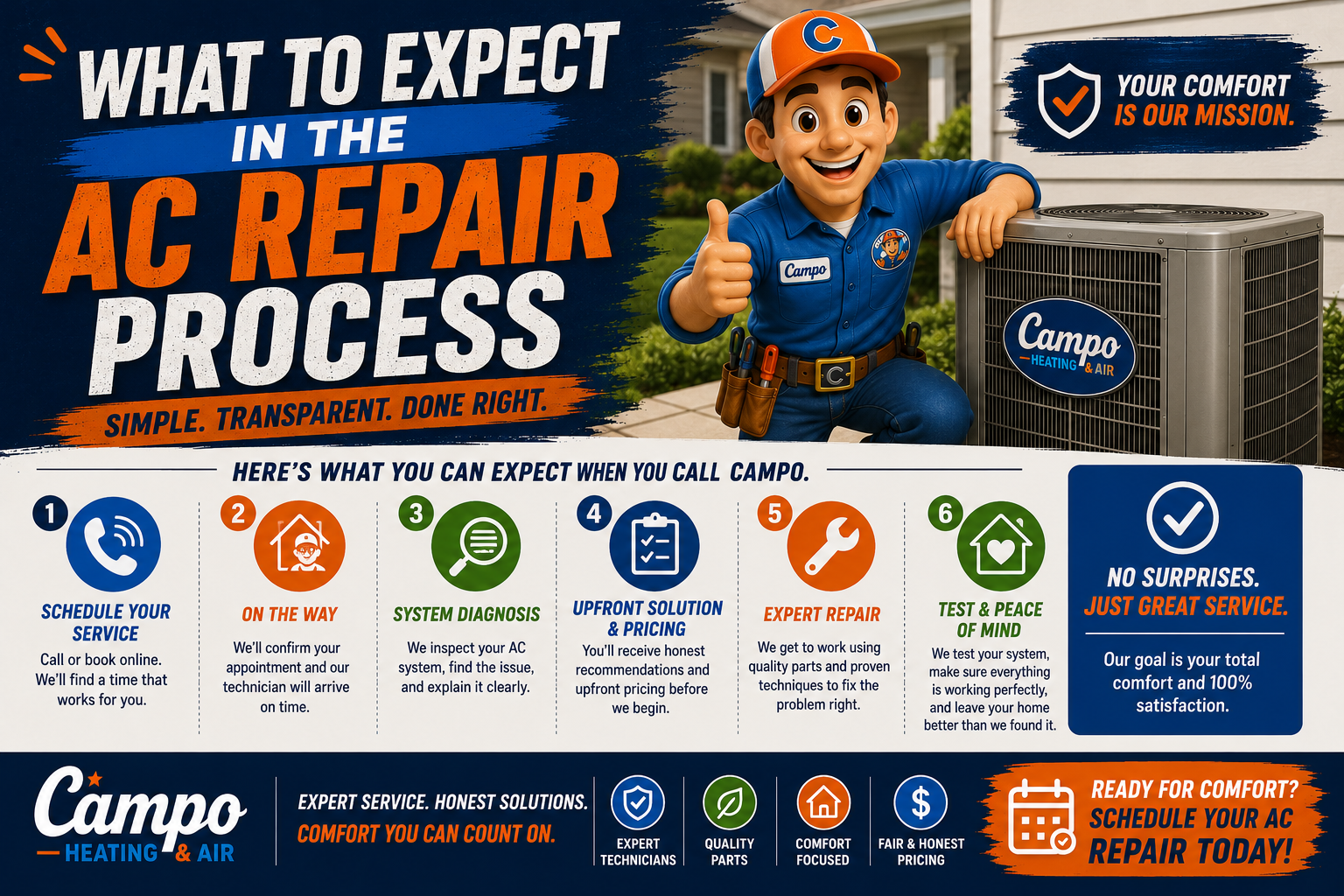
When your AC quits on a hot afternoon, you usually want two things right away – cool air and a clear answer. The ac repair process should give you both. A good service call is not just about replacing a part and leaving. It should help you understand what failed, what it will take to fix it, and whether a repair still makes sense for your system.
For homeowners and business owners along the Mississippi Gulf Coast and nearby Louisiana communities, speed matters. So does trust. No one wants to feel talked into a repair they do not need or left guessing about cost, timing, or whether the problem will come right back next week. That is why it helps to know what a proper AC repair visit should look like from the start.
Why the AC repair process matters
Air conditioning problems rarely show up at a convenient time. Maybe the house is getting warmer by the hour. Maybe one room feels fine while another is unbearable. Maybe the system is running constantly and the electric bill is climbing with it. In a commercial space, an AC issue can affect employees, customers, equipment, and daily operations.
That is where the process matters. A rushed repair can miss the root cause. A careful one can save you from repeat breakdowns, wasted money, and a system that never quite gets back to normal. The goal is not just to get the unit running again. The goal is to restore reliable comfort and give you peace of mind about what comes next.
Step one in the AC repair process: listening first
Before gauges come out or panels come off, a good technician starts by asking questions. What has the system been doing? When did the problem start? Is the issue constant or off and on? Have you noticed weak airflow, unusual noises, warm air, short cycling, leaks, or a spike in utility costs?
This part may seem simple, but it matters more than people think. Your description helps narrow the problem faster. An AC that will not turn on at all points to a different path than one that runs but does not cool. A system freezing up is different from one tripping the breaker. The more complete the picture, the more accurate the diagnosis tends to be.
The inspection and diagnosis
Once the symptoms are clear, the hands-on inspection begins. This is the core of the ac repair process. The technician checks the thermostat settings, air filter, electrical connections, capacitors, contactors, blower components, drain line, evaporator coil, condenser, and refrigerant side of the system if needed.
In many cases, the actual issue is not the first thing a homeowner suspects. Poor cooling might be caused by low refrigerant, but it could also come from a dirty coil, a weak capacitor, airflow restrictions, a failing blower motor, or even a thermostat problem. Water near the indoor unit may look serious, but sometimes the fix is a clogged condensate drain line rather than a major system failure.
This is also the point where an experienced technician separates the symptom from the cause. If a part failed, why did it fail? If refrigerant is low, where is the leak? If the system overheated, was airflow restricted? That extra level of diagnosis is what helps prevent repeat repairs.
Clear explanation before work starts
Once the problem is identified, you should get a straightforward explanation of what is wrong and what needs to happen next. This is where trust is built. The best service experience is one where the technician can explain the issue in plain language, answer questions without talking over your head, and provide repair options that fit your situation.
Sometimes the solution is simple and affordable. Other times there is a bigger decision to make. If the system is older, has multiple failing components, or uses outdated refrigerant, a repair may still be possible, but it may not be the smartest long-term move. That does not mean every repair turns into a replacement conversation. It means honest service should include both the immediate fix and the larger picture.
For budget-conscious households, this matters a lot. You may need the lowest-cost repair today. That is understandable. But you should still know if that repair is likely to buy you years of service or just a little time.
Completing the repair
Once you approve the work, the repair itself can begin. Depending on the issue, this may involve replacing an electrical part, repairing wiring, clearing a drain line, fixing a blower issue, sealing a leak, or handling refrigerant-related repairs. Some problems can be corrected during the same visit. Others take longer if specialty parts are needed or if the repair is more complex.
This is one reason same-day service is so valuable. In the middle of a Southern summer, waiting days for an AC repair is more than an inconvenience. It can affect sleep, productivity, indoor humidity, and overall comfort. For families with children, older adults, or health concerns, fast response is even more important.
That said, speed should not come at the expense of quality. A repair done too quickly and without proper testing can create another service call right behind the first one. A dependable company focuses on both response time and workmanship.
Testing after the repair
A real repair is not finished when the new part is installed. It is finished when the system is tested and confirmed to be operating as it should. That means checking system performance, airflow, cooling operation, temperatures, electrical readings, and overall function.
This stage helps catch anything else that may be affecting performance. For example, if the failed capacitor is replaced but the outdoor coil is heavily clogged, the system may still struggle. If refrigerant was added without confirming pressures and temperatures afterward, the cooling may remain off. Testing is what turns a repair into a reliable fix.
It also gives you a chance to ask practical questions. How can you help prevent this issue in the future? Does the filter need to be changed more often? Is the system showing signs of wear in other areas? Should maintenance be scheduled before peak season? Good service does not stop at the repair itself.
When the AC repair process leads to replacement talk
Not every broken AC should be repaired. That can be frustrating to hear, especially when you were hoping for a quick fix. But sometimes replacement is the better financial decision. If the system is older, needs expensive parts, breaks down often, or struggles to cool your space even when it is running, repair costs can start stacking up fast.
This is where honesty matters. A customer-first company will not push replacement when a solid repair is still the right answer. At the same time, it should not pretend an aging system is in good shape if it is near the end of the line. The right recommendation depends on the age of the unit, repair history, efficiency, part availability, and your budget.
For some families, keeping the current system going a little longer is the most realistic option. For others, investing in a replacement brings lower utility bills, fewer breakdowns, and better comfort. There is no one-size-fits-all answer. The right path is the one that fits your home, your priorities, and your finances.
What you can do before calling for service
There are a few simple checks that can save time and help rule out minor issues. Make sure the thermostat is set correctly and has power. Check the air filter and replace it if it is heavily clogged. Look to see whether the breaker has tripped. Make sure supply vents are open and unobstructed.
If the system still is not cooling properly, it is time for professional service. AC systems have electrical components, moving parts, and refrigerant circuits that need trained handling. Trying to force a DIY fix can make the problem worse or create a safety issue.
What dependable service should feel like
The ac repair process should leave you feeling informed, respected, and confident about the next step. You should know what failed, what it costs to fix, and whether the repair is expected to solve the problem in a lasting way. You should not feel pressured, rushed, or left with more questions than answers.
That is the kind of service families remember and call again. At Campo Heating & Air, that standard matters because comfort is not a one-time transaction. It is an ongoing relationship built on showing up, doing the job right, and treating people the way neighbors should be treated.
If your AC is acting up, the best next step is not guessing. It is getting a clear diagnosis from someone who knows what to look for and cares enough to explain it well.
0 Comments