
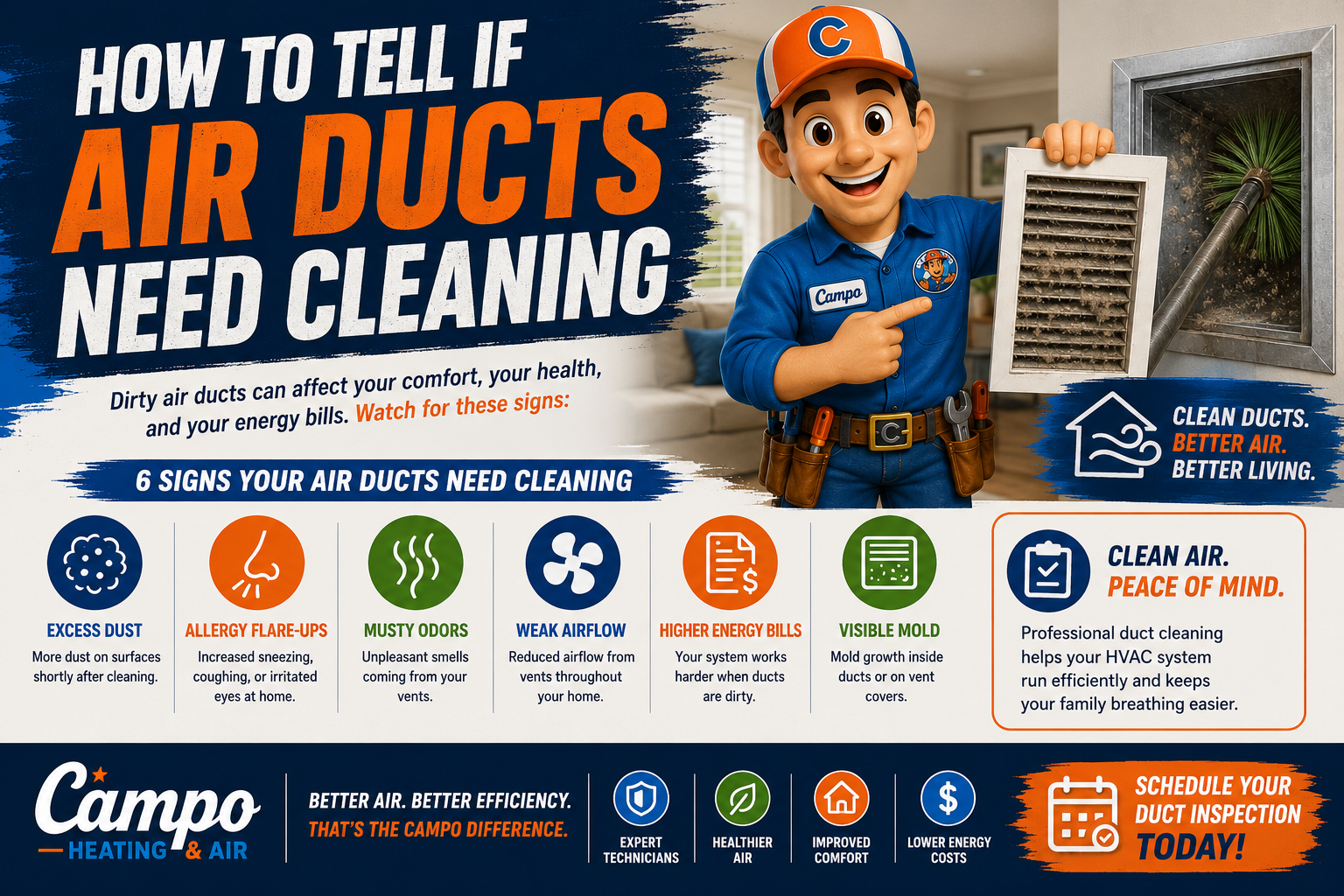
You change the air filter, wipe down the furniture, and still end up with dust settling on everything a day later. That is usually when homeowners start asking how to tell if air ducts need cleaning – and whether dirty ductwork is really the problem or just an easy thing to blame.
The honest answer is that duct cleaning is not something every home needs on a fixed schedule. Sometimes it helps a lot. Sometimes the bigger issue is leaky ductwork, poor filtration, high humidity, or an HVAC system that is overdue for service. The key is knowing which signs point to dirty ducts and which signs point to something else.
How to Tell if Air Ducts Need Cleaning in Your Home
If your ducts need attention, the signs usually show up in your comfort, your air quality, or what you can see around the vents. One dusty vent cover alone does not always mean the whole duct system is dirty. But when several warning signs start happening together, it is worth having the system inspected.
Dust blowing from vents
One of the clearest red flags is visible dust puffing out when the system starts. If you turn on the AC or heat and notice particles blowing into the room, that can mean there is built-up debris inside the ductwork. In some homes, especially older ones or homes that have had recent remodeling, that debris can include drywall dust, insulation particles, pet hair, and other household contaminants.
That said, some dust near a vent is normal. Air is moving through that opening every day. The concern is when it becomes excessive or keeps coming back right after cleaning.
Vent covers and registers get dirty fast
Take a look at the supply and return vents around your home. If they are covered with a thick layer of dust or dark buildup shortly after being cleaned, your ducts may be circulating more debris than they should. Return vents often collect dust faster than supply vents, so the comparison matters.
If only one vent looks dirty, the issue may be isolated to that room. If most of the vents throughout the house look the same, that points to a system-wide problem.
Musty or stale odors when the system runs
A dirty duct system can hold onto odors. If you notice a musty smell when the air kicks on, there may be dust, moisture, or even microbial growth somewhere in the ductwork or air handler. In our Gulf Coast climate, humidity can make this more noticeable.
Not every odor means the ducts need cleaning, though. Sometimes the smell is coming from a clogged drain line, dirty evaporator coil, or insulation near the system. That is why a professional inspection matters. You want the real cause fixed, not just the symptom.
More allergy or respiratory irritation indoors
If people in the home seem to cough more, sneeze more, or deal with irritated eyes when the HVAC system is running, dirty ducts may be part of the problem. This is especially common in homes with pets, smokers, recent renovations, or long gaps between filter changes.
Still, indoor air quality is rarely about one thing. Duct buildup can contribute, but so can humidity, old filters, poor ventilation, or dirty system components. Cleaning the ducts may help, but the best result often comes from addressing the whole system.
Uneven airflow and stuffy rooms
Dirty ducts can restrict airflow if dust and debris are heavy enough, especially around vents or in certain sections of the duct system. If some rooms feel stuffy while others cool or heat normally, it is possible that buildup is affecting performance.
But this is also where homeowners can get misled. Weak airflow often has more to do with duct leaks, crushed duct sections, closed dampers, or blower issues than duct cleaning alone. A good technician will tell you the difference instead of recommending a cleaning for every airflow complaint.
Signs After Renovation, Water Damage, or Pest Activity
Some situations make duct cleaning much more likely to be necessary.
Recent remodeling or construction work
Even if contractors tried to keep the area clean, fine dust has a way of getting everywhere. Sawdust, drywall dust, and construction debris can enter return vents and settle inside the ductwork. If your home has been remodeled recently and the air feels dusty ever since, your ducts should be checked.
Water intrusion or moisture issues
If your home has had roof leaks, flooding, heavy condensation, or HVAC moisture problems, your ductwork may have been exposed to damp conditions. Moisture inside ducts is never something to ignore. It can lead to odors, contamination, and damage that cleaning alone may not solve.
Flexible duct or lined duct systems can be especially sensitive here. In some cases, replacement is the better option if the material has been damaged.
Evidence of insects or rodents
If you hear movement in the ductwork, find droppings near vents, or notice unusual odors, there may have been pest activity in the system. That is a strong reason to schedule an inspection. A dirty duct is one thing. A contaminated duct system is another.
When pests have been inside the ductwork, the job may involve more than cleaning. It may also require sealing entry points and repairing damaged sections.
What You Can Check Yourself
You do not need special tools to do a basic first look. Remove a vent cover and shine a flashlight inside. If you see a light film of dust, that is fairly normal. If you see matted debris, thick buildup, signs of moisture, or anything that looks suspicious, it is time to have it looked at.
Check your air filter too. If it is getting clogged unusually fast, that may be a sign the system is pulling in excessive debris. Also look around furniture and floors near vents. If those areas collect dust quickly despite regular cleaning, your HVAC system may be recirculating particles.
You can also pay attention to timing. If the dust problem, odors, or irritation seem noticeably worse when the system turns on, that points back to the HVAC system rather than general housekeeping.
When Duct Cleaning Helps – and When It Does Not
This is where a lot of companies oversimplify things. Duct cleaning can absolutely help when there is visible buildup, contamination, post-construction debris, pest activity, or odor tied to the duct system. In those cases, it can improve air quality, reduce circulating dust, and give you more peace of mind.
But duct cleaning is not a cure-all. It will not fix a failing blower motor, an undersized system, leaky return ducts in the attic, or humidity problems inside the home. If those issues are present, cleaning may give only temporary relief or no relief at all.
That is why the best service starts with inspection, not assumptions. A trustworthy HVAC company should explain what they found, show you the problem when possible, and recommend only what actually needs to be done.
How Often Should Air Ducts Be Cleaned?
There is no one-size-fits-all answer. Some homes can go years without needing duct cleaning. Others need it sooner because of pets, allergies, smoking, renovations, or local dust and humidity conditions.
If your system is well maintained, your filters are changed on time, and there are no indoor air quality concerns, you may not need duct cleaning very often. On the other hand, if your home has recurring dust issues or you have recently dealt with water, pests, or construction debris, waiting too long usually makes the problem worse.
For many homeowners, the better question is not how often should it be done, but what is the condition of the ductwork right now.
Choosing the Right Next Step
If you are trying to figure out how to tell if air ducts need cleaning, look for patterns instead of one isolated symptom. Excess dust, dirty vents, stale smells, allergy flare-ups, and visible buildup inside the ducts all matter more when they happen together.
The next step should be a professional evaluation from a company that understands the full HVAC system, not just duct cleaning as a standalone sale. In many cases, the real answer may include duct cleaning, duct repair, better filtration, or routine maintenance to stop the issue from coming back.
At Campo Heating & Air, that kind of honest guidance matters because comfort is not just about a quick service call. It is about making sure your home feels cleaner, healthier, and more dependable day after day.
If your house feels dusty no matter what you do, trust what you are noticing. Your home usually tells you when something is off – you just need the right team to help you read the signs.
0 Comments