
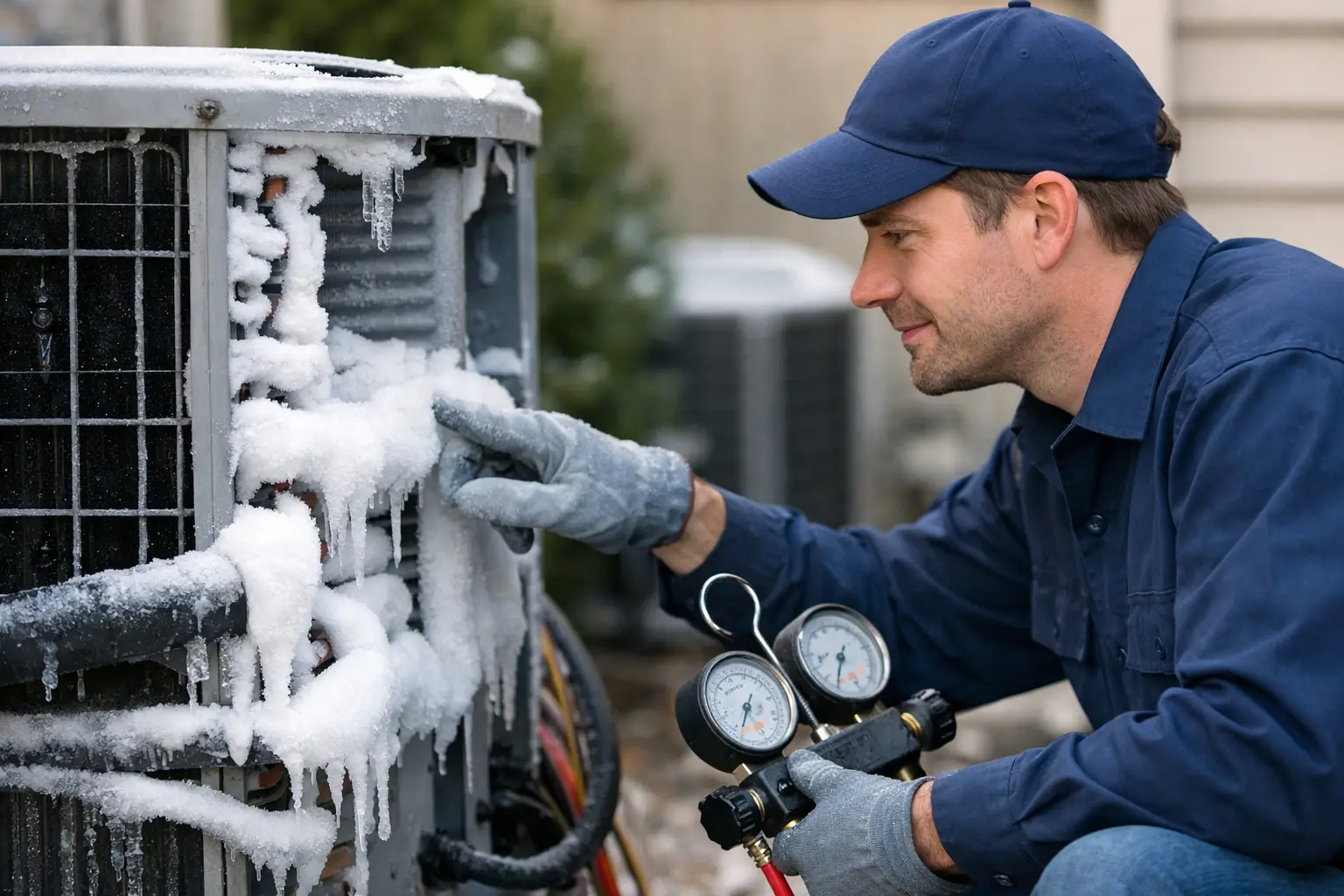
A frozen air conditioner rarely starts with a dramatic breakdown. You may first notice weak airflow, rooms that will not cool down, or ice building up on the copper line near the outdoor unit. If you are asking, why is AC freezing, the short answer is that something is preventing your system from moving enough heat through the indoor coil.
That ice is not harmless. Running a frozen AC can strain the compressor, leave your home hot and humid, and turn a smaller repair into a more expensive one. In the heat and humidity common around Picayune and the Gulf Coast, it is worth acting quickly and carefully.
Why Is AC Freezing in the First Place?
Your AC does not create cold air. It removes heat from inside your home. Warm household air passes across the indoor evaporator coil, where refrigerant absorbs its heat. The cooled air then moves back through your vents.
For that process to work, the coil needs steady airflow and the correct refrigerant pressure. When airflow is too low or refrigerant levels are off, the coil can become colder than freezing. Moisture in the air then freezes on the coil, creating a layer of ice that blocks even more airflow. It is a frustrating cycle: the more ice that forms, the less your system can cool.
The visible ice is the symptom. Finding the reason behind it is what protects your comfort and your equipment.
Common Reasons an AC Unit Freezes Up
A dirty air filter restricts airflow
A clogged filter is one of the most common and easiest causes to address. When dust, pet hair, and debris fill the filter, your blower cannot pull enough warm air across the evaporator coil. The coil gets too cold, and ice can form.
Check the filter before assuming the worst. Most homes benefit from a fresh filter every one to three months, although homes with pets, allergies, renovations, or frequent summer use may need more frequent changes. Use the filter size and rating recommended for your system. A filter that is too restrictive can also reduce airflow.
Closed vents or blocked returns create an airflow problem
Closing several supply vents does not usually save money. It can disrupt the airflow your HVAC system was designed to handle. Furniture, rugs, curtains, or storage boxes covering return vents can cause the same issue.
Make sure supply registers are open and return grilles are clear. If airflow is still weak throughout the house after replacing the filter, the problem may involve dirty ductwork, a failing blower motor, a damaged duct, or an issue inside the air handler.
A dirty evaporator coil cannot transfer heat well
Even with a clean filter, dust can gradually collect on the evaporator coil. This layer acts like insulation and limits the coil’s ability to absorb heat from the air. The result can be poor cooling, higher energy use, and eventually ice.
The evaporator coil is usually inside the indoor unit and is not a good place for a quick DIY cleaning attempt. It has delicate fins, electrical components, and a condensate drain nearby. A trained technician can clean it correctly while checking for the underlying reason it became dirty.
Low refrigerant may point to a leak
Refrigerant is not fuel that your AC normally uses up. If your system is low, there is usually a leak somewhere in the refrigerant circuit. Low refrigerant pressure can make the evaporator coil unusually cold, causing it to freeze.
You may also notice that the system runs longer without reaching the thermostat setting, the air from vents feels less cool, or you hear hissing near the equipment. Adding refrigerant without locating and repairing the leak is only a temporary patch. The proper repair involves diagnosing the leak, fixing it when practical, and charging the system to the manufacturer’s specifications.
A blower or thermostat issue can keep the coil too cold
Your indoor blower must keep moving air while the cooling system operates. A failing blower motor, weak capacitor, worn belt on older equipment, or control-board problem can reduce airflow enough to freeze the coil.
Thermostat settings can also contribute. Setting the temperature extremely low will not cool the house faster, but it can make a struggling system run continuously. On mild evenings or rainy days, indoor temperatures may already be lower while humidity remains high. If the system has an existing airflow or refrigerant problem, long run times can make freezing more likely.
Drainage and maintenance issues can add to the trouble
A clogged condensate drain does not always directly cause a frozen coil, but moisture problems often show up alongside neglected maintenance. A backed-up drain can trigger a safety switch, cause water damage, or encourage mold around the air handler. When your AC is iced over, it is smart to have the full system inspected rather than treating only what is visible.
What to Do When You See Ice on Your AC
First, turn the cooling mode off at the thermostat. Do not keep lowering the thermostat in hopes that the unit will push through the problem. Continuing to run the compressor while the coil is frozen can cause serious damage.
Then set the thermostat fan to ON, if your thermostat allows it. The circulating indoor air can help thaw the coil. If your system will not run the fan without cooling, turn the system off completely and allow time for the ice to melt naturally. Depending on how much ice has formed, this can take several hours. Place towels around the indoor unit if water may drip as it thaws.
Check the filter and replace it if it is dirty. Also confirm that vents and returns are open and unobstructed. Do not chip at the ice with a screwdriver, knife, or other object. Coil fins bend easily, and refrigerant lines can be damaged.
After the unit has completely thawed and you have replaced a dirty filter, you can cautiously restart cooling. If it freezes again, airflow remains weak, or the system does not cool properly, stop running it and schedule service. A repeat freeze-up is a clear sign that the problem needs professional attention.
When to Call for AC Repair Right Away
Some situations should not wait for a convenient time. Call for AC repair if you see repeated ice after changing the filter, hear unusual buzzing or grinding, smell something burning, find water around the indoor equipment, or have little to no airflow from the vents. A system that runs constantly but cannot cool your home also deserves prompt attention.
For homeowners and property managers, timely repair is often the more affordable decision. Ice can damage the compressor, which is one of the costliest components in an air conditioner. Catching a refrigerant leak, blower problem, or dirty coil early can help avoid that outcome.
Campo Heating & Air provides dependable AC diagnostics and repair for homeowners and businesses that need clear answers, not guesswork. A technician can check airflow, blower performance, refrigerant pressures, coil condition, electrical components, and drainage to identify what is actually causing the freeze-up. If repair or replacement choices are needed, you should receive straightforward options that fit your comfort needs and budget.
How to Help Prevent a Frozen Air Conditioner
Regular maintenance is the best defense against an unexpected freeze-up. Replace filters on schedule, keep outdoor equipment clear of grass and leaves, and avoid blocking indoor vents or returns. During a professional tune-up, technicians can clean components, verify refrigerant performance, inspect electrical parts, test drainage, and catch small issues before summer demand exposes them.
There is one trade-off to keep in mind: the cheapest filter is not always the best, but the highest-rated filter is not always right for every system either. A very dense filter may capture more particles while reducing airflow if your equipment is not designed for it. Ask an HVAC professional which filter type supports both cleaner air and proper system performance.
A frozen AC is your system asking for attention. Turn off the cooling, let the ice thaw, handle the simple airflow checks, and get help if the problem returns. Fast action now can protect your equipment, your budget, and the comfortable home your family depends on.
0 Comments